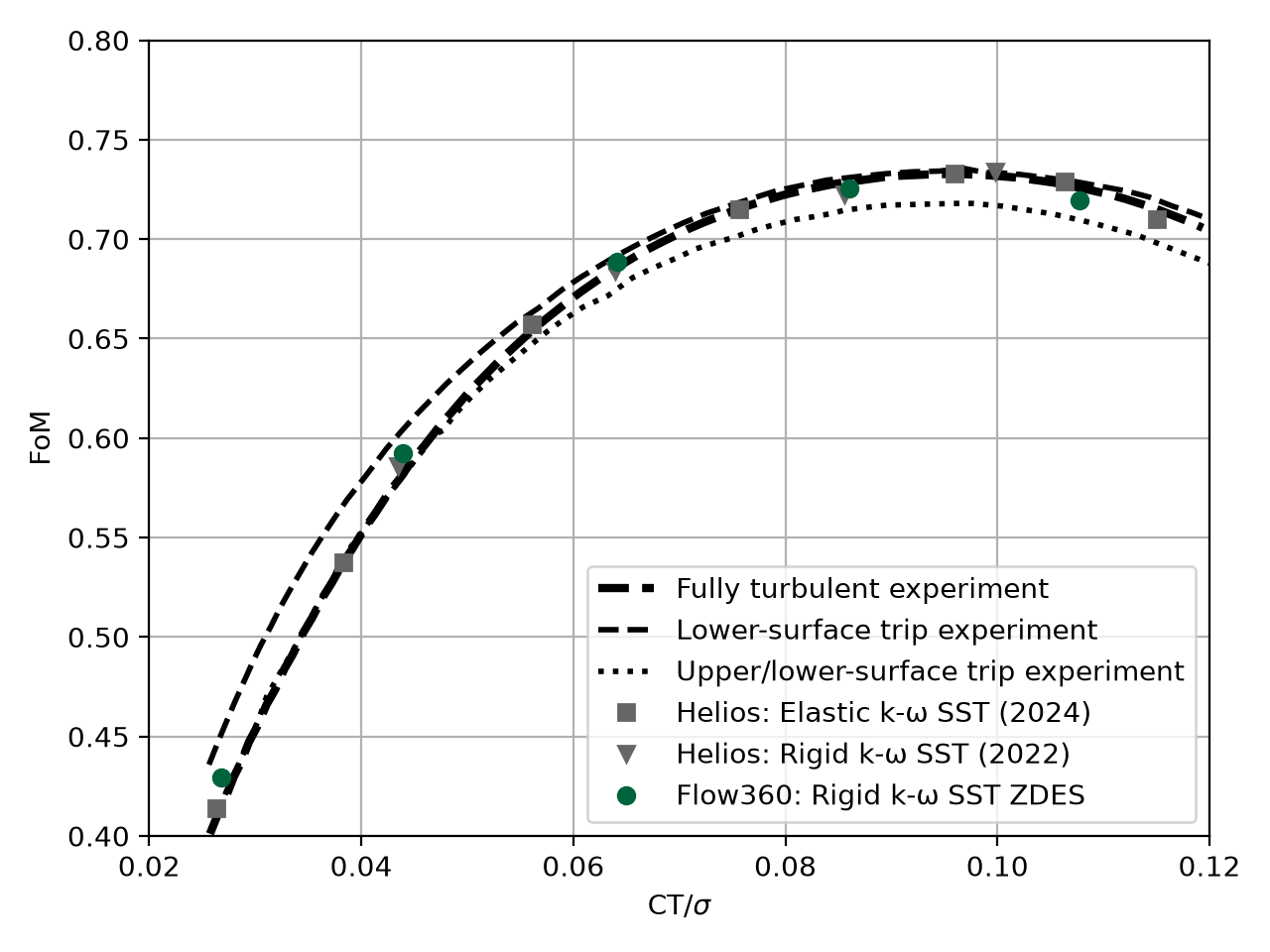
HVAB Rotor Hover Validation. Figure of merit across a collective-pitch sweep

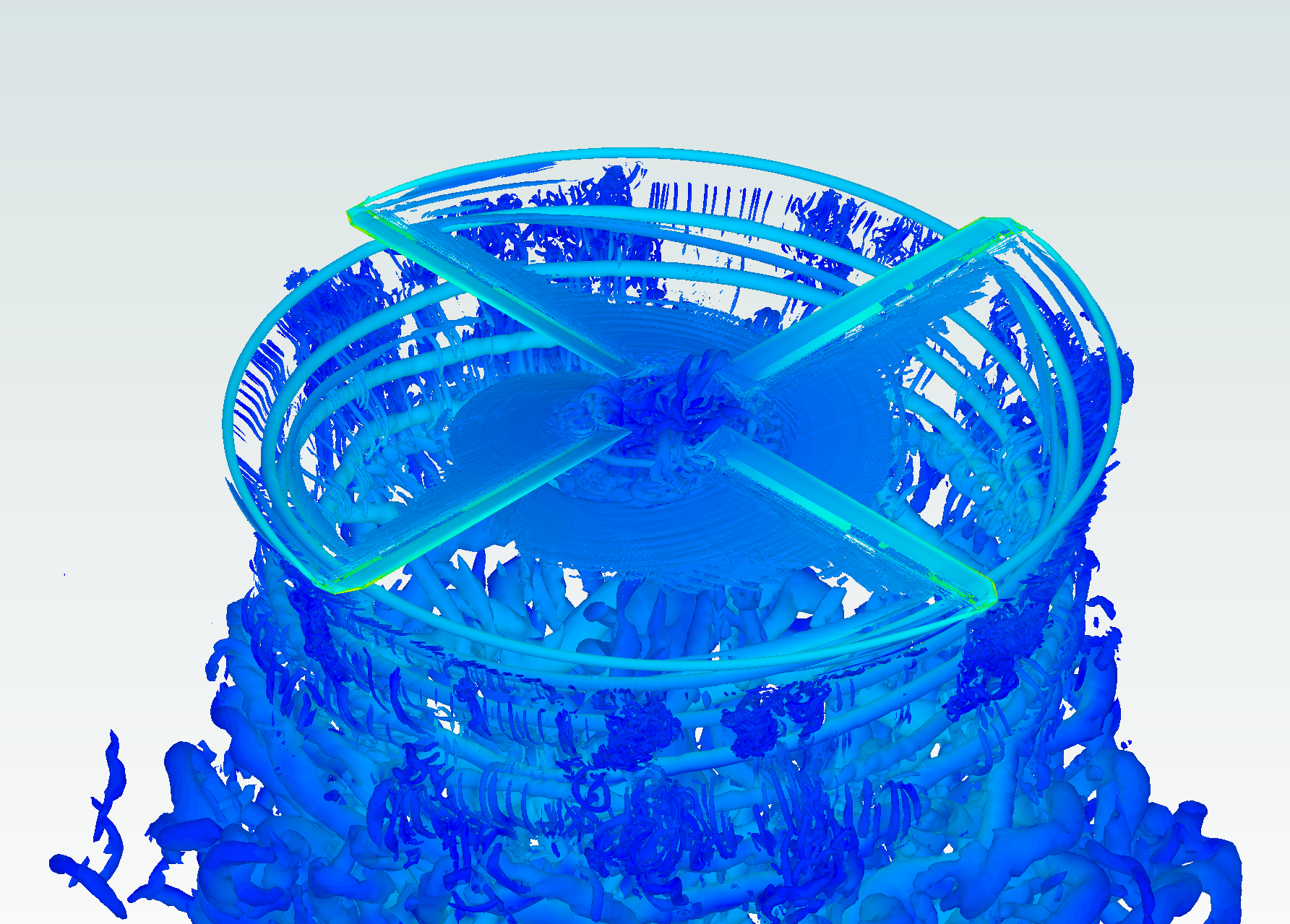
The Hover Validation and Acoustic Baseline rotor is the latest isolated-rotor validation case featured by the AIAA Rotorcraft Hover Prediction Workshop. It draws on a comprehensive set of NASA Ames hover measurements, providing a strong basis for assessing modern rotorcraft simulation methods. This benchmark highlights the use of Geometry AI on imperfect workshop CAD. The original blade geometry contains a trailing edge gap and defects near the blade tip that would otherwise prevent automated meshing using traditional bodyfitted meshers. Flow360 repairs and meshes the imported blade and then defines each rotor configuration by applying the prescribed collective pitch, lag, and coning angles through coordinate system transformations. The k-ω SST ZDES rigid Flow360 sweep at 1250.39 RPM closely reproduces the fully turbulent experimental figure of merit curve, while also exhibiting similar behaviour as the rigid and elastic Helios predictions. The 4° to 10° collective cases use a 120 million node mesh. Each runs for 15 revolutions with a 6° azimuthal time step, followed by five revolutions at 1°. The 12° case uses a finer, 200 million node mesh, with the time step refined from 6° to 0.5°. The results capture the peak in efficiency and its subsequent decline at higher loading. This case demonstrates an automated path from imperfect single blade geometry to configurable full-rotor simulations with validation level hover performance agreement.
rotorcraft.arc.nasa.gov/HVAB/
Comparison of Flow360 predictions against reference data. Click an image to expand.