PAW-6 NASA 1507 axisymmetric Supersonic Inlet. Supersonic Analysis Using Bleed Boundary Conditions
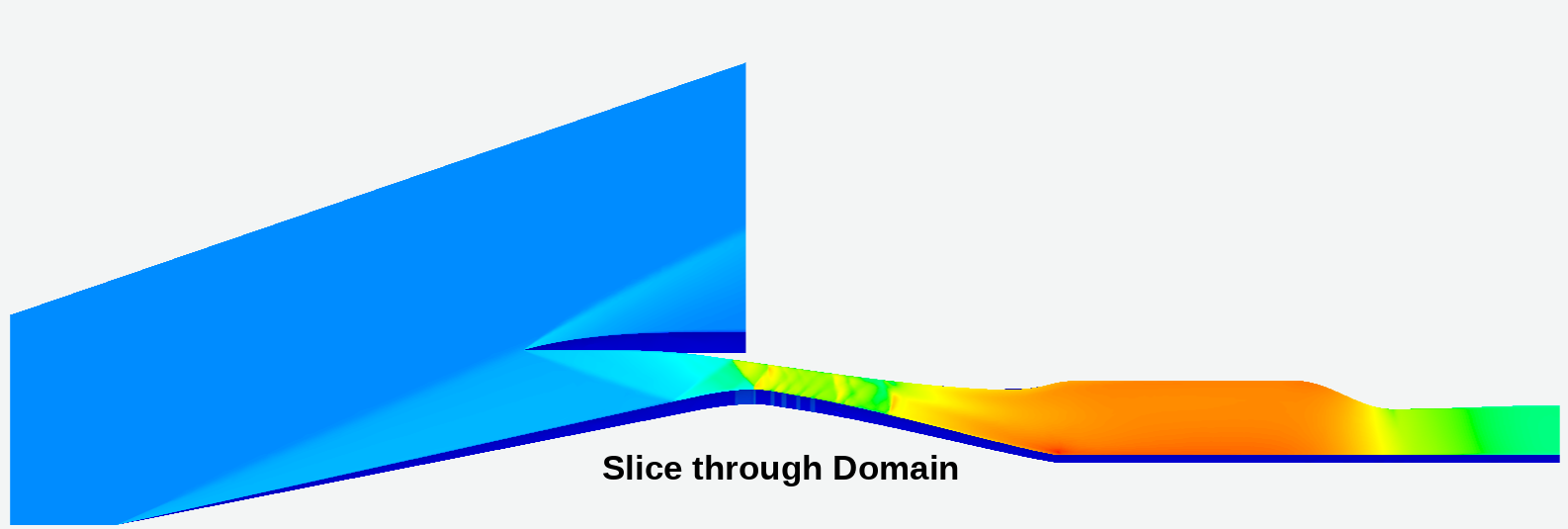
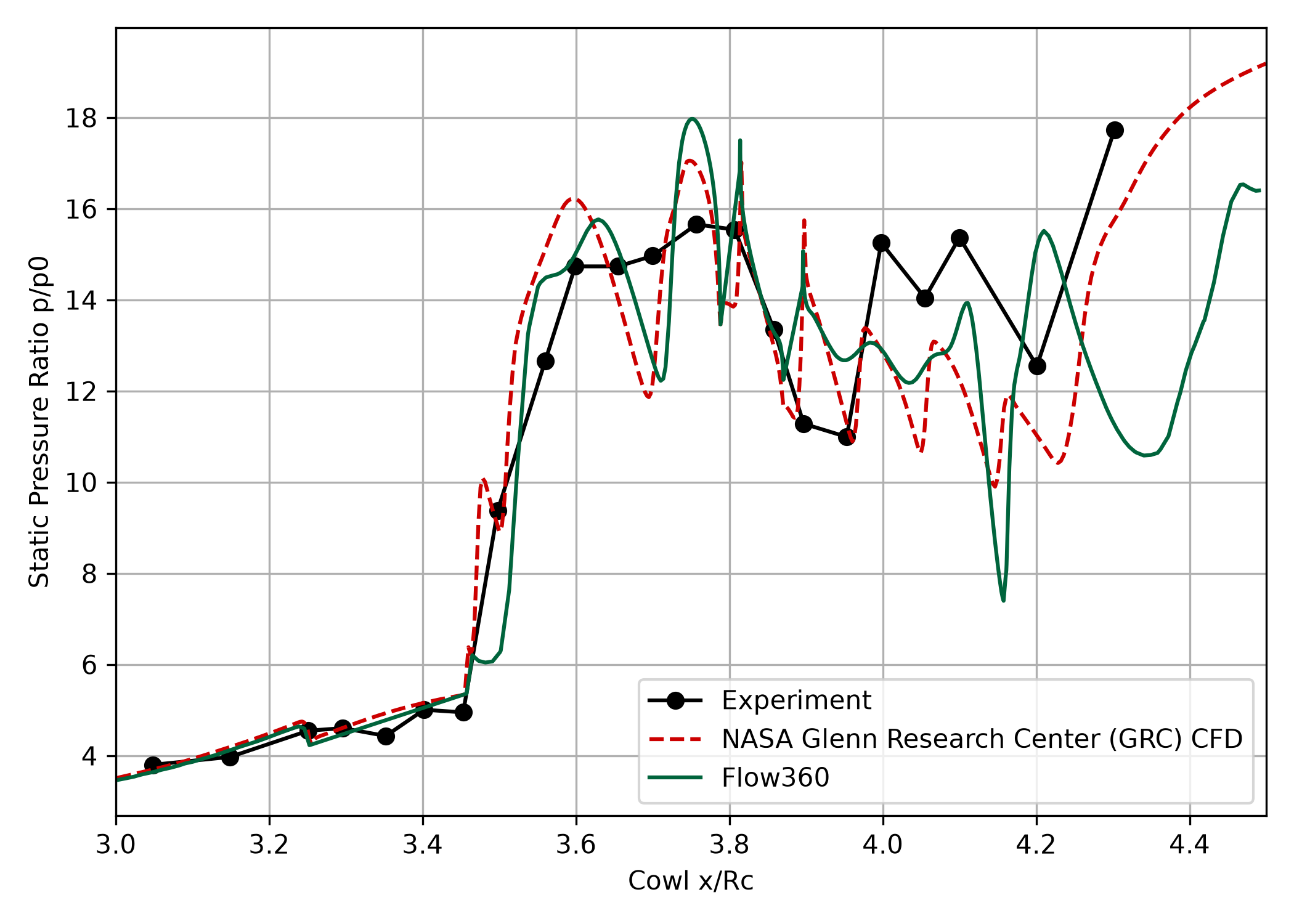
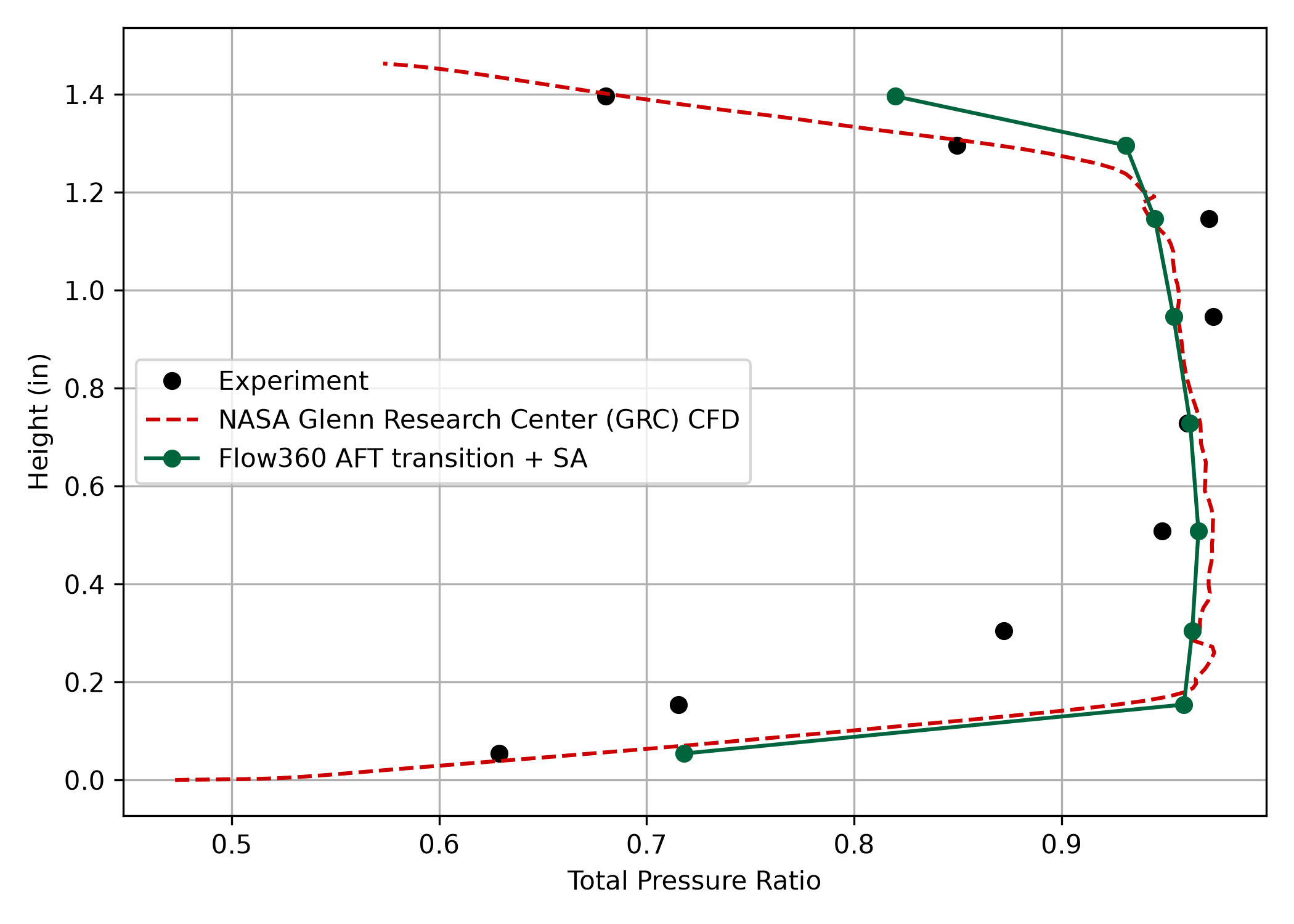
The NASA 1507 mixed-compression inlet is a PAW-6 workshop benchmark for supersonic bleed boundary conditions and shock–boundary-layer interaction in propulsion intakes. It is a demanding validation target because one case couples a shock train, laminar-to-turbulent transition, and bleed through porous walls — all three with workshop experimental and reference CFD data to compare against. Flow360 runs workshop Grid C as a steady simulation at Mach 3.0 with Spalart–Allmaras turbulence, AFT transition, and Slater porous bleed held at target mass flow by four PI controllers. Through the throat rake the computed total-pressure profile matches the measured core to within a few percent. The case shows that the bleed and transition models reproduce the inlet's overall pressure recovery, with minor disagreement concentrated where shock-train position and boundary-layer edges are most sensitive.
doi.org/10.2514/6.2024-0983
Comparison of Flow360 predictions against reference data. Click an image to expand.