FLEXCOMPUTE FLOW
GPU-NATIVE CFD SOFTWARE
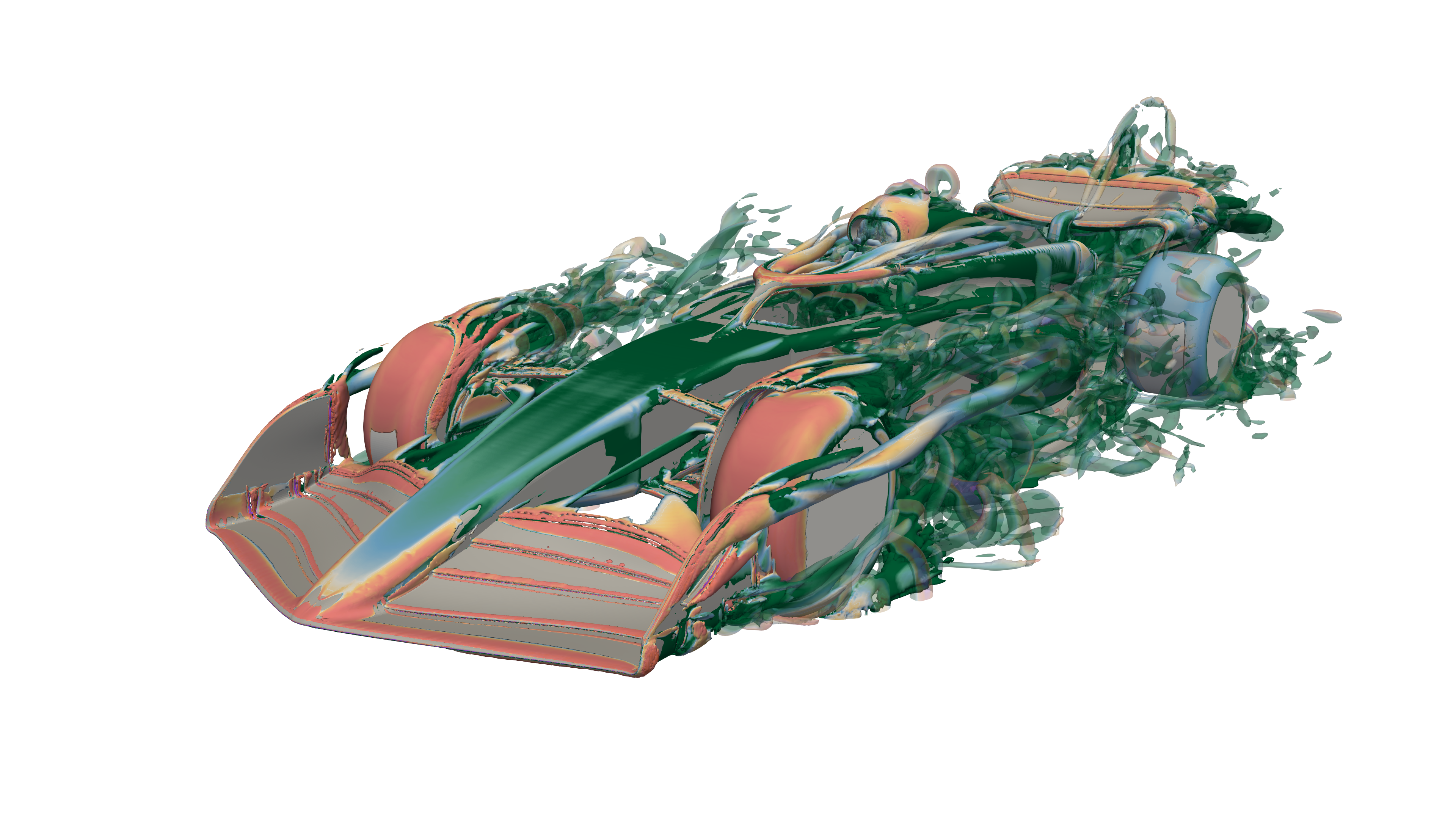
Streamline complex fluid simulations from automated geometry clean up to highly accurate results and large-scale data generation for building Physics AI models.
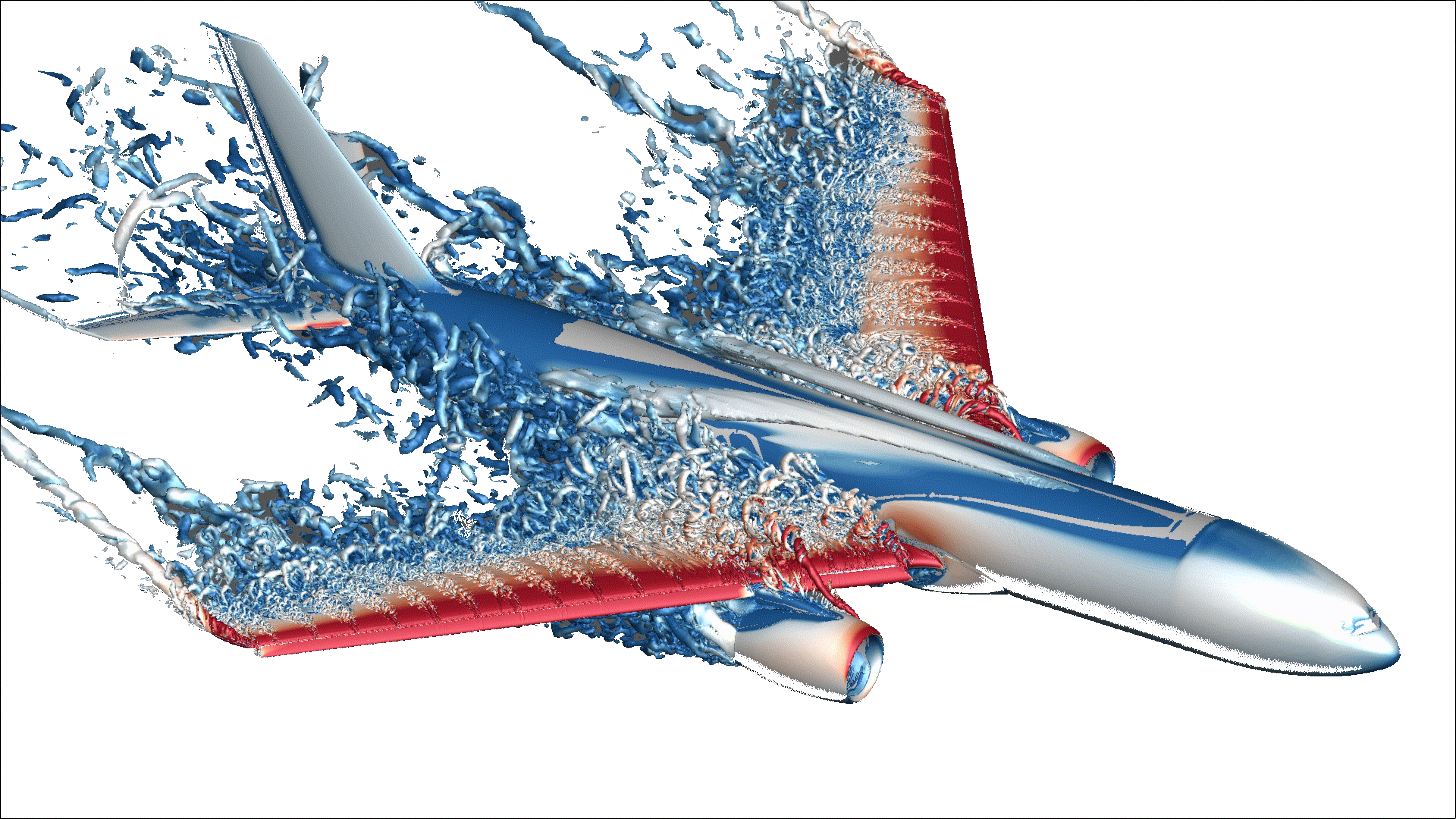
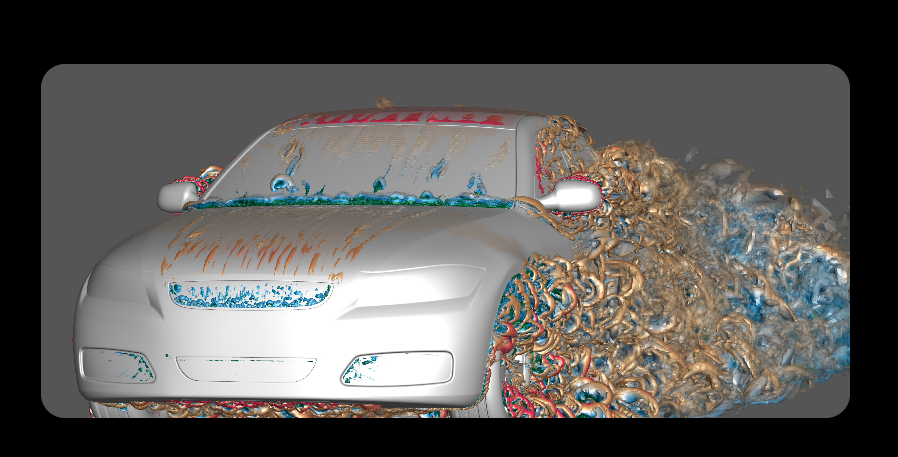
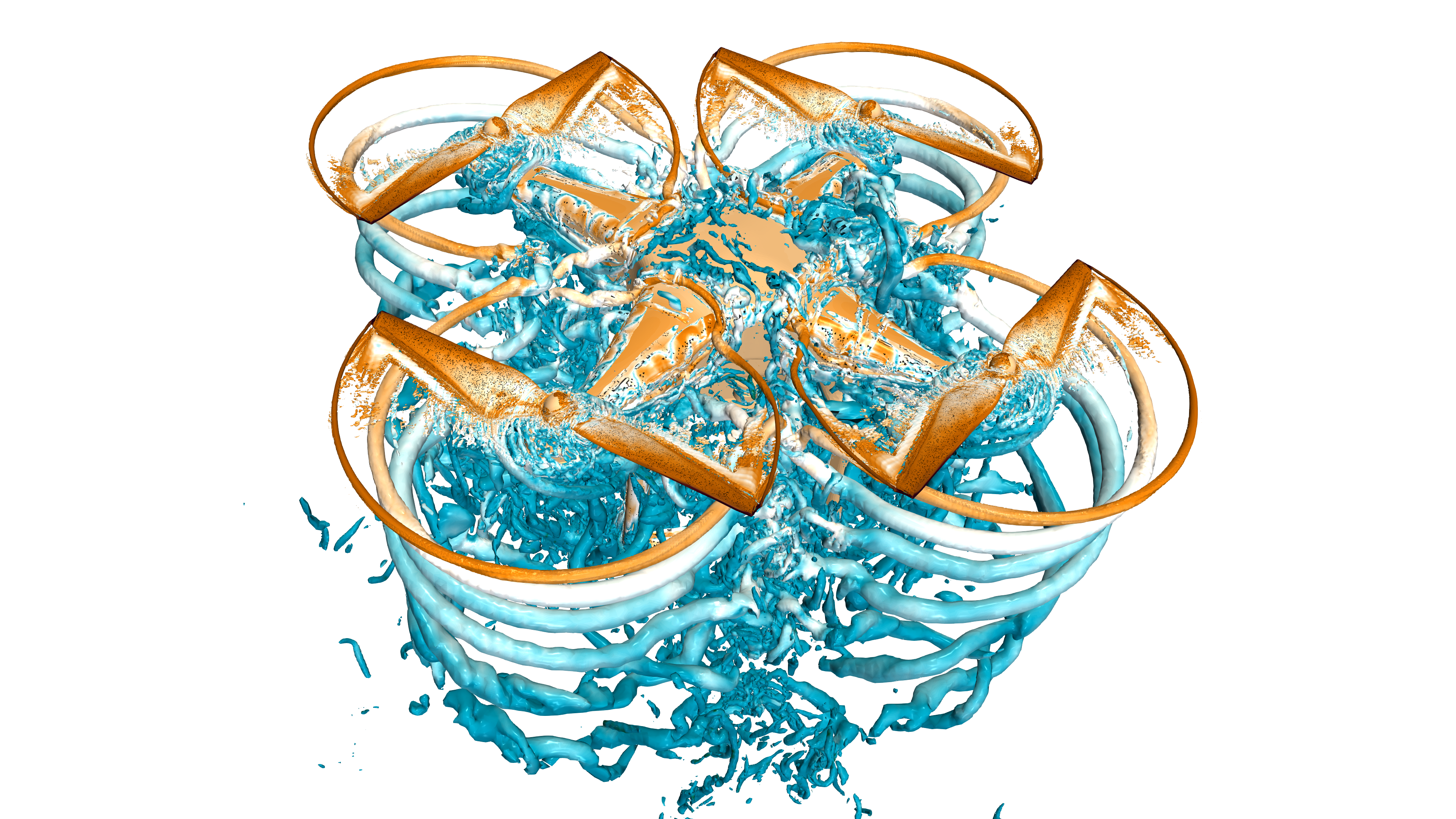
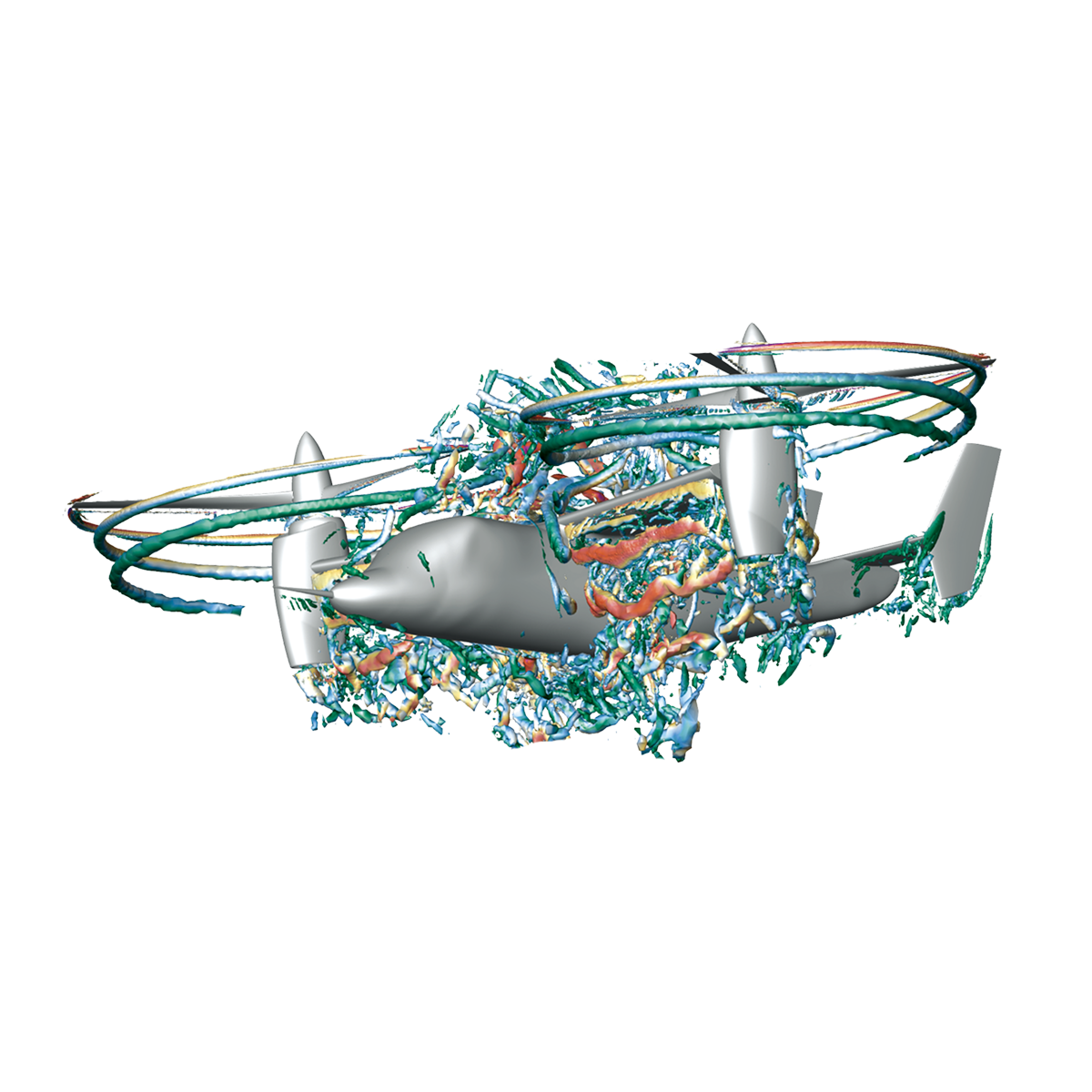
"Electra cut 9 months off its aircraft design timeline using Flow's ultra-fast CFD simulations. With rapid iteration and deep flow insights, startups like Electra bring breakthrough innovations to market faster and more cost-effectively."

"The speed and robustness of the Flow solver is remarkable. We appreciate Flexcompute's integrated data management environment and collaboration platform that enhances productivity and enables us to solve problems in real time."

"Flow has transformed our R&D process. The solver's speed and robustness allow us to quickly explore and iterate designs, saving us both time and money."

If you are ready to perform design exploration at scale with GPU-native CFD simulation and automated workflows
View Our Technical BriefFlow360 is an advanced CFD solver built for high-fidelity simulation of complex fluid, thermal, and acoustics phenomena at scale. Its solver architecture, physics models, and numerical methods support both routine engineering analysis and large, high-fidelity simulation workloads. The features below highlight the core capabilities that define Flow360's performance, accuracy, and modeling depth across modern simulation workflows.
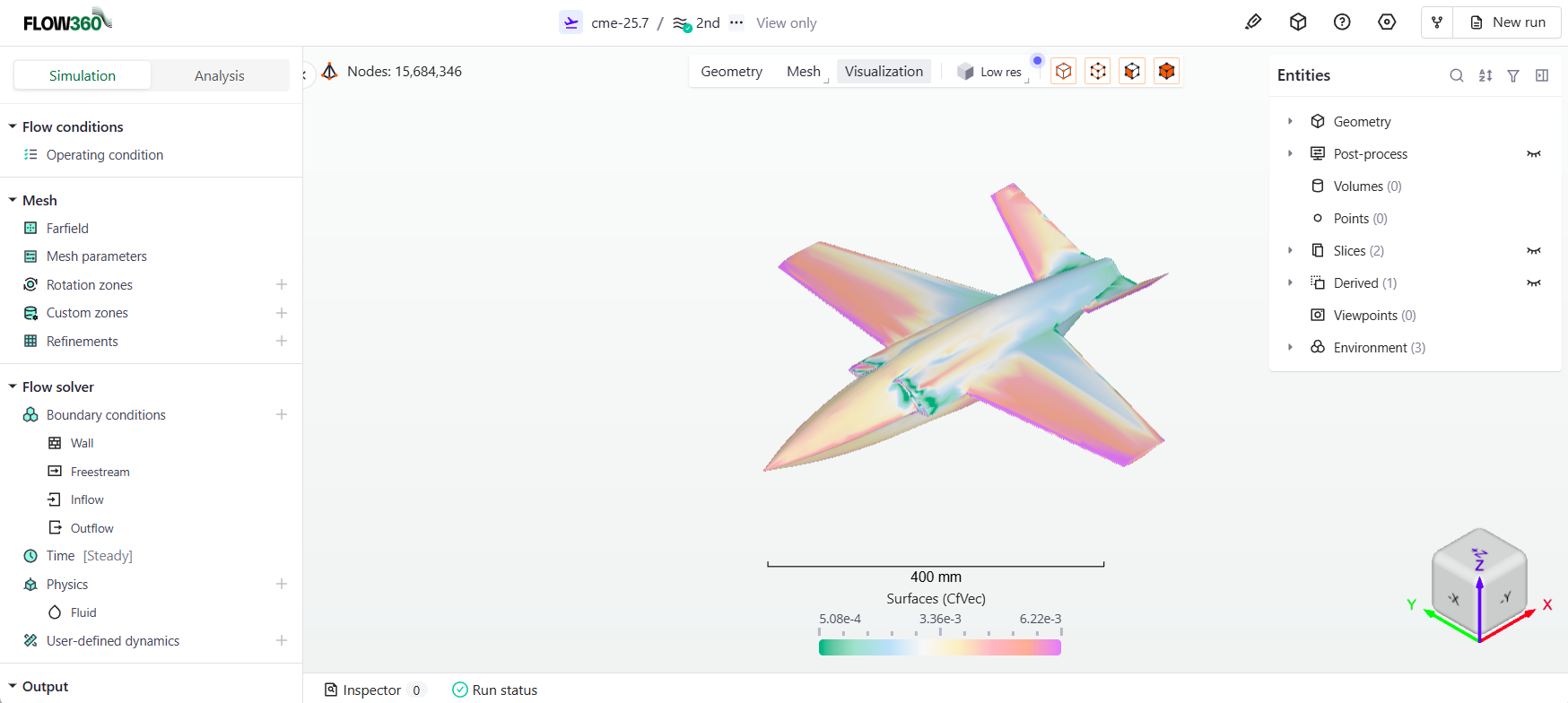
A unified, solver-integrated workflow from geometry and meshing through simulation execution and post-processing. Case setup, execution, and result inspection are tightly coupled to reduce handoffs between tools and minimize friction across large design studies and production runs.
A browser-based interface for interactive case setup, monitoring, and visualization without local software installation. Supports collaborative workflows, rapid access to results, and centralized management of large simulation campaigns.
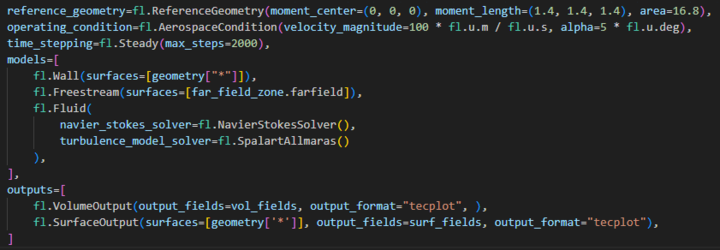
A powerful Python API for programmatic control of case setup, parameter sweeps, batch execution, and post-processing. Enables scripting, automation, and integration into larger simulation and optimization pipelines.
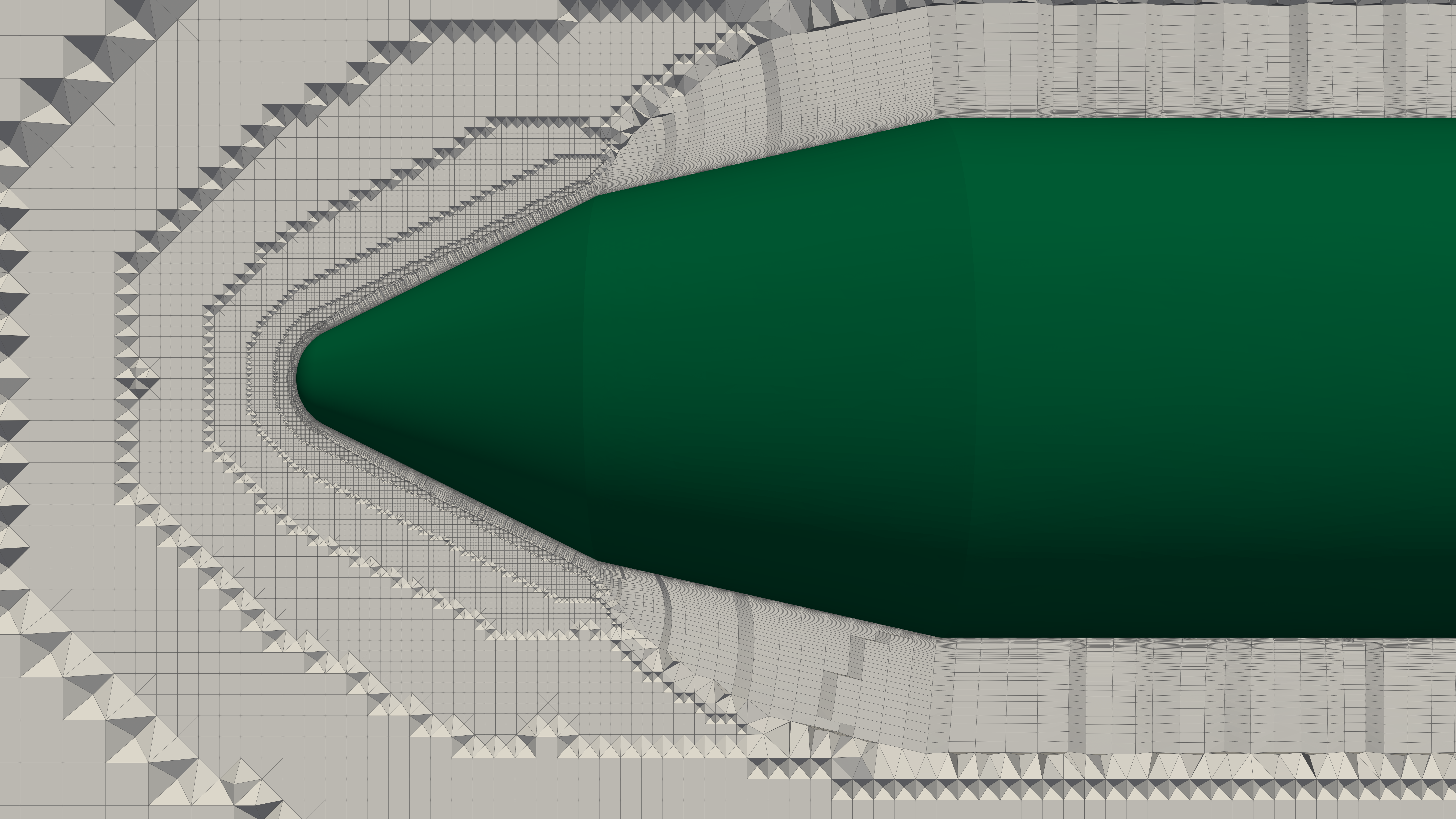
A fully integrated, automated meshing pipeline designed to remove meshing as a workflow bottleneck. The solver-aware mesher handles large, complex geometries efficiently, generating high-quality boundary layers, farfield domains, and localized refinements with minimal manual setup. Supports large-scale meshes with robust memory efficiency, enabling practical high-resolution simulations without reliance on external meshing tools.
Built natively for GPUs and large-scale parallel execution, enabling high-resolution simulations to run efficiently across many GPUs with fast turnaround for both steady and transient workloads.
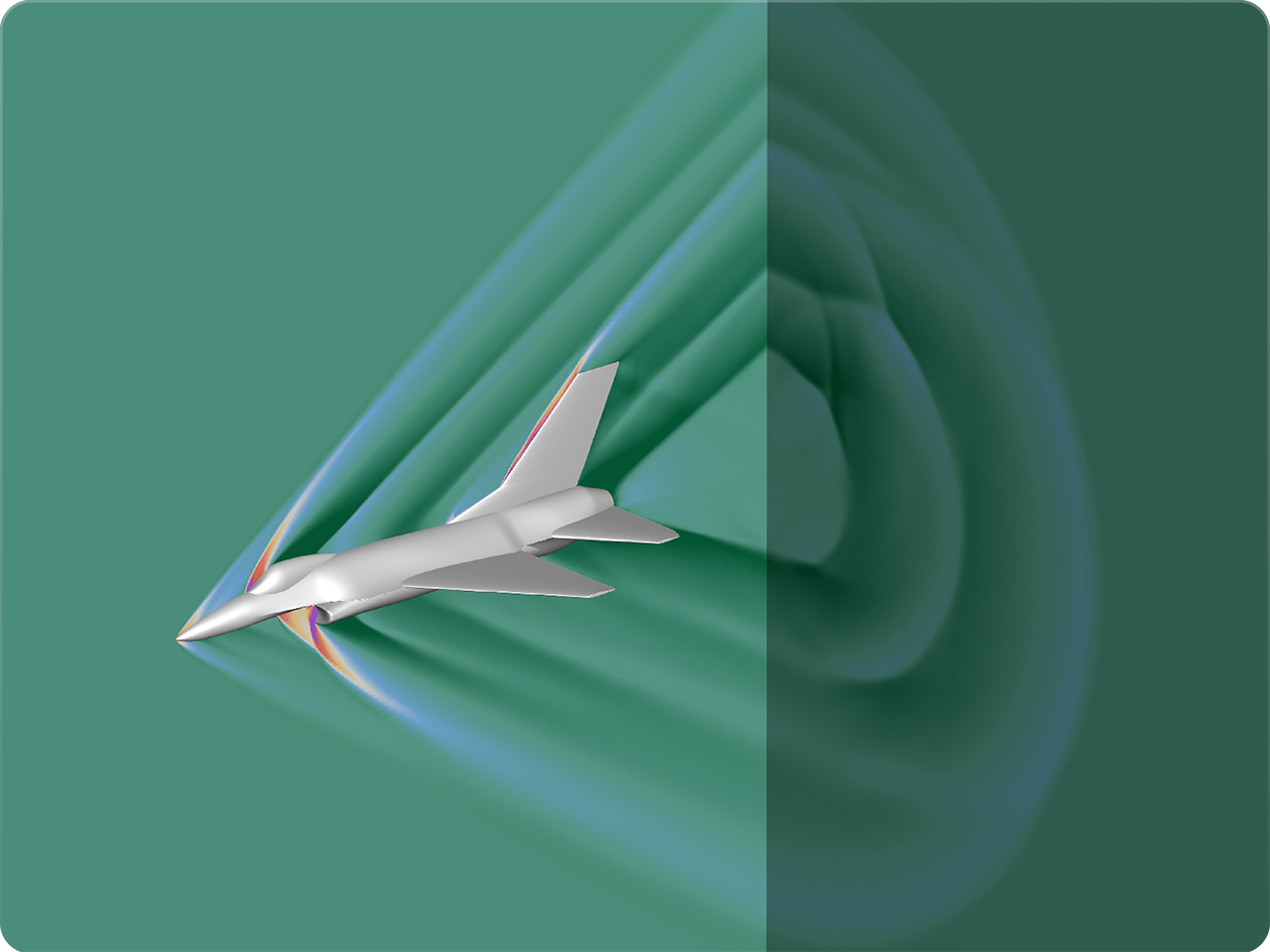
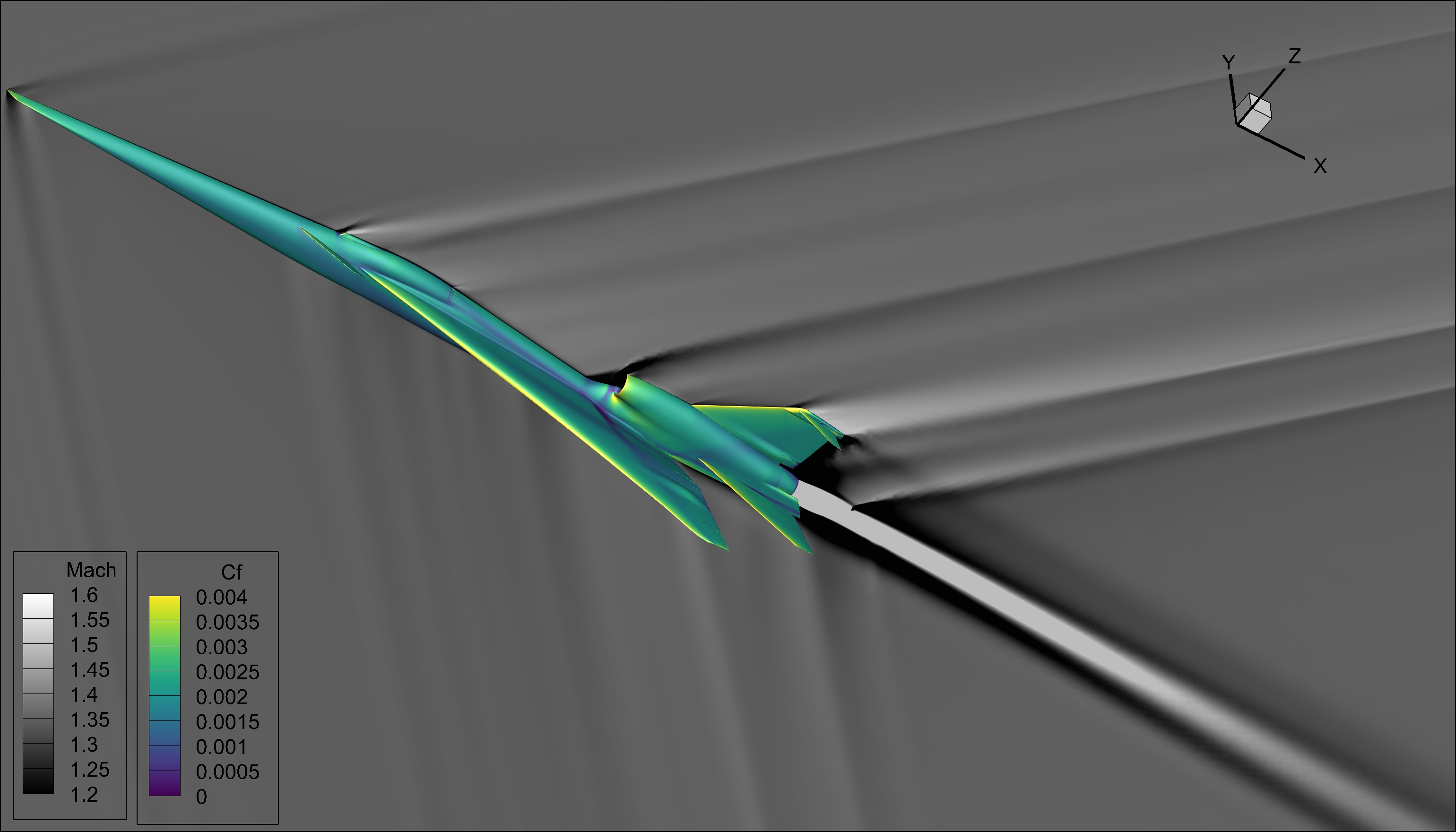
Solves the fully compressible Navier–Stokes equations for viscous external flows, supporting accurate prediction of aerodynamic loads across subsonic to high-Mach regimes in steady and time-accurate simulations.
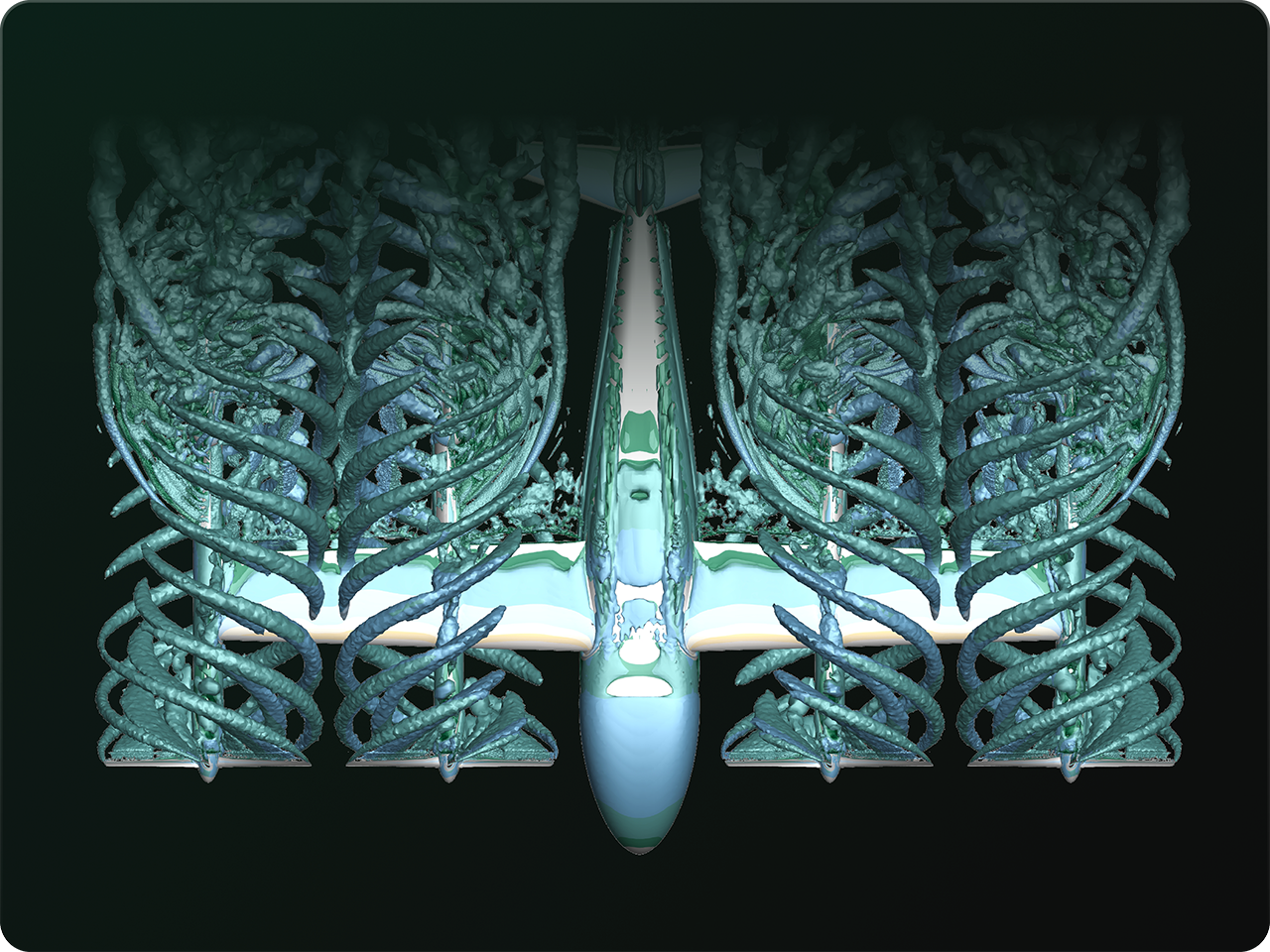
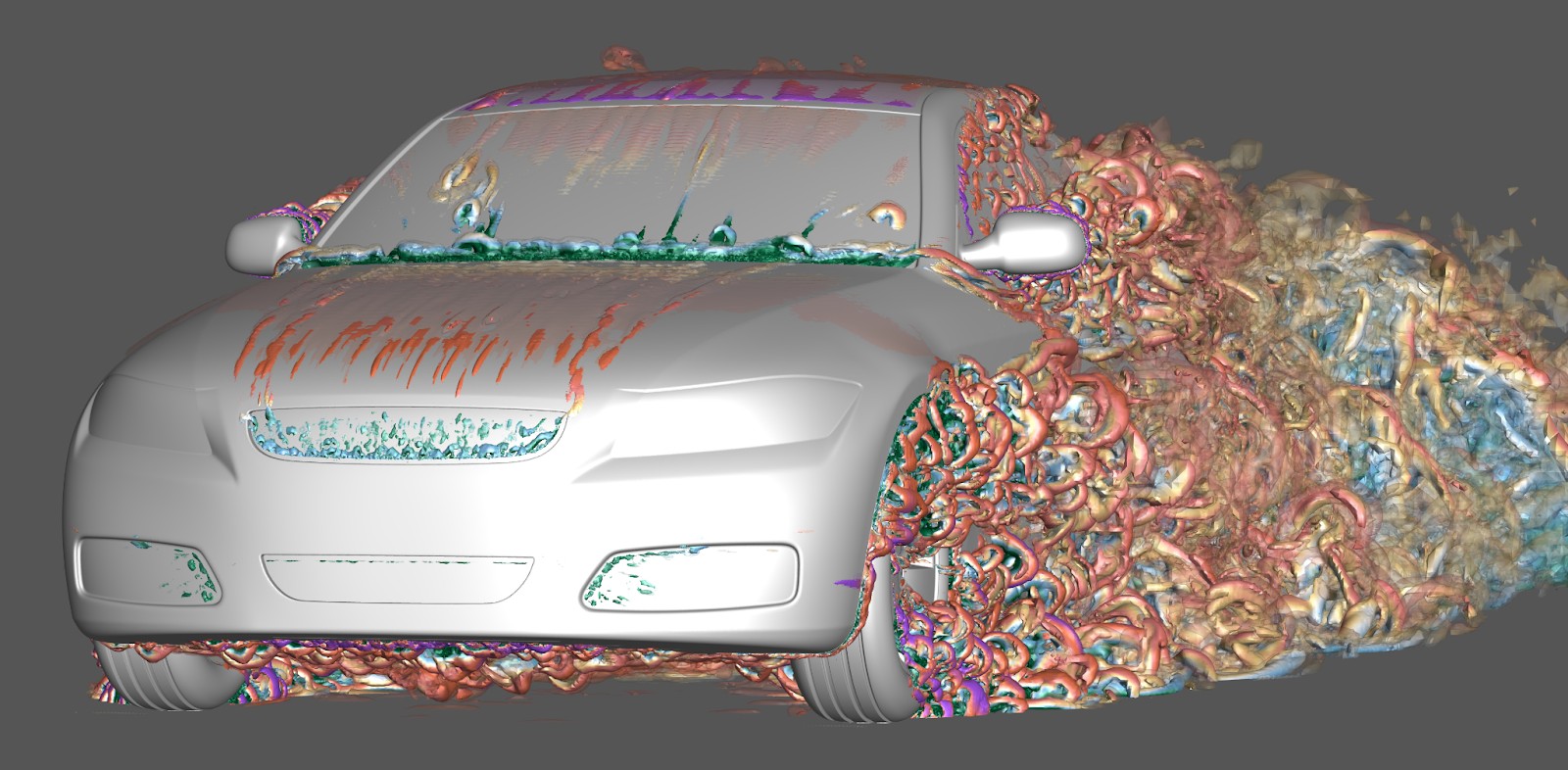
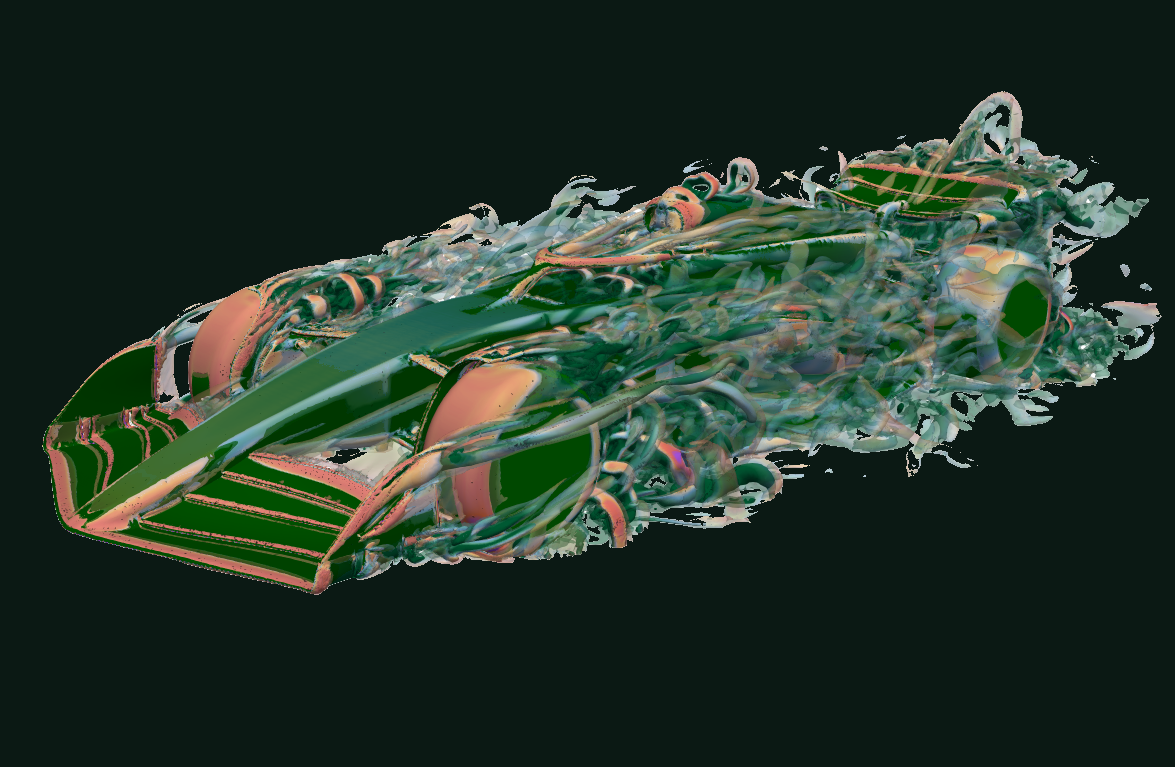
Supports a spectrum of modeling approaches from RANS and URANS to scale-resolving methods (DDES, ZDES, and even iLES), including SA and kωSST turbulence models, for capturing unsteady flow structures, separation dynamics, and transient aerodynamic phenomena.
Supports laminar-to-turbulent transition modeling to improve prediction of boundary layer behavior, separation onset, and surface heat transfer in regimes where transition location materially affects performance.
Supports convective heat transfer with isothermal and prescribed heat-flux boundary conditions, as well as conjugate heat transfer for coupled fluid–solid thermal analysis and surface temperature prediction.
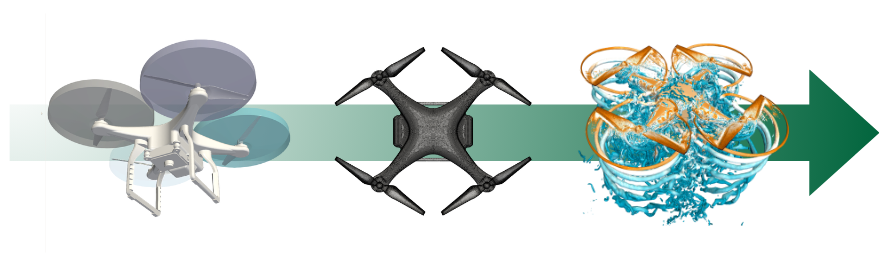
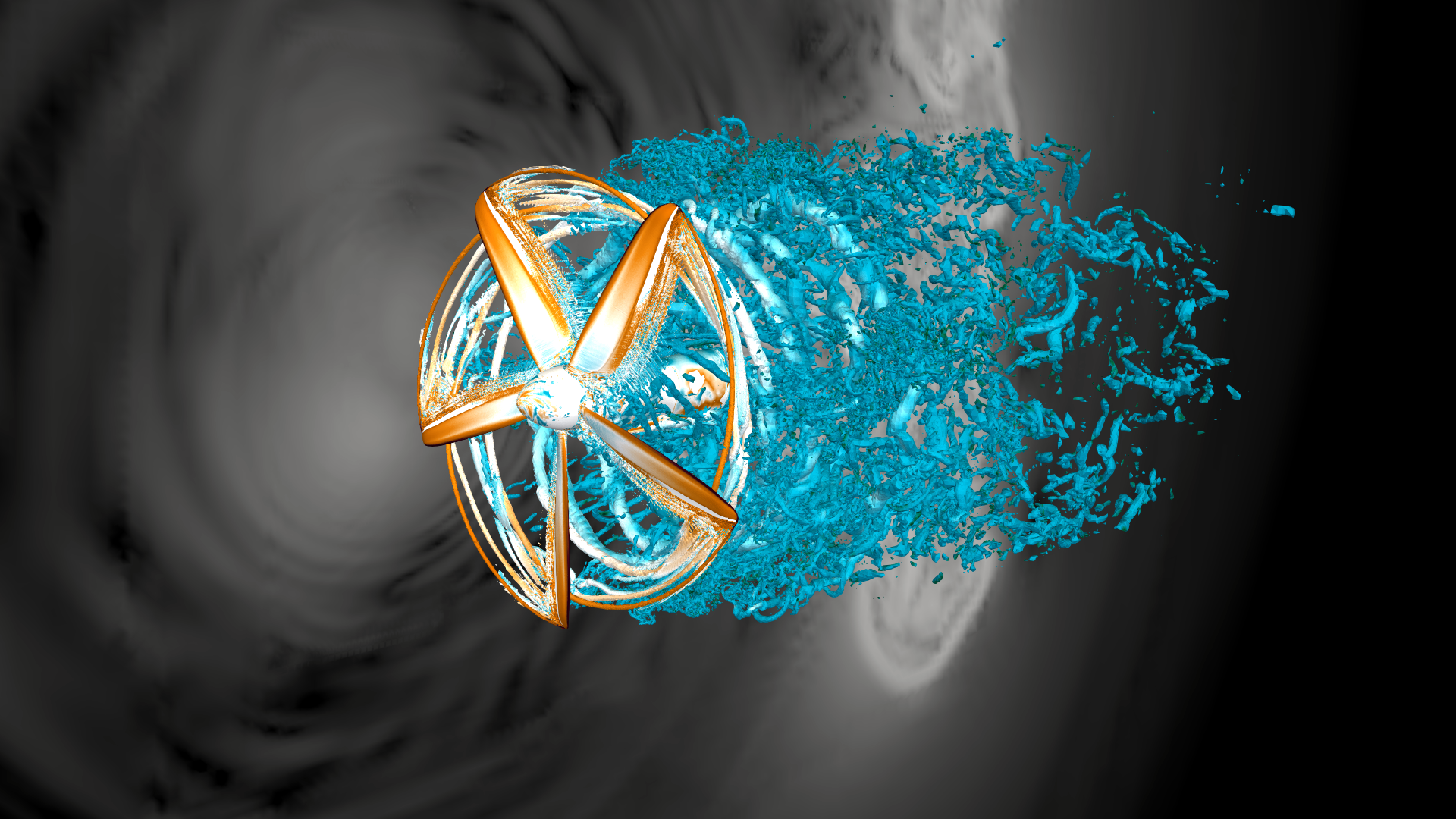
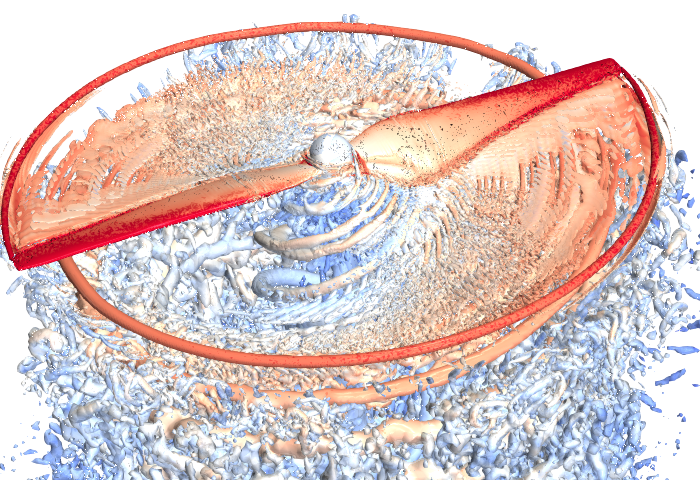
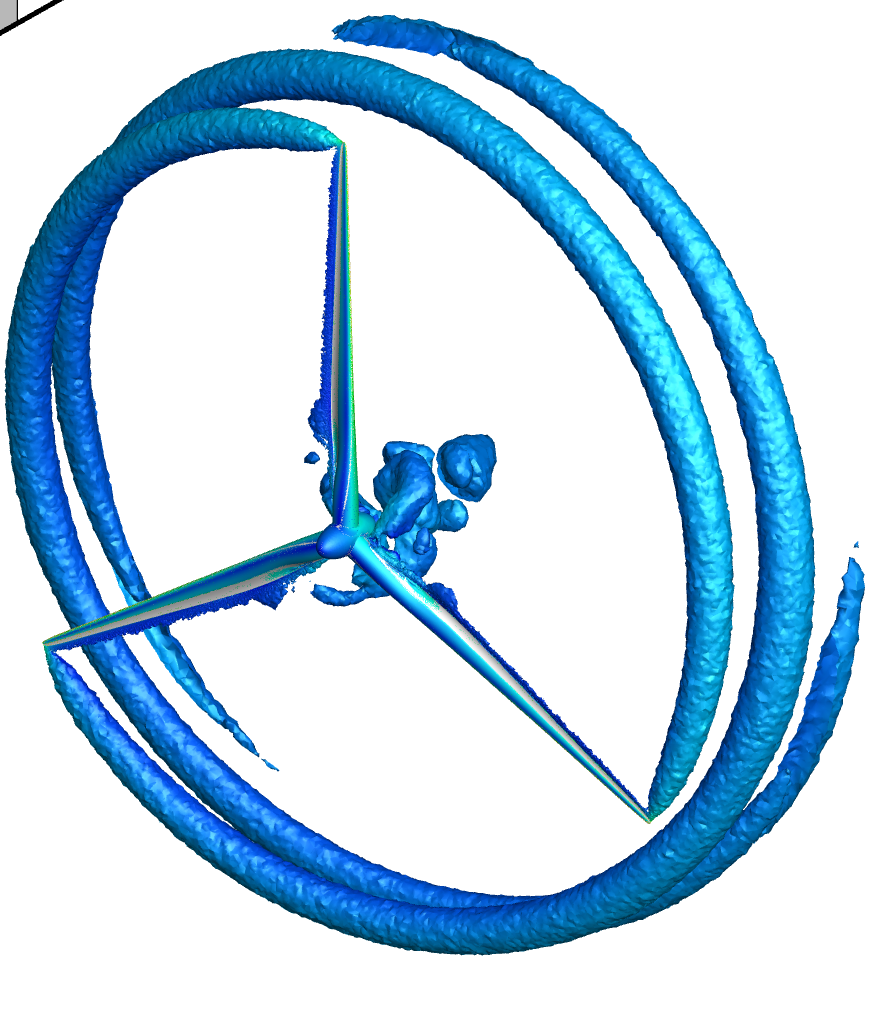
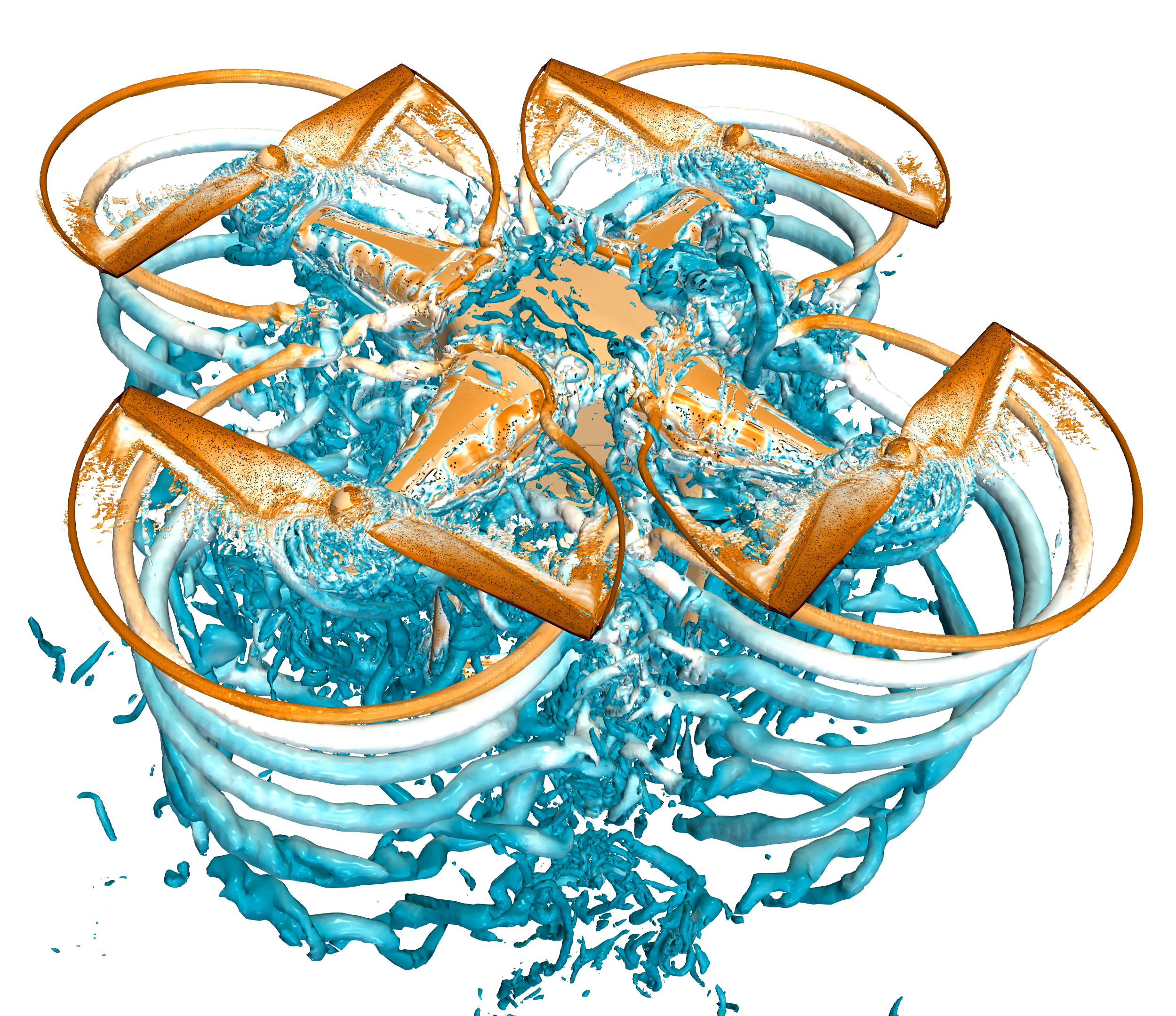
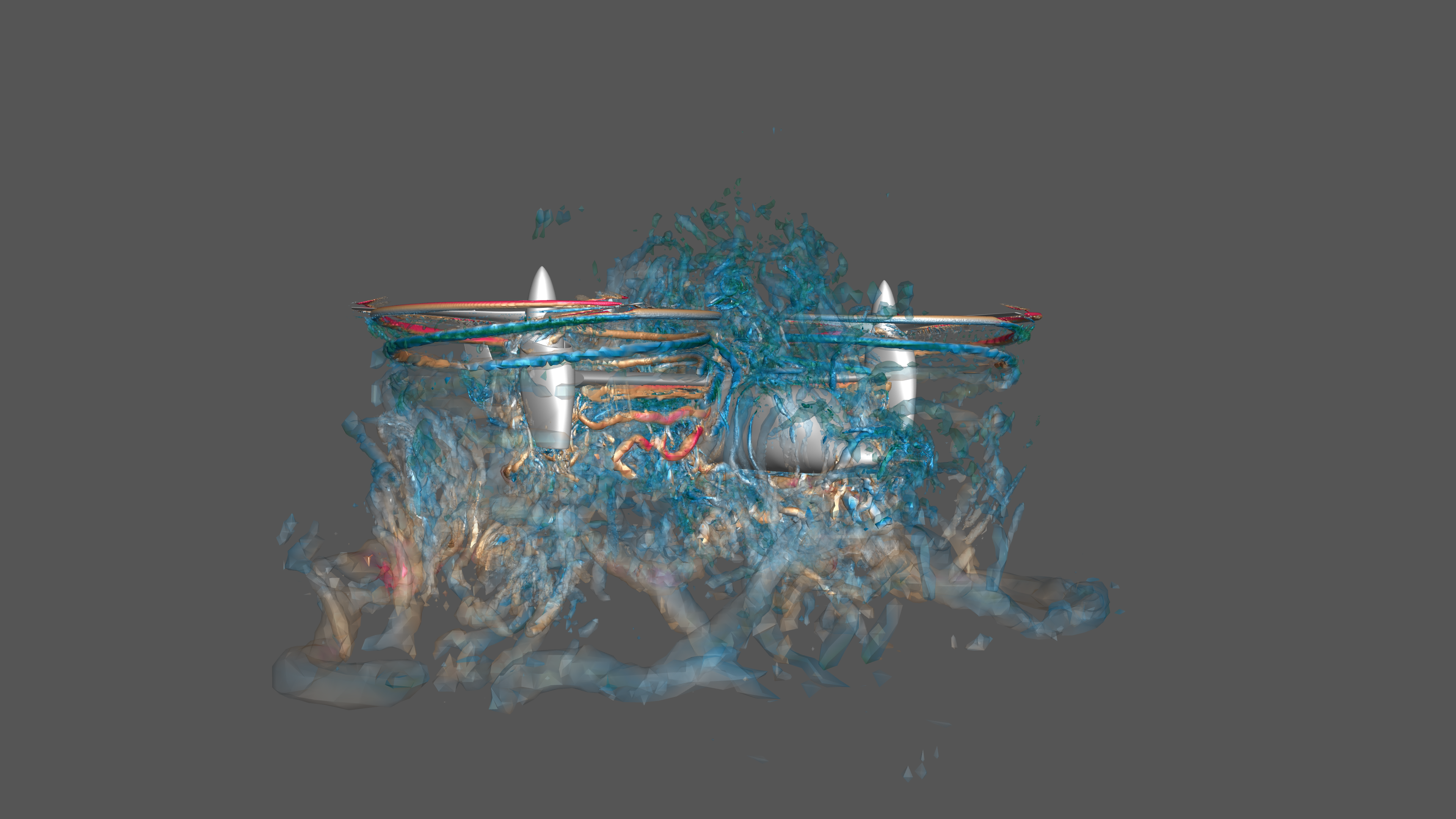
Supports multiple approaches for modeling rotating components, including actuator disk, blade element theory disk and line models, multiple reference frames, and sliding interface support. Enables efficient simulation of propellers, rotors, and rotating components while capturing unsteady interaction effects where required.
Provides aeroacoustic prediction based on permeable and non-permeable Ffowcs Williams–Hawkings formulations, enabling far-field noise analysis from unsteady flow fields and rotating machinery.
Implements low-dissipation spatial discretization schemes designed to achieve lower numerical dissipation in the range of higher resolved wave numbers for scale-resolving simulations.
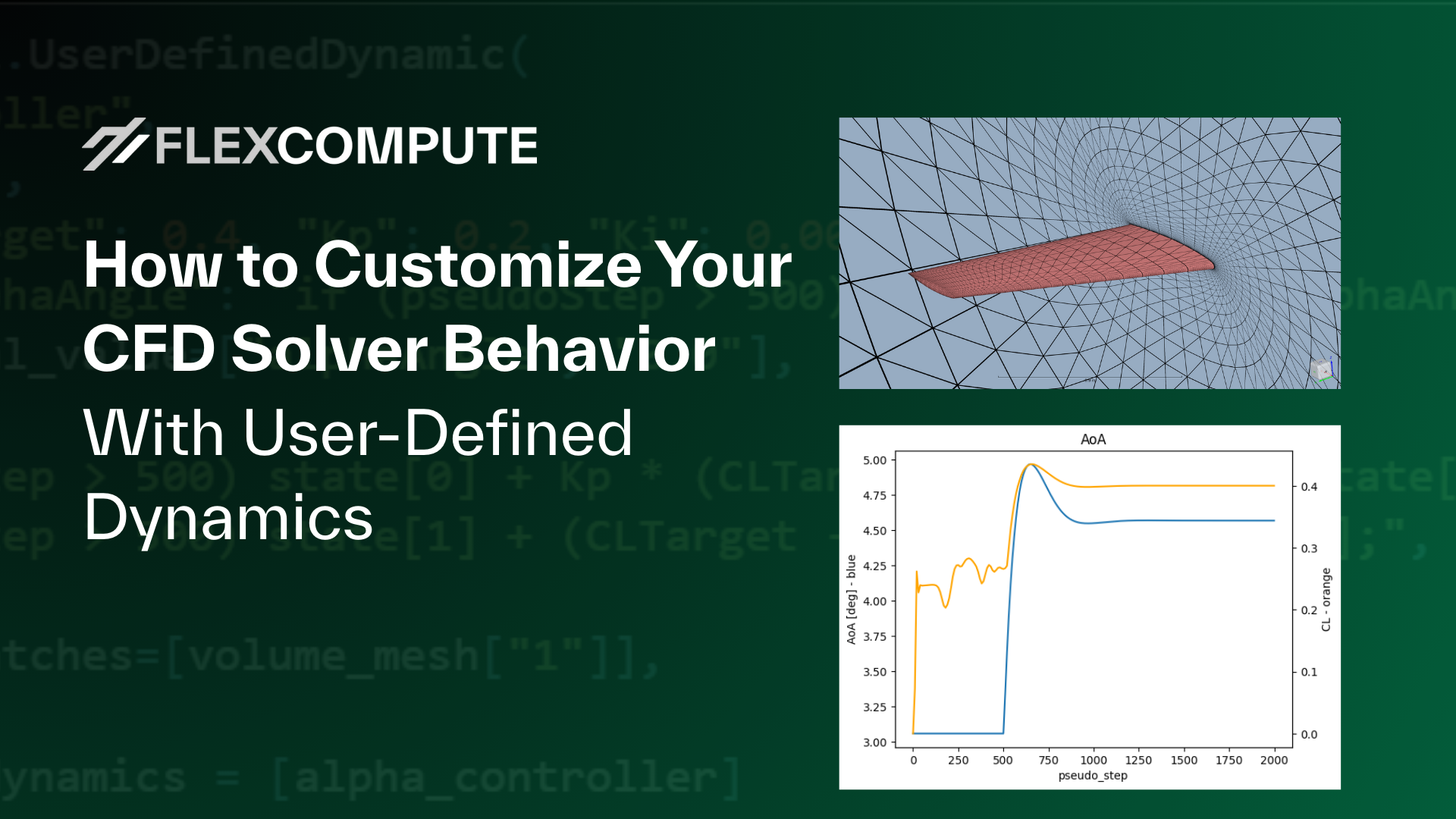
Enables user-defined motion, dynamic boundary conditions, and custom actuation models for simulating moving components and time-dependent flow scenarios within the solver.


Thanks for subscribing

 TERMS & CONDITIONS
EFFECTIVE DATE: January 1, 2025
Terms and Conditions for User-Submitted Content
By submitting content to Flexcompute, you agree to the following terms:
1. Ownership and Copyright
2. Responsibility for Content
3. Modification and Presentation
4. Liability Disclaimer
5. Content Use Rights
6. Privacy and Confidentiality


 How the process works:
 Try this real URL to see an example:
https://www.flexcompute.com/tidy3d/q7ras6JBww
Try this real URL to see an example:
https://www.flexcompute.com/tidy3d/q7ras6JBww