NASA N2A Blended Wing Body. Static Stability Analysis of unconventional aircraft

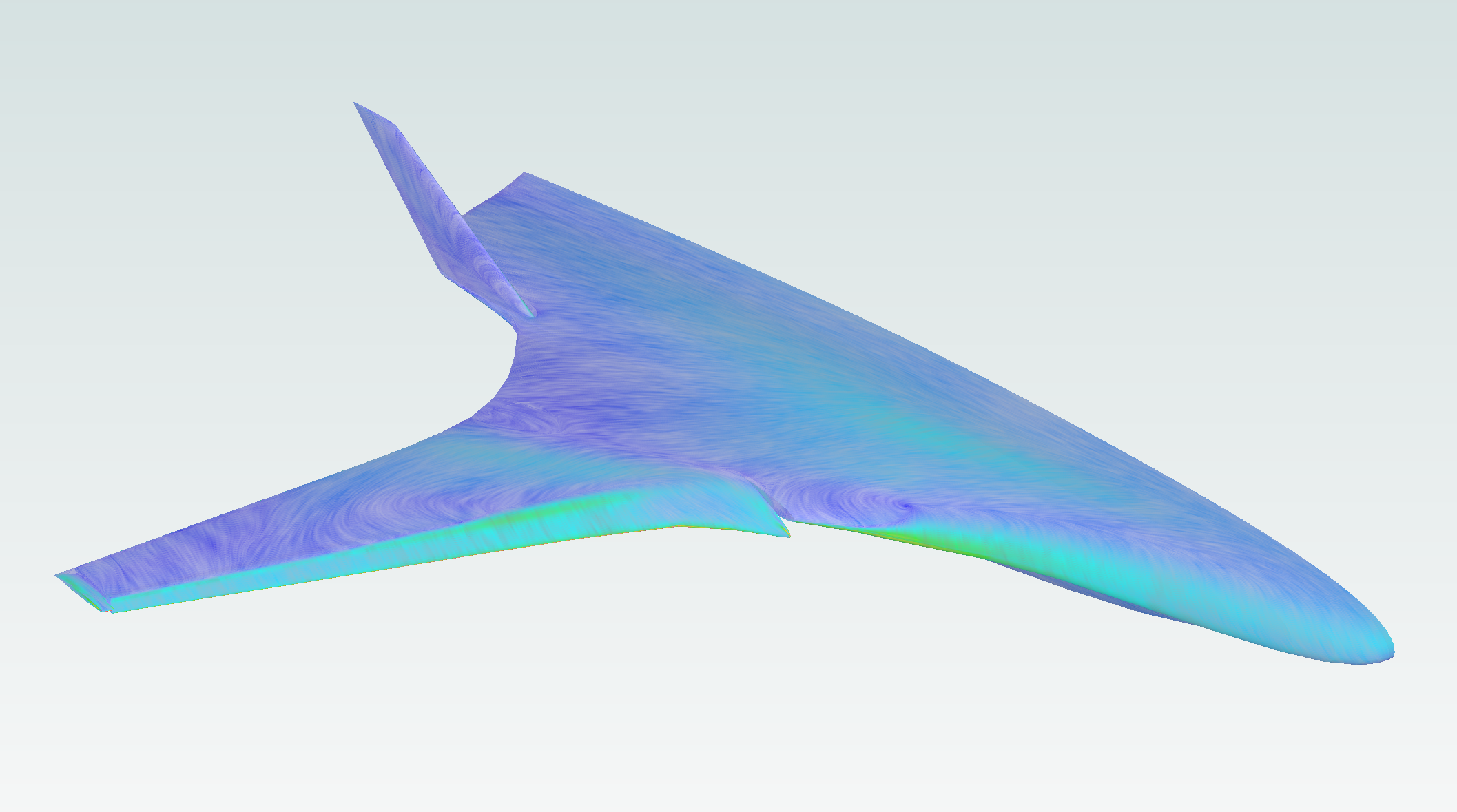
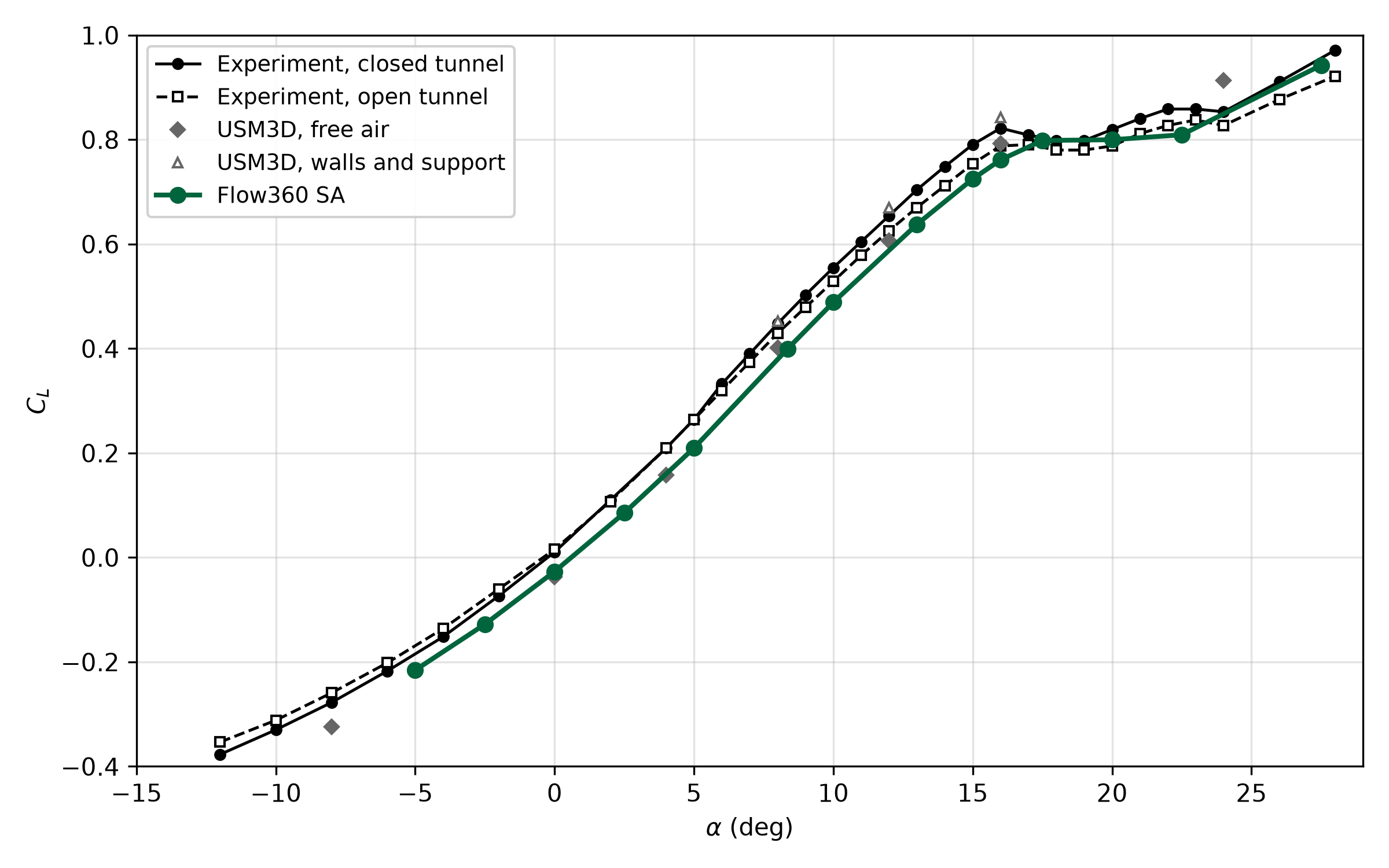
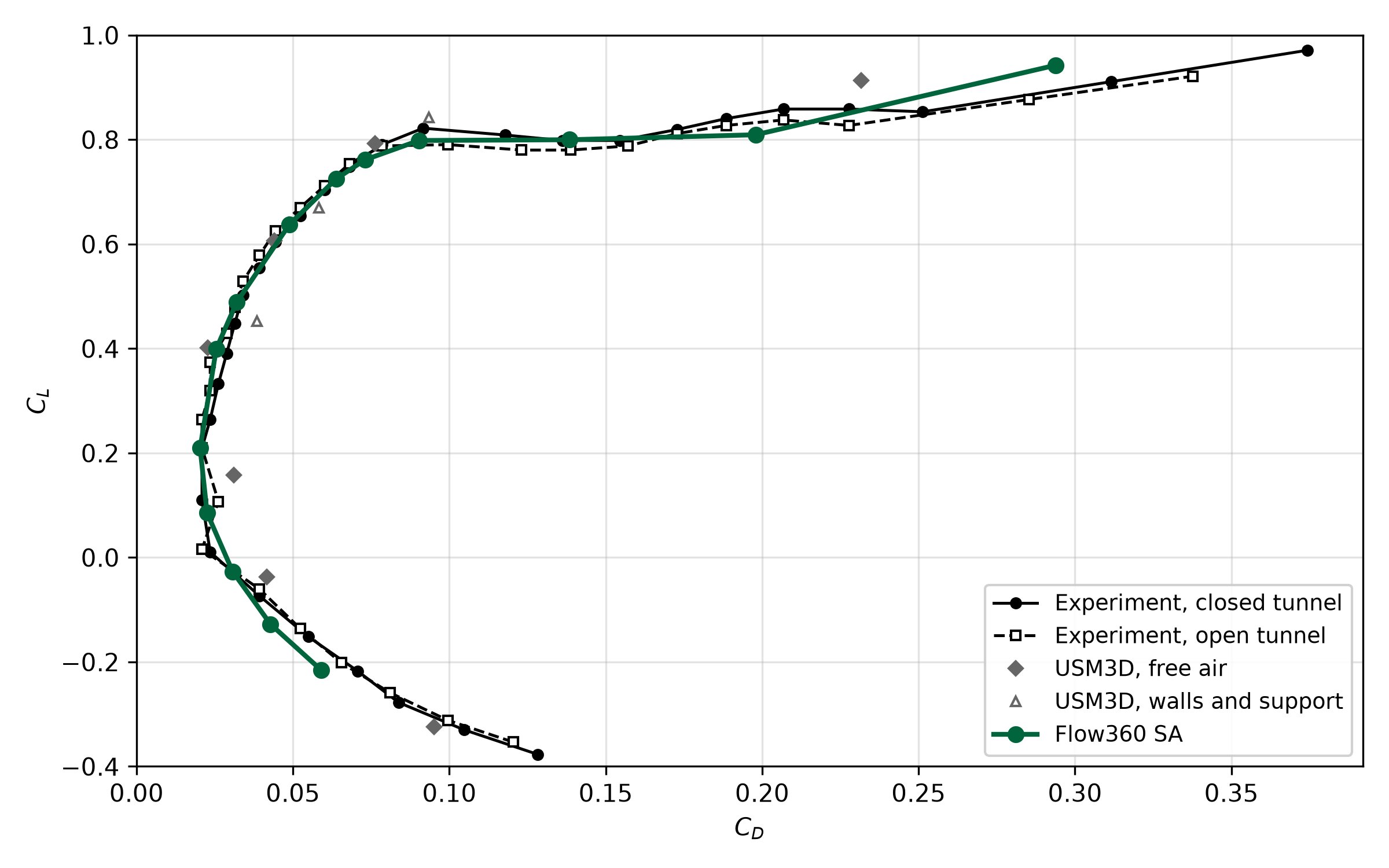
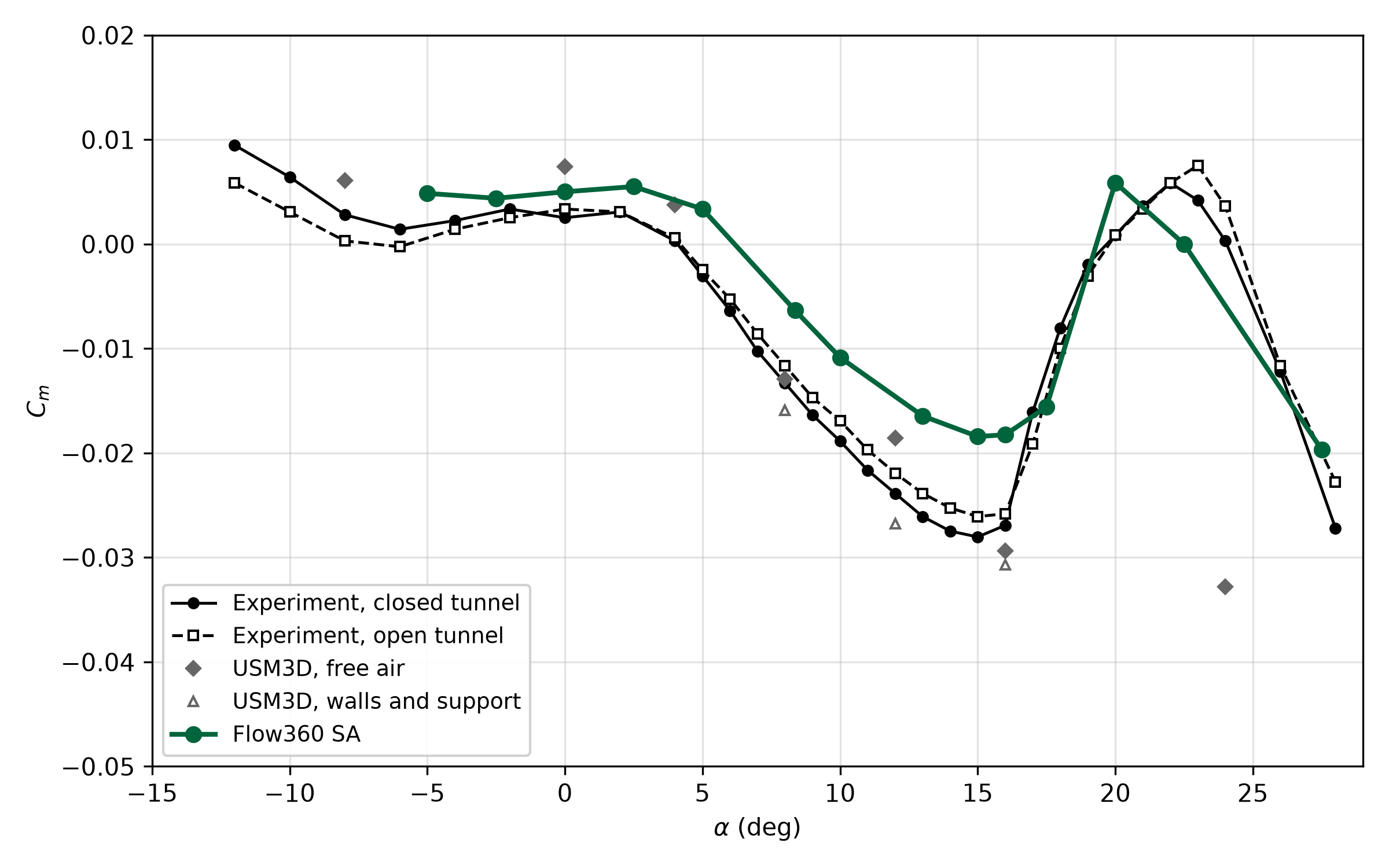
As emissions standards tighten and aircraft efficiency targets become more ambitious, unconventional configurations are emerging as promising paths toward greener aviation. The NASA N2A hybrid wing body is particularly valuable as a low-speed validation case, offering a representative platform for assessing the aerodynamic behavior of blended wing body aircraft. The configuration exercises prediction of nonlinear lift, drag, and pitching moment across a broad incidence range. Simulations were performed using a RANS Spalart-Allmaras sweep from α = -5° to 27.5° at Mach 0.2 and Reynolds number 6.60 million. The resulting force and moment results are compared to NASA 14x22 test data for closed and open tunnel test sections and USM3D predictions. The inclusion of both open and closed-tunnel measurements provides useful context for assessing experimental interference, specifically for tunnel wall interference and wake blockage, which was not modelled in the CFD simulations. The open-tunnel measurements, as expected, show closer agreement with the CFD predictions. In addition, the experimental model included flow-through nacelles and a support mount, both of which may influence the measured pressure distribution. Previous studies have associated such interference with an increasingly nose-down pitching moment at higher angles of attack, consistent with the trend observed in the present experimental data.
ntrs.nasa.gov/citations/20120011838
Comparison of Flow360 predictions against reference data. Click an image to expand.