Fifth-Generation High-Performance Aircraft Characterization. Static Derivatives and Analysis

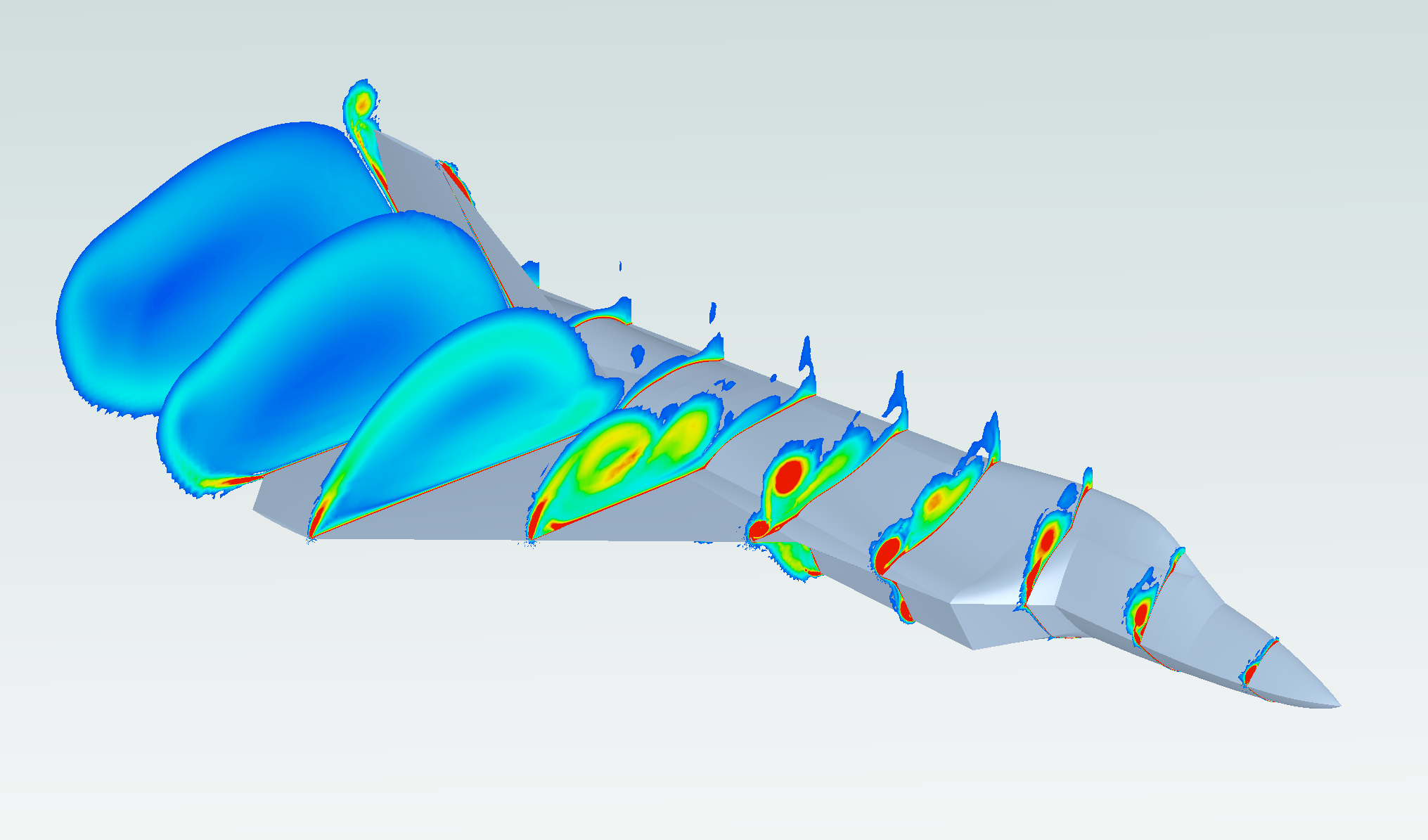
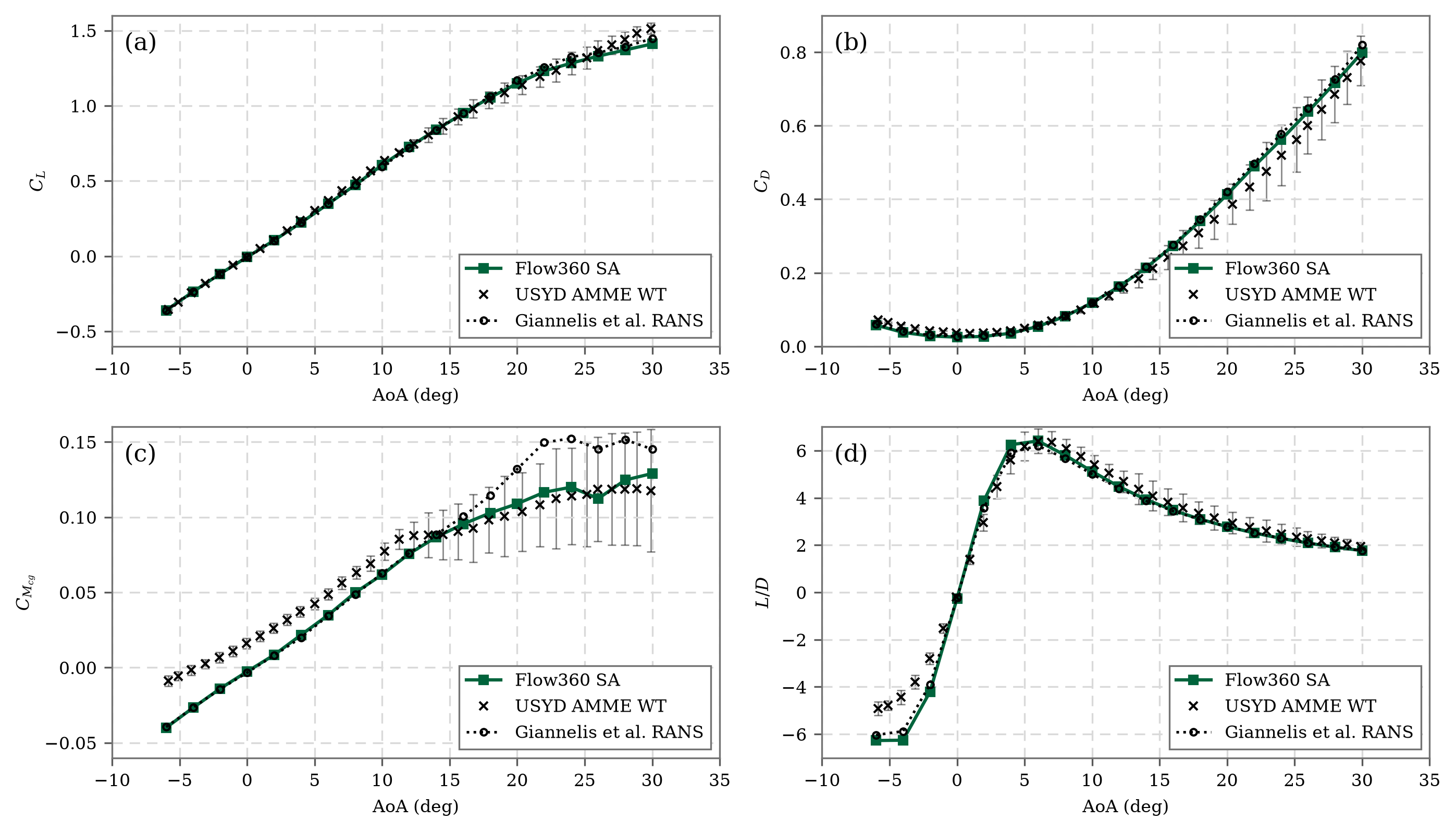
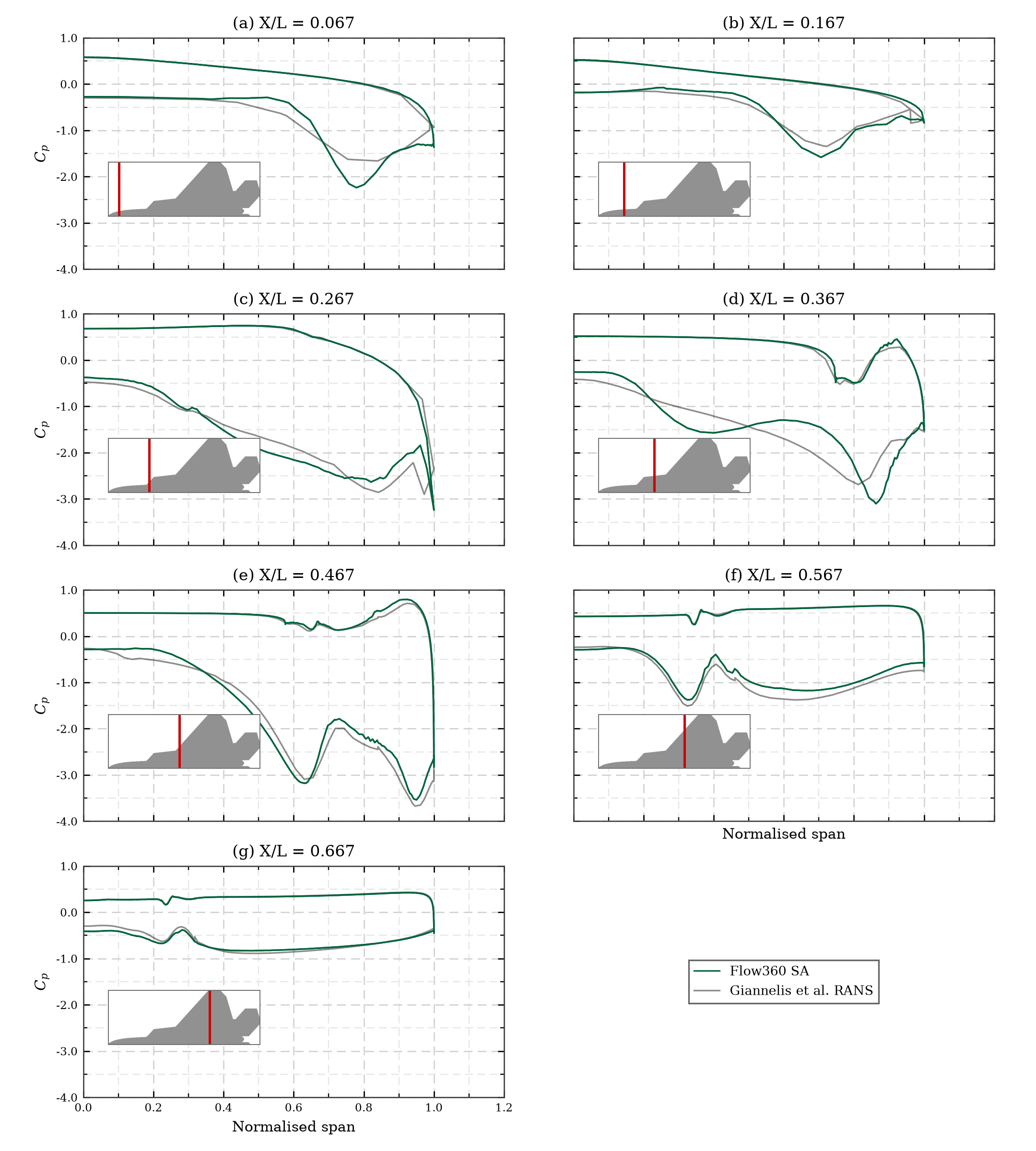
As high-performance aircraft design continues to evolve under strict stealth constraints, new aerodynamic modeling standards are vital for capturing complex, non-linear flow behaviors. The Sydney Standard Aerodynamic Model (SSAM-Gen5) provides an open, representative benchmark for studying these modern configurations. Characterizing this behavior through static derivatives is critical for 5th-generation fighters, as their stability and handling qualities are heavily dictated by intense strake-vortex interactions and vortex breakdown at high angles of attack. In this study, Flow360 is used to map these essential static derivatives using a half-body model, a 20 m/s freestream, and a steady angle-of-attack sweep from -6 to 30 degrees in 2-degree increments. To validate the high-fidelity simulation, the results are compared against experimental and numerical data in terms of overall aerodynamic coefficients alongside Cp distributions extracted at selected spanwise slices.
doi.org/10.3390/aerospace10090746;
Comparison of Flow360 predictions against reference data. Click an image to expand.