X-57 Blown-Wing Validation. Wing–rotor interaction analysis using AFT

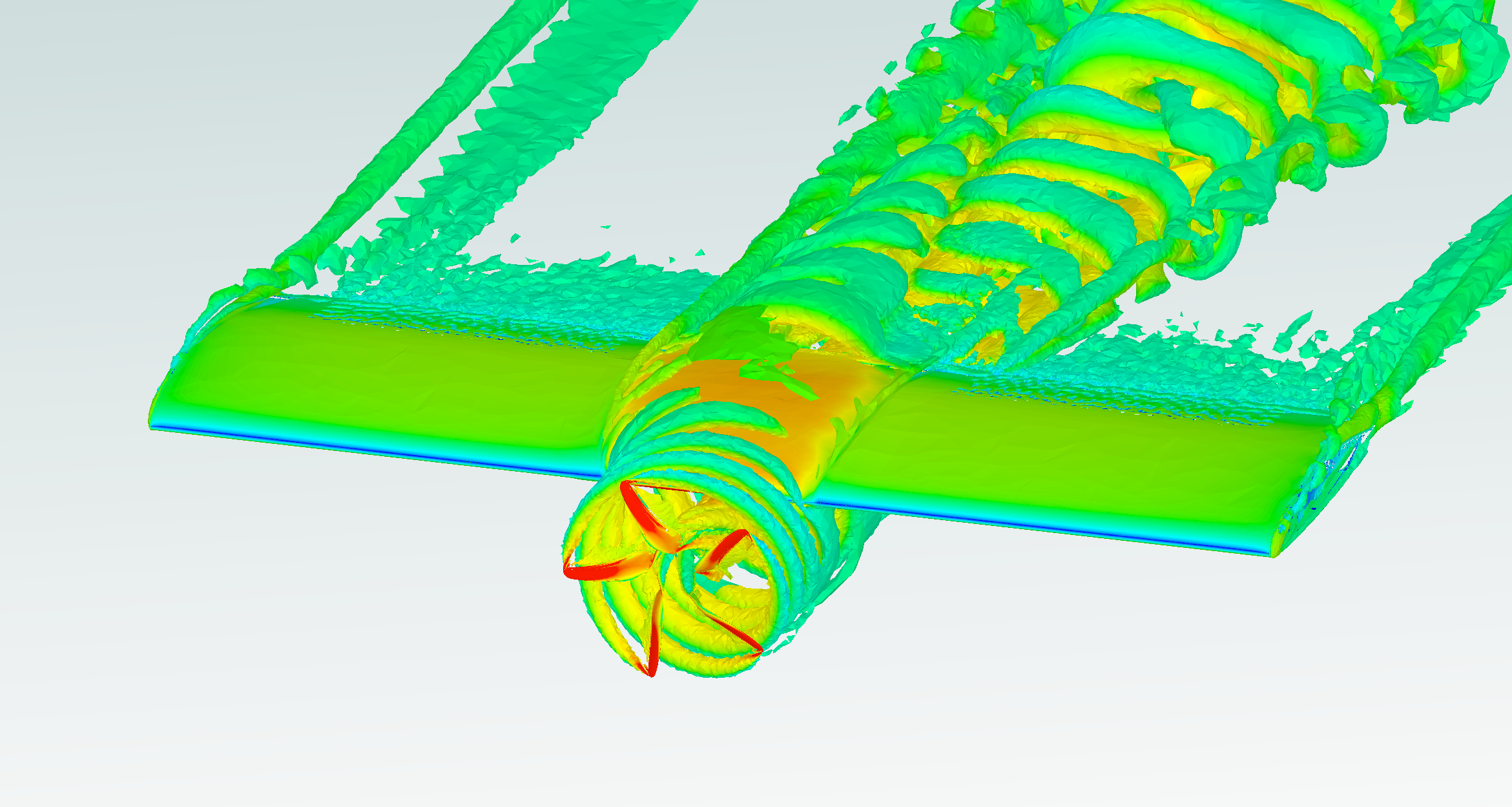
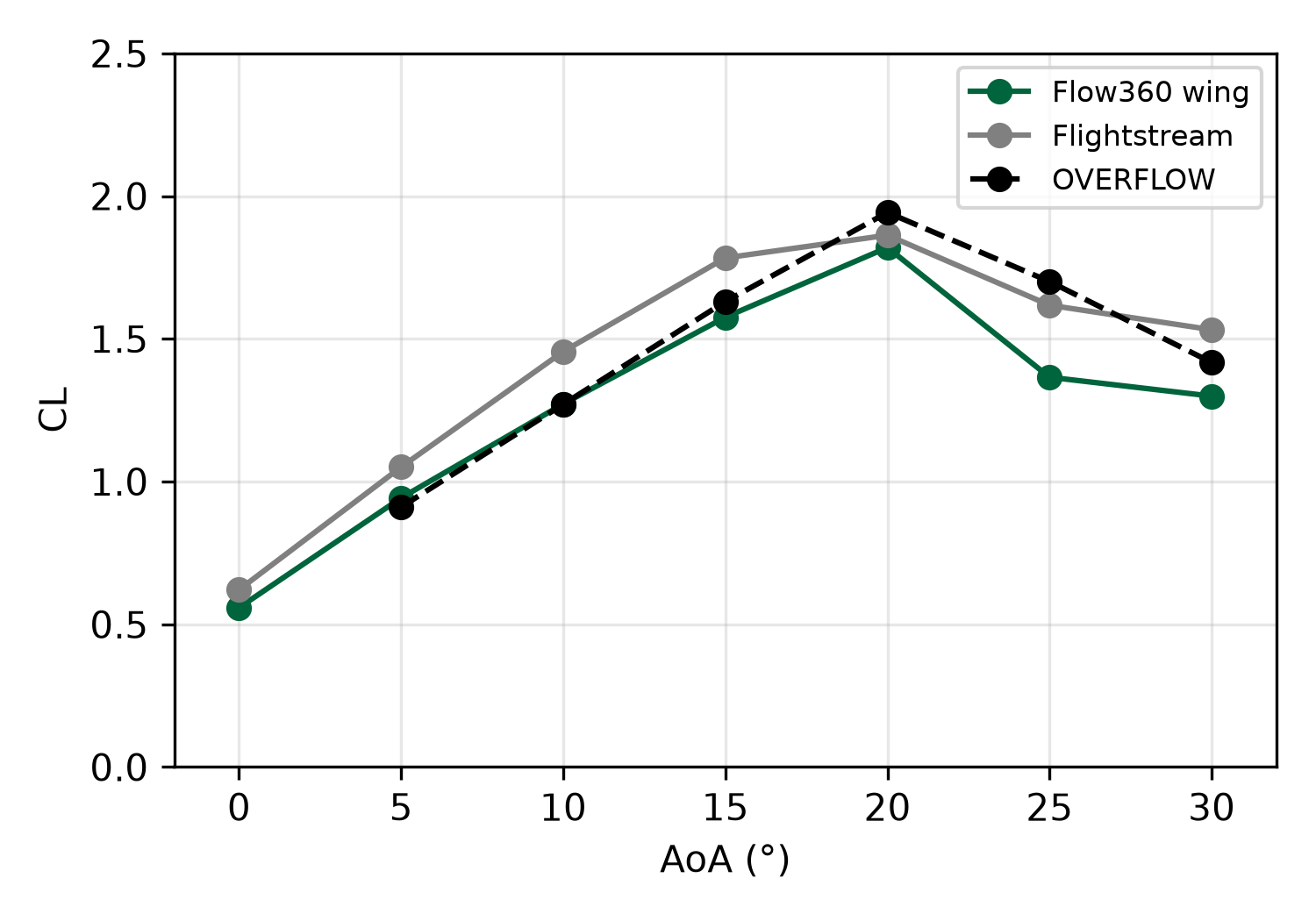
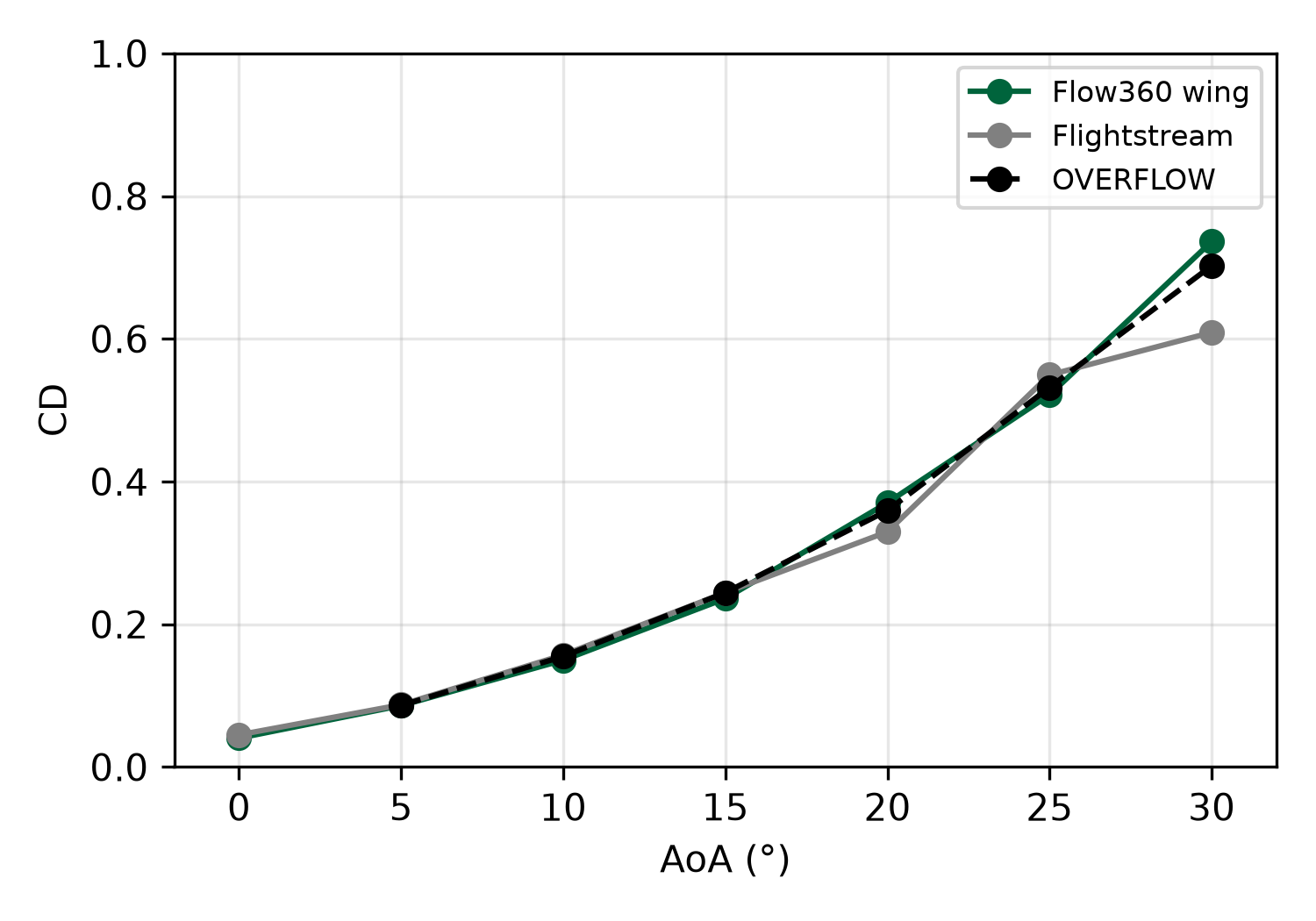
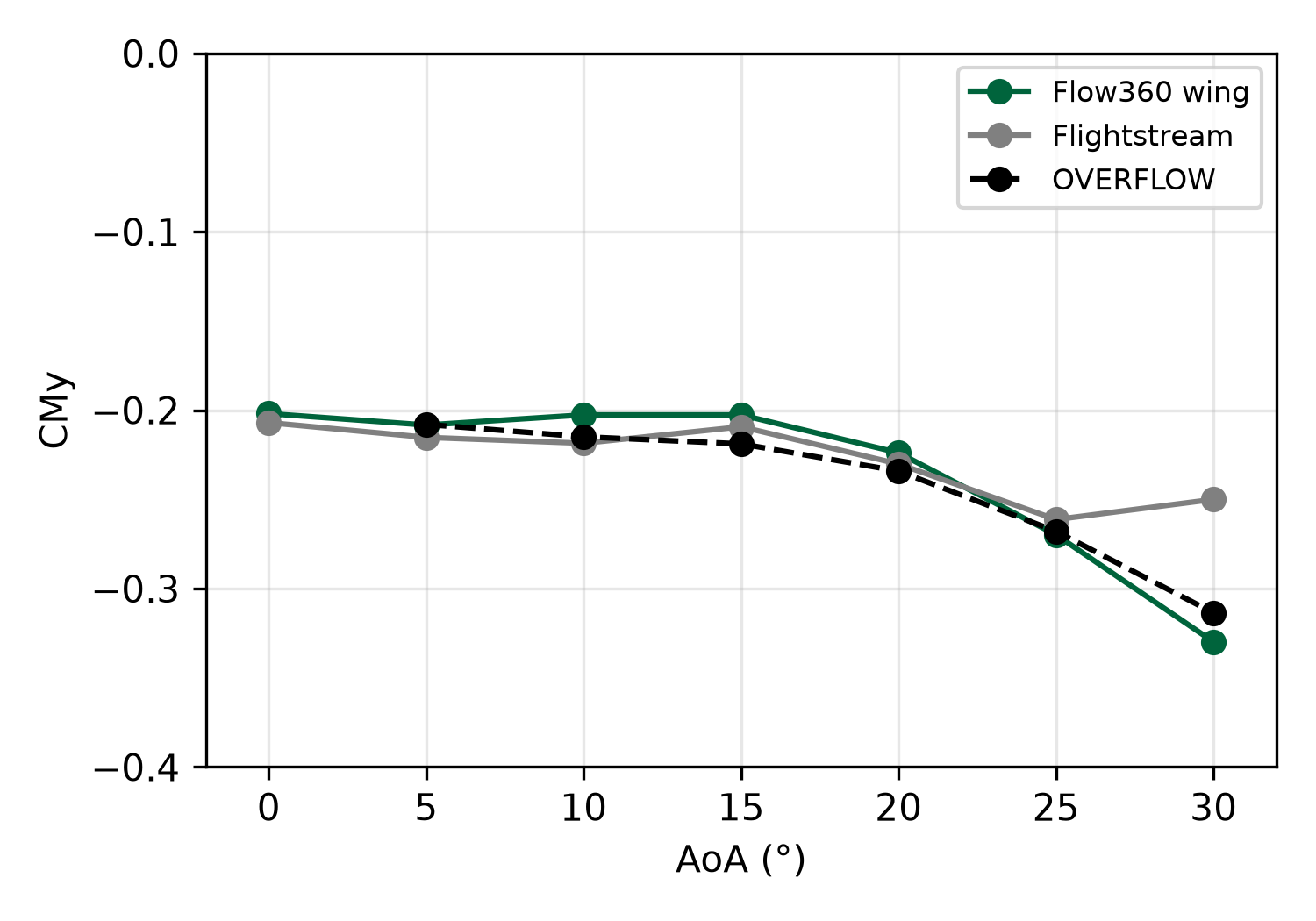
Distributed propulsion has emerged as one of the leading solutions for implementing electric propulsion in innovative aircraft. The X-57 represents a comprehensive effort to benchmark the potential benefits and limitations of this approach. This reduced model seeks to showcase Flow360's applicability at modelling complex blown lift and the impact of laminar flow in such scenarios. This case tackles aerodynamic-load trend prediction across a wide angle-of-attack range, comparing these wing–rotor interaction results with predictions from FlightStream and OVERFLOW. Seven unsteady Flow360 runs span angles of attack from 0° to 30° at approximately 29 m/s and 4549 RPM, using k-ω SST DDES with the Amplification Factor Transport (AFT) laminar-turbulent transition model. Each sequence begins with five revolutions and is extended in five-revolution increments to between 15 and 40 revolutions, depending on the angle of attack; wing coefficients are averaged over the final revolution. The resulting wing CL, CD, and CM curves provide a consistent basis for numerical comparison across the angle-of-attack sweep.
ntrs.nasa.gov/api/citations/20220018375/downloads/FS_v_OVF_presentation_final.pdf
Comparison of Flow360 predictions against reference data. Click an image to expand.