Finner Missile Pitch Damping Derivative. Transient Supersonic Analysis

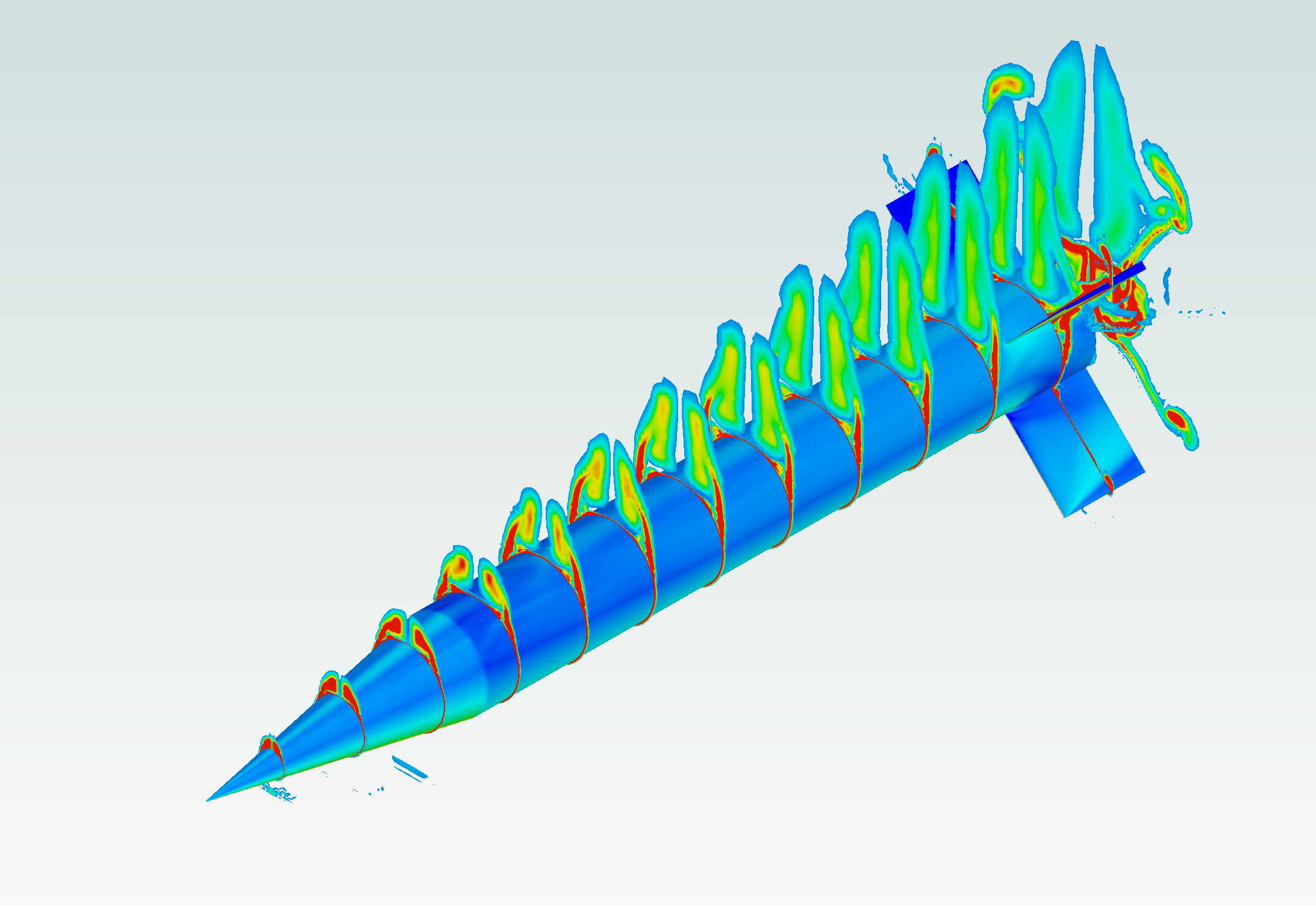
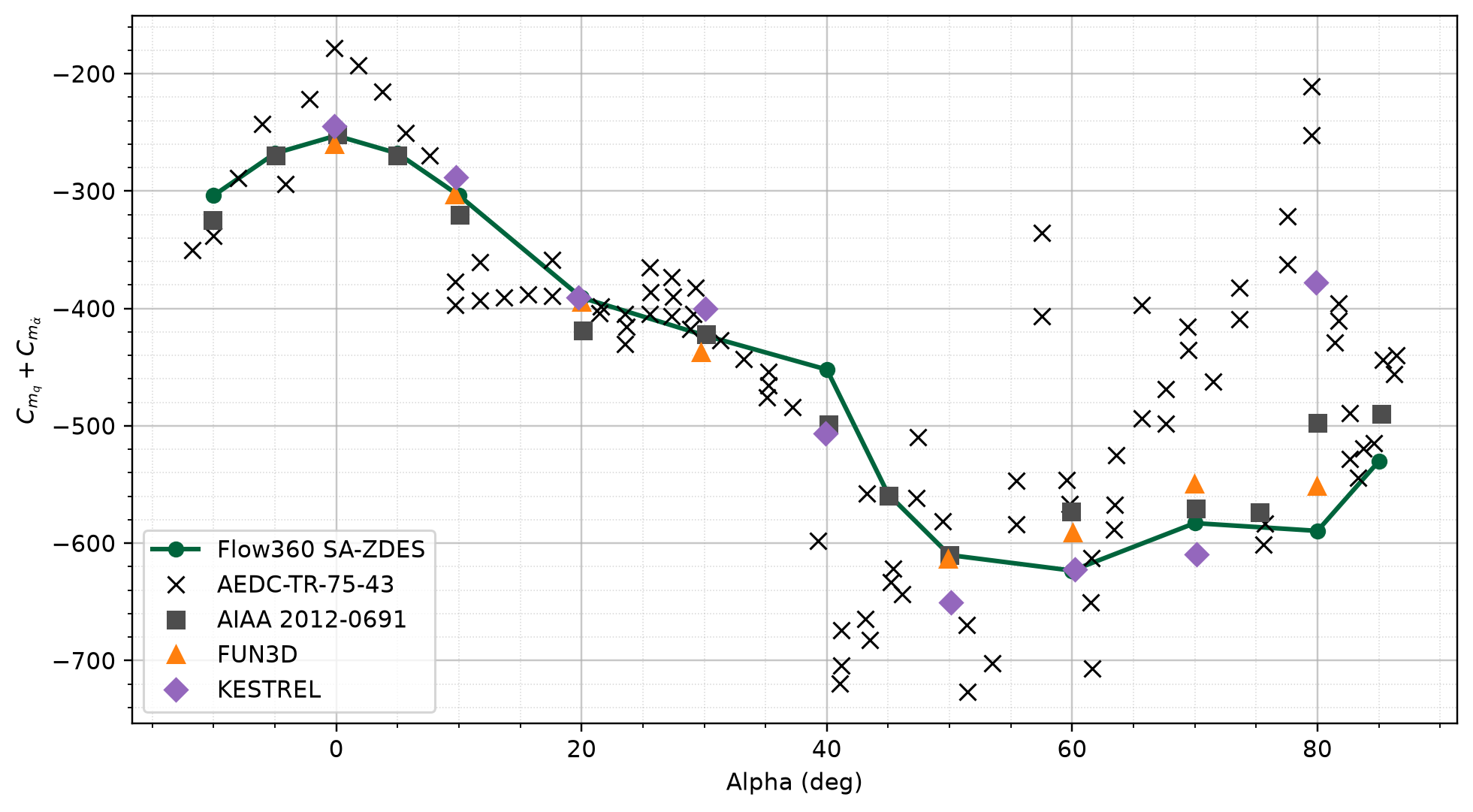
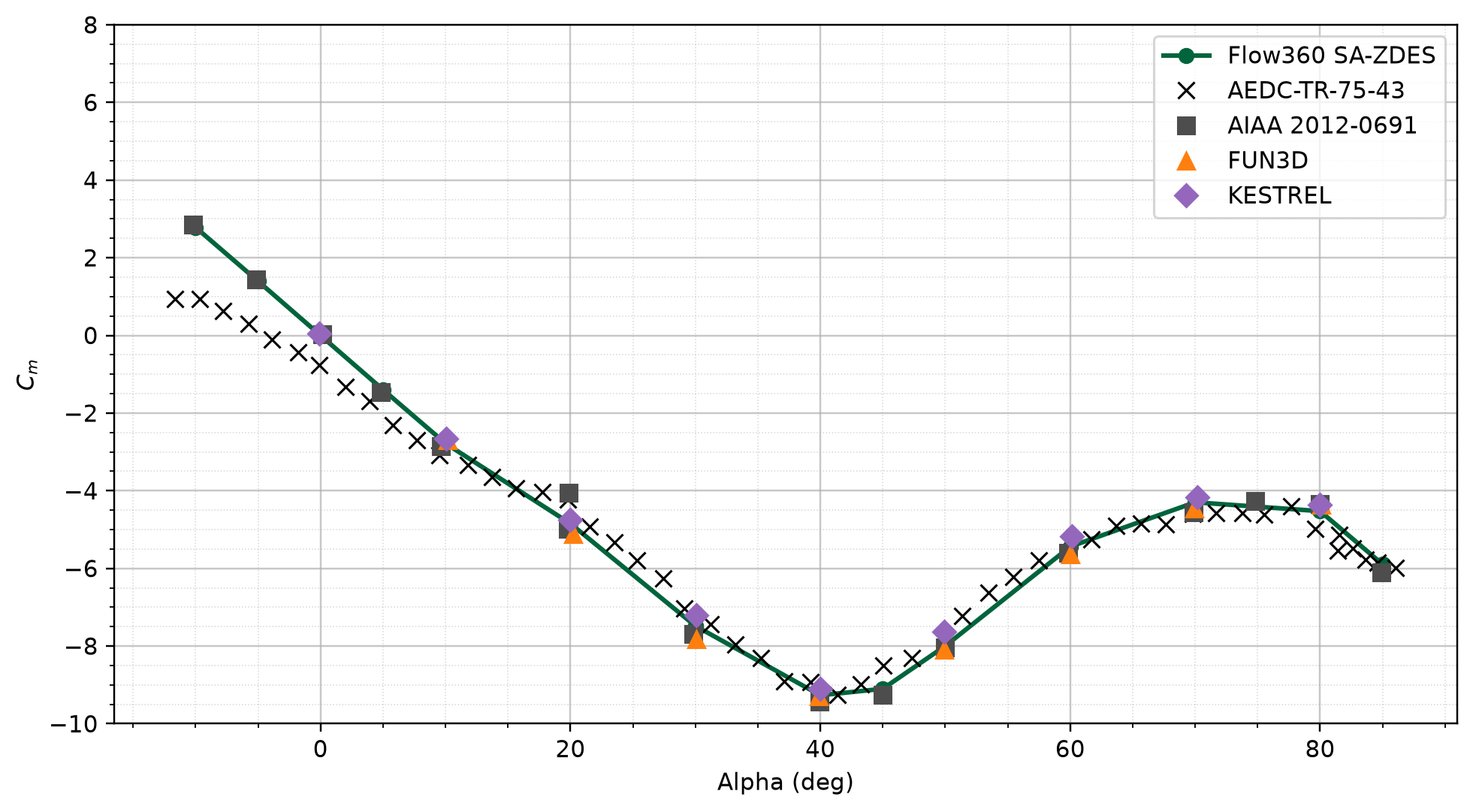
Accurate prediction of dynamic derivatives is essential for assessing missile stability and control in supersonic flight, where unsteady aerodynamic loads can strongly influence flight behavior. The Army-Navy Finner Missile has long been the key benchmark for dynamic derivative benchmark for supersonic applications, thanks to its simple geometry and wealth of available experimental data. As the mean angle of attack increases, the flow regime shifts from mostly aligned supersonic flow to separated, shock-dominated blunt-body behavior. This broad range of flow physics makes the case a stringent test of Flow360’s accuracy, stability, and robustness. This benchmark compares Flow360 forced-pitch predictions against AEDC high-angle pitch-damping data and published CFD reference results. The operating conditions are Mach 1.96 and Reynolds number 187,000 based on diameter, with a reduced frequency of 0.16 and a 0.32° pitching amplitude. All cases were run using SA-ZDES.
www.scribd.com/document/740623880/Ada-009865
Comparison of Flow360 predictions against reference data. Click an image to expand.