SCWS Common Research Model. Static and dynamic rolling aerodynamics benchmark

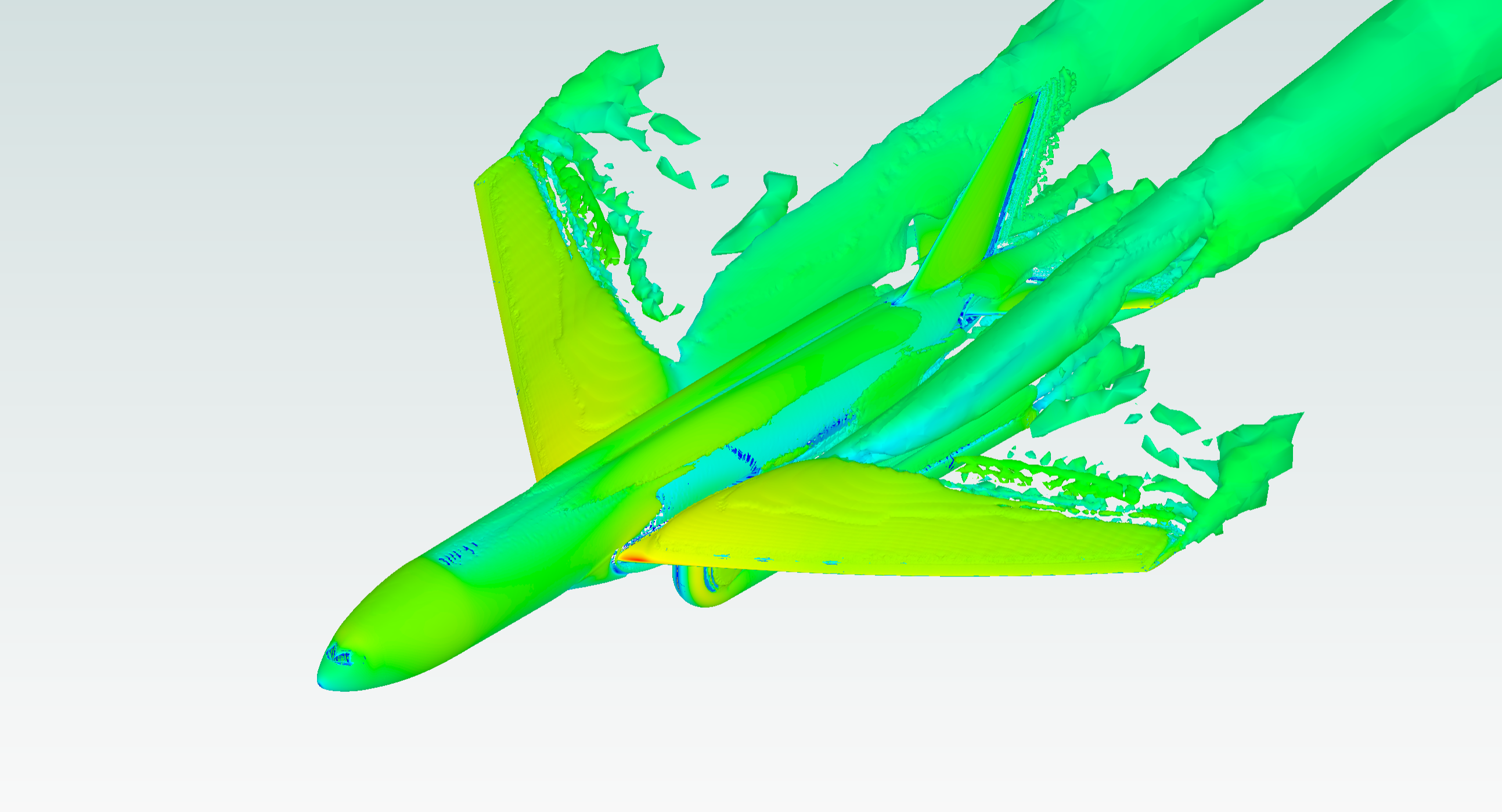
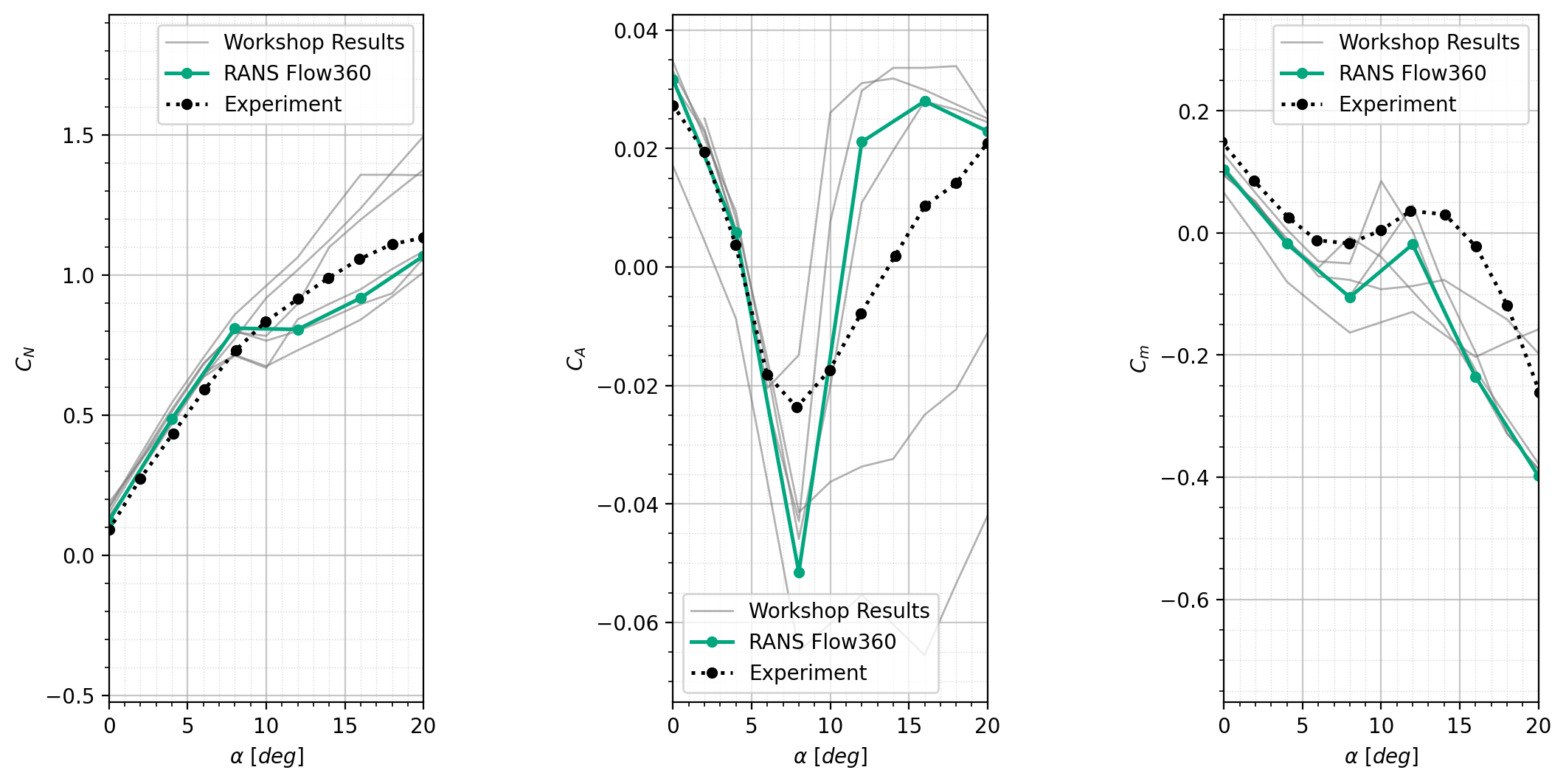
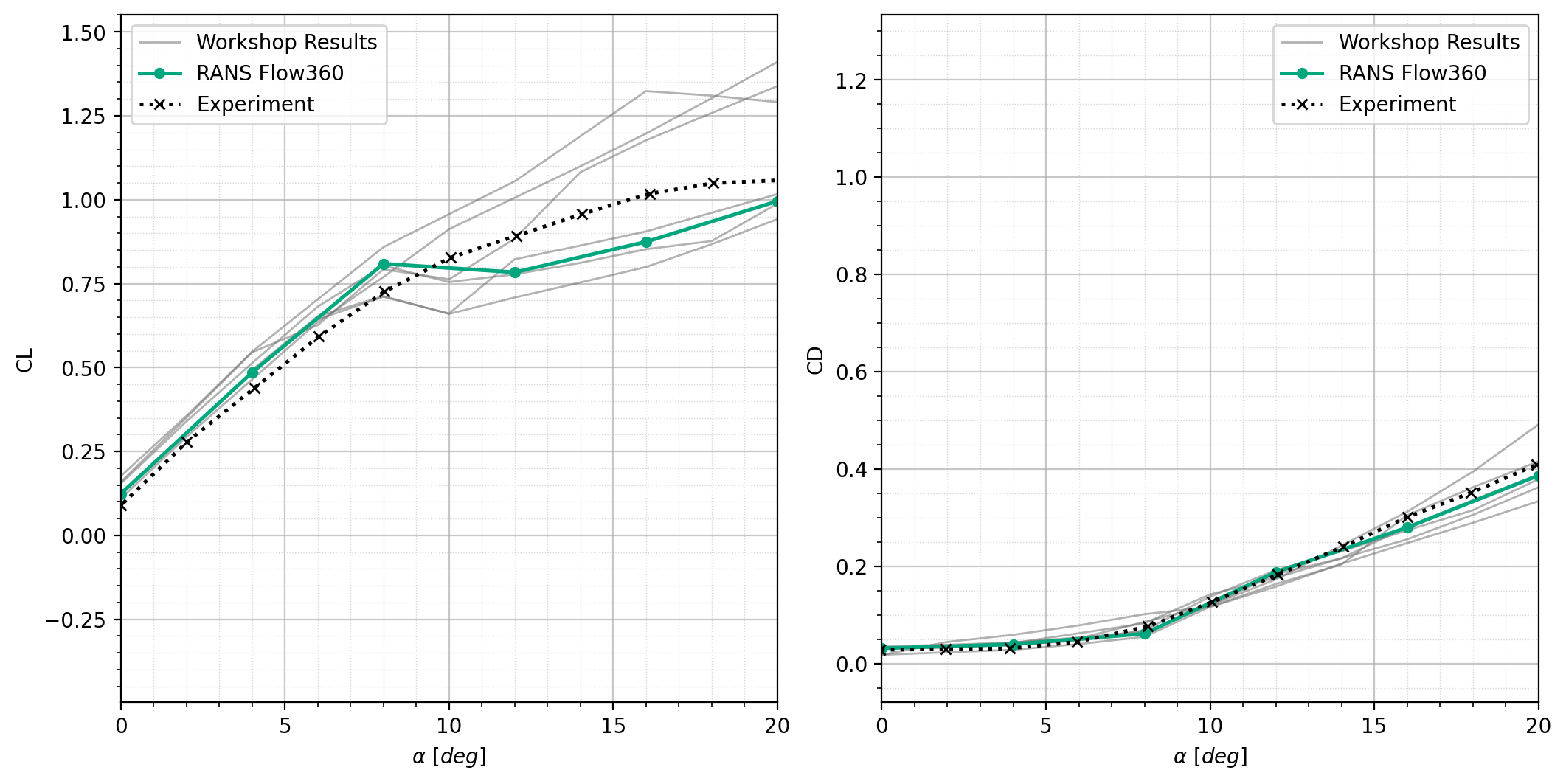
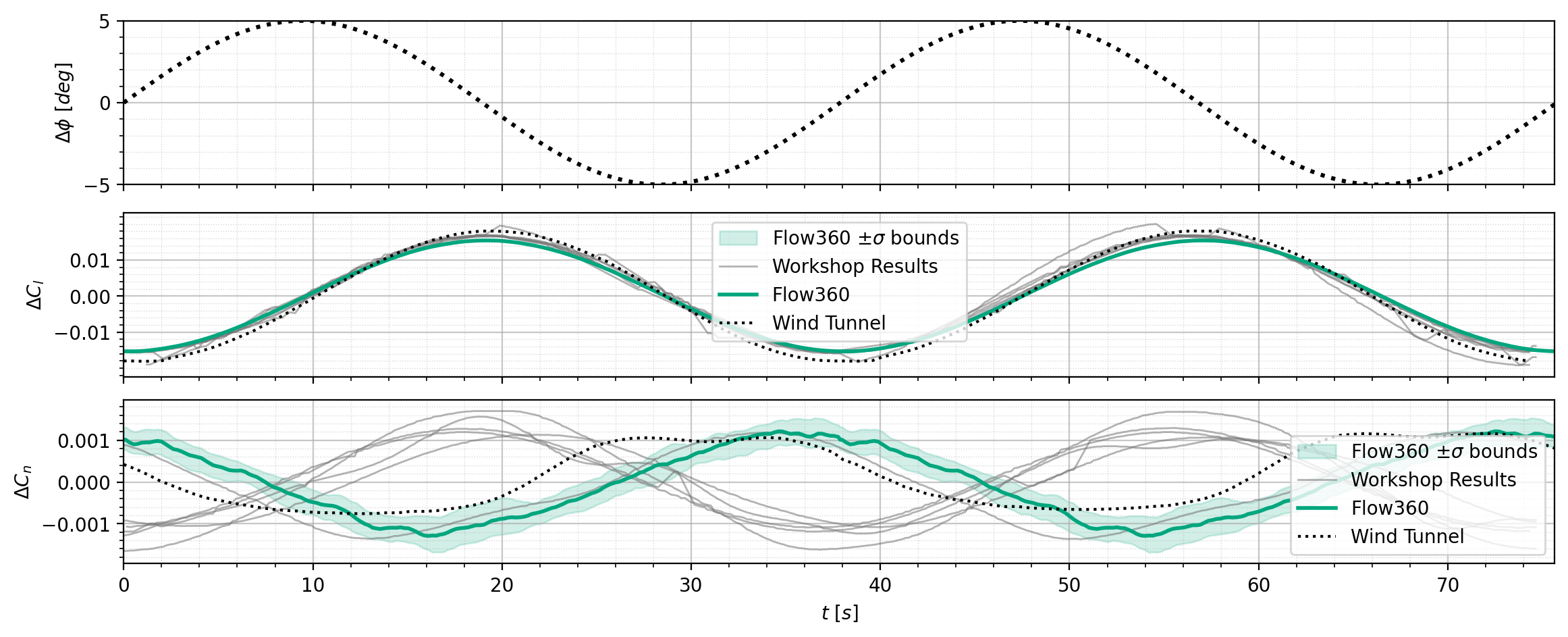
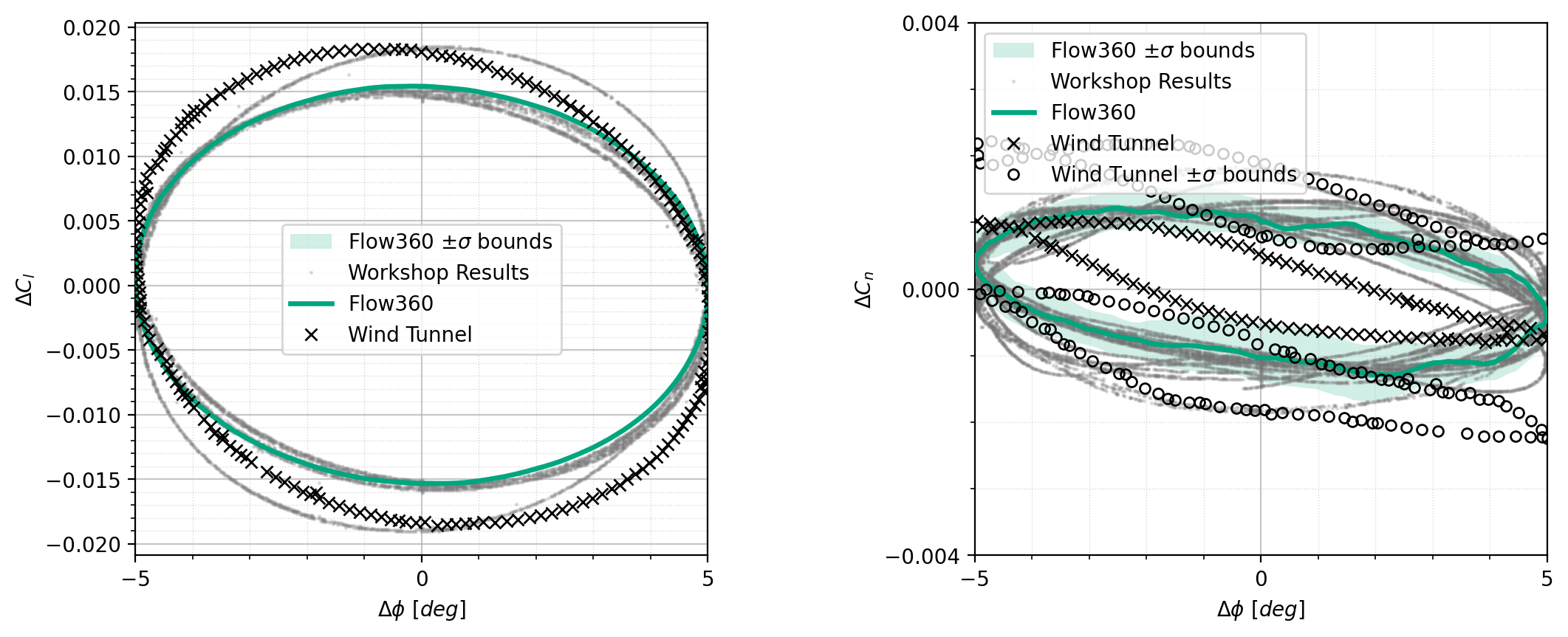
The Second AIAA Stability and Control Prediction Workshop (S&CPW2) represents the industry gold standard for validating how CFD solvers predict aircraft stability-and-control behavior at low mach conditions. Built around the NASA/Boeing Common Research Model (CRM), this workshop provides a rigorous framework with both computational predictions and experimental data from NASA Langley's 12-Foot Low-Speed Tunnel. S&CPW2 is the critical proving ground for establishing best practices in predicting dynamic derivatives and forced-motion aerodynamics. This validation demonstrates the capacity of Flow360 to bridge the gap between high-fidelity physics and industrial design cycles. The benchmark targets both static and dynamic rolling aerodynamics. The static analysis covers RANS cases from 0 to 20 degrees angle of attack at Mach 0.052 and Reynolds number based on mean aerodynamic chord of 200,000. The dynamic branch runs an unsteady SA-DDES rolling case at alpha 3 degrees, Mach 0.0358, and Reynolds number 140,000 with a 5 degree sinusoidal roll amplitude. The benchamrk compares reference aerodynamic coefficients versus alpha and compares changes in Cl and Cn against time-history and roll-phase reference data.
Comparison of Flow360 predictions against reference data. Click an image to expand.