SIAM IMR26: Meshing Contest. Brandenburg Gate

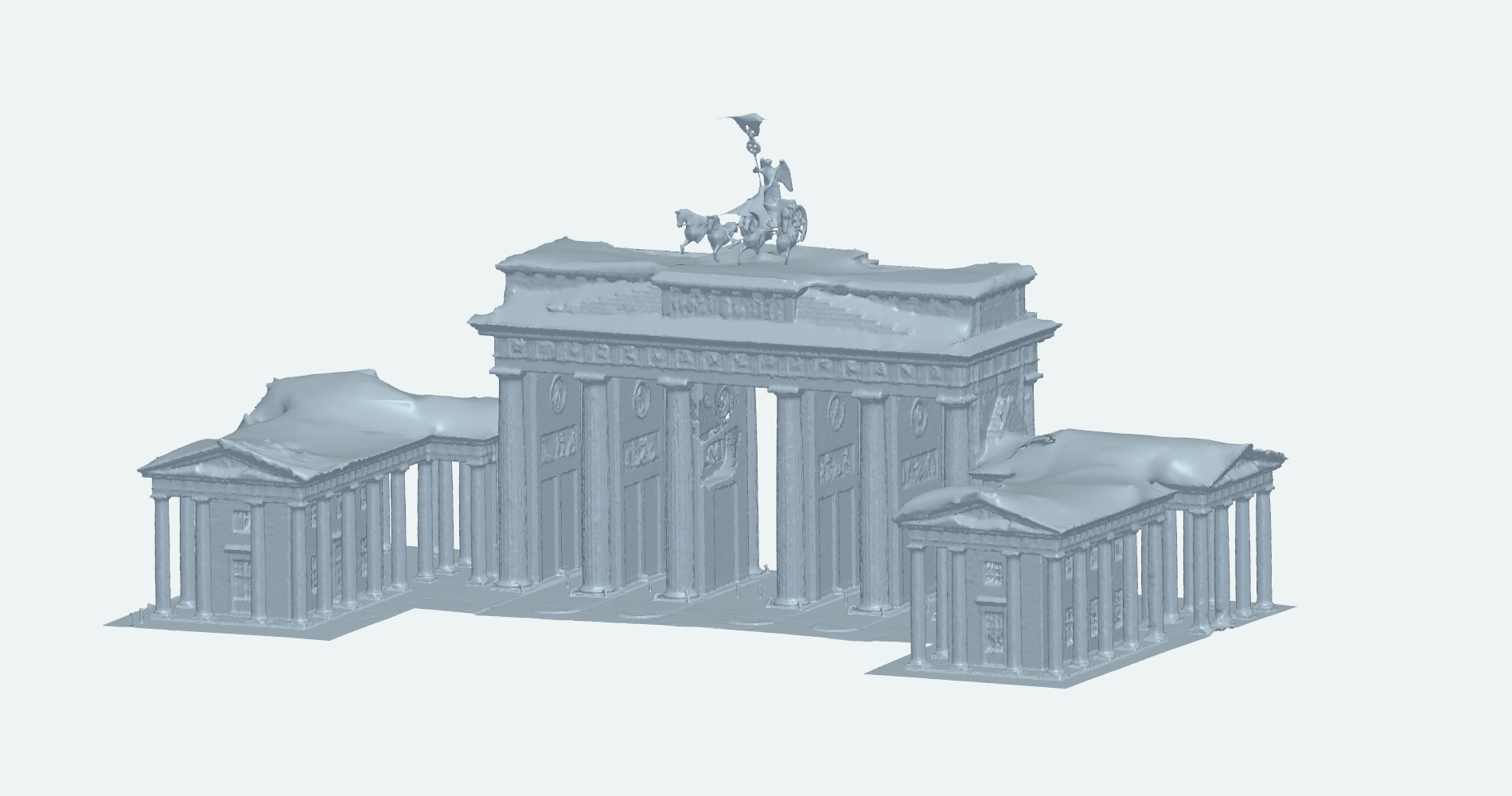
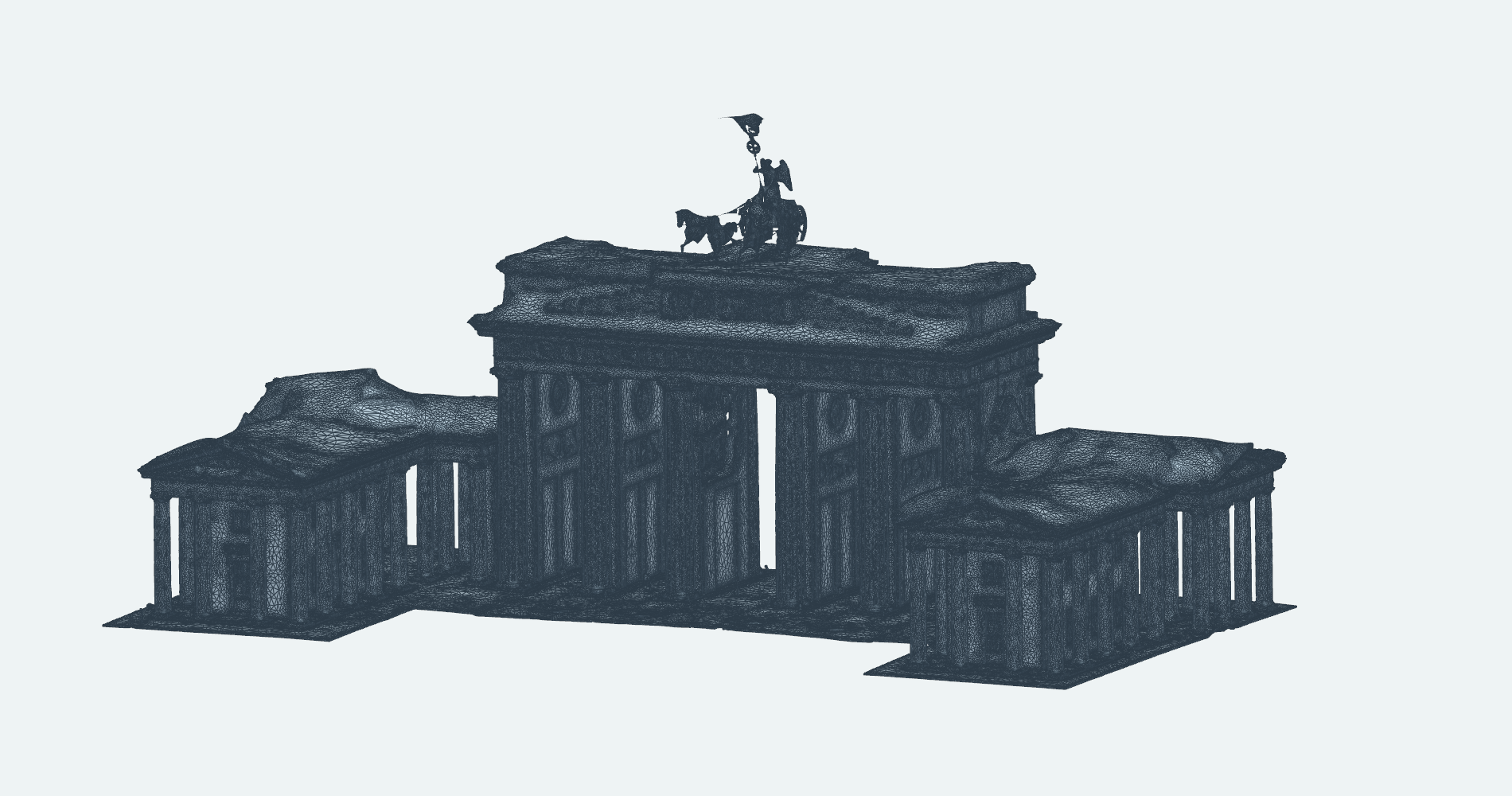
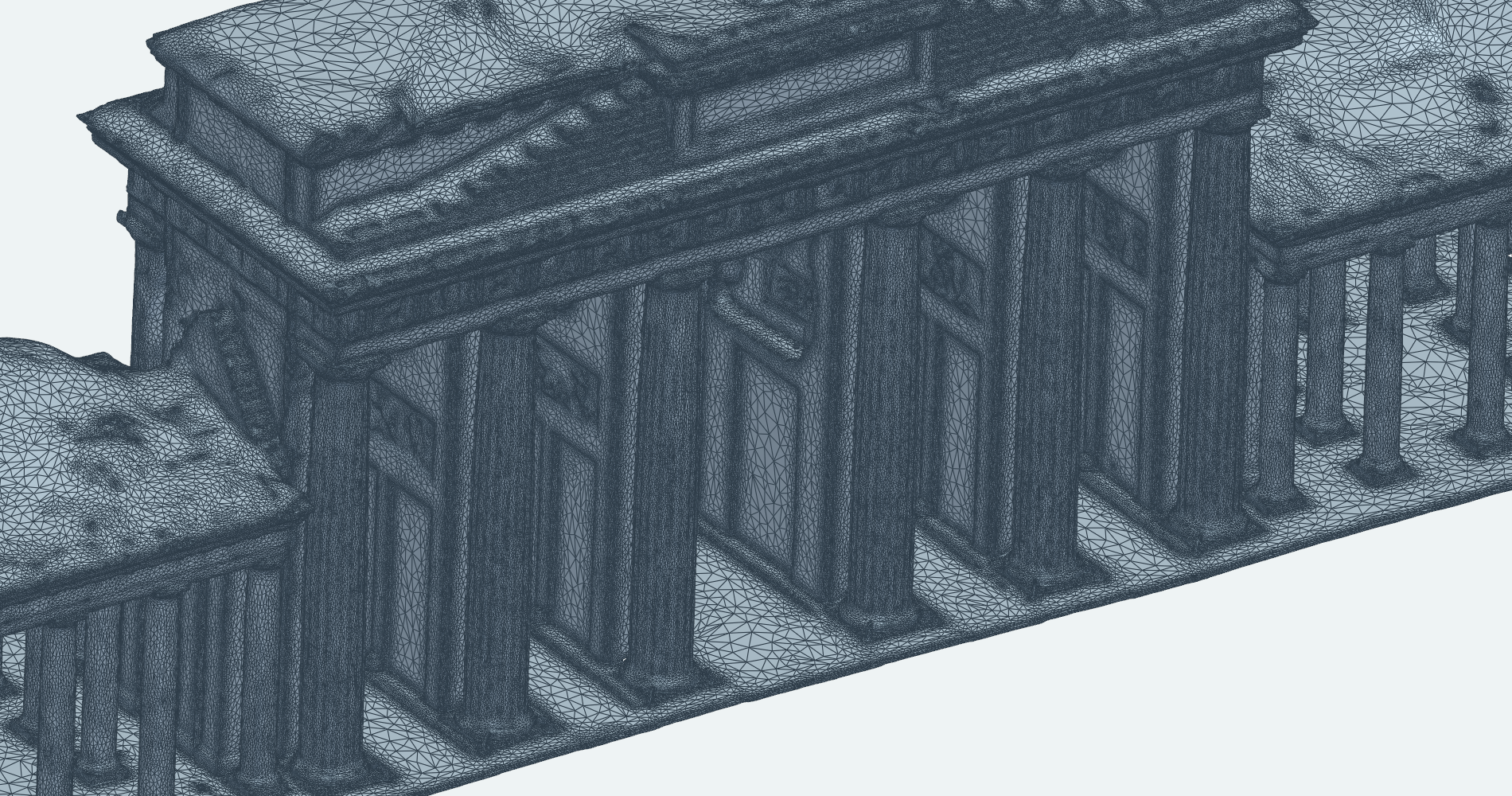
For the 2026 International Meshing Roundtable (IMR), the Society for Industrial and Applied Mathematics (SIAM) challenged participants to generate a watertight model of the Brandenburg Gate from a single STL reconstructed from a 3D scan. The input consists entirely of zero-thickness geometry, poorly captured as a continuous baffle with abrupt curvature changes and overlapping features, placing it beyond the capabilities of traditional tools. This case presents Flow360's submission and demonstrates how GeometryAI transforms the problematic scan into a clean, fully watertight mesh with minimal user input.
At a glance
A snapshot of the input geometry, what GeometryAI cleaned up, and the final surface mesh.
| Bodies | 1 |
|---|---|
| Faces | 1 |
| Baffle triangles | 954,699 |
|---|---|
| Hidden area removed | 0.0% |
| Gaps closed | ~90 |
| Nodes | 1,899,015 |
|---|---|
| Triangles | 3,801,218 |
| Meshing time | 30 min 34 s |
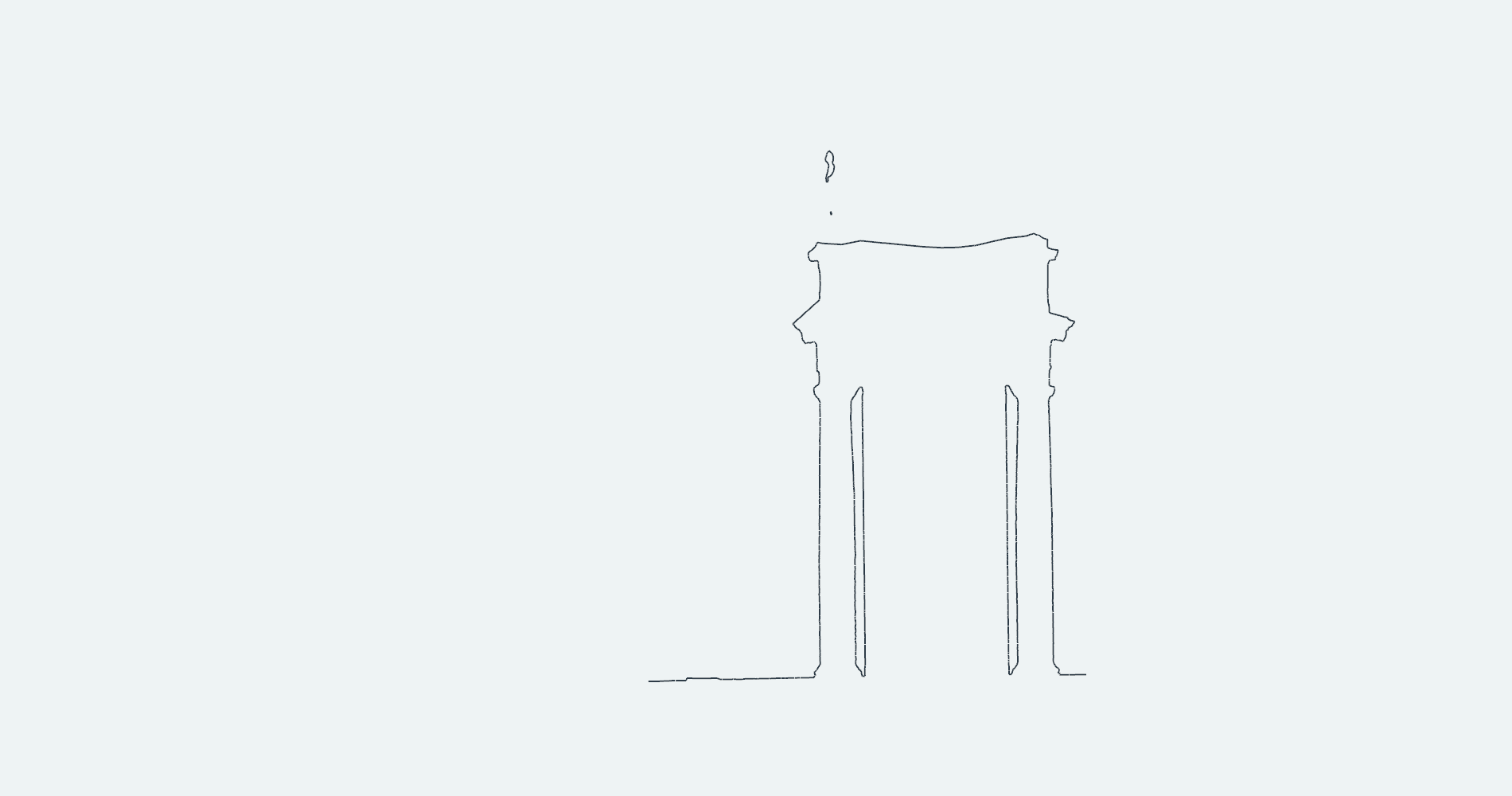
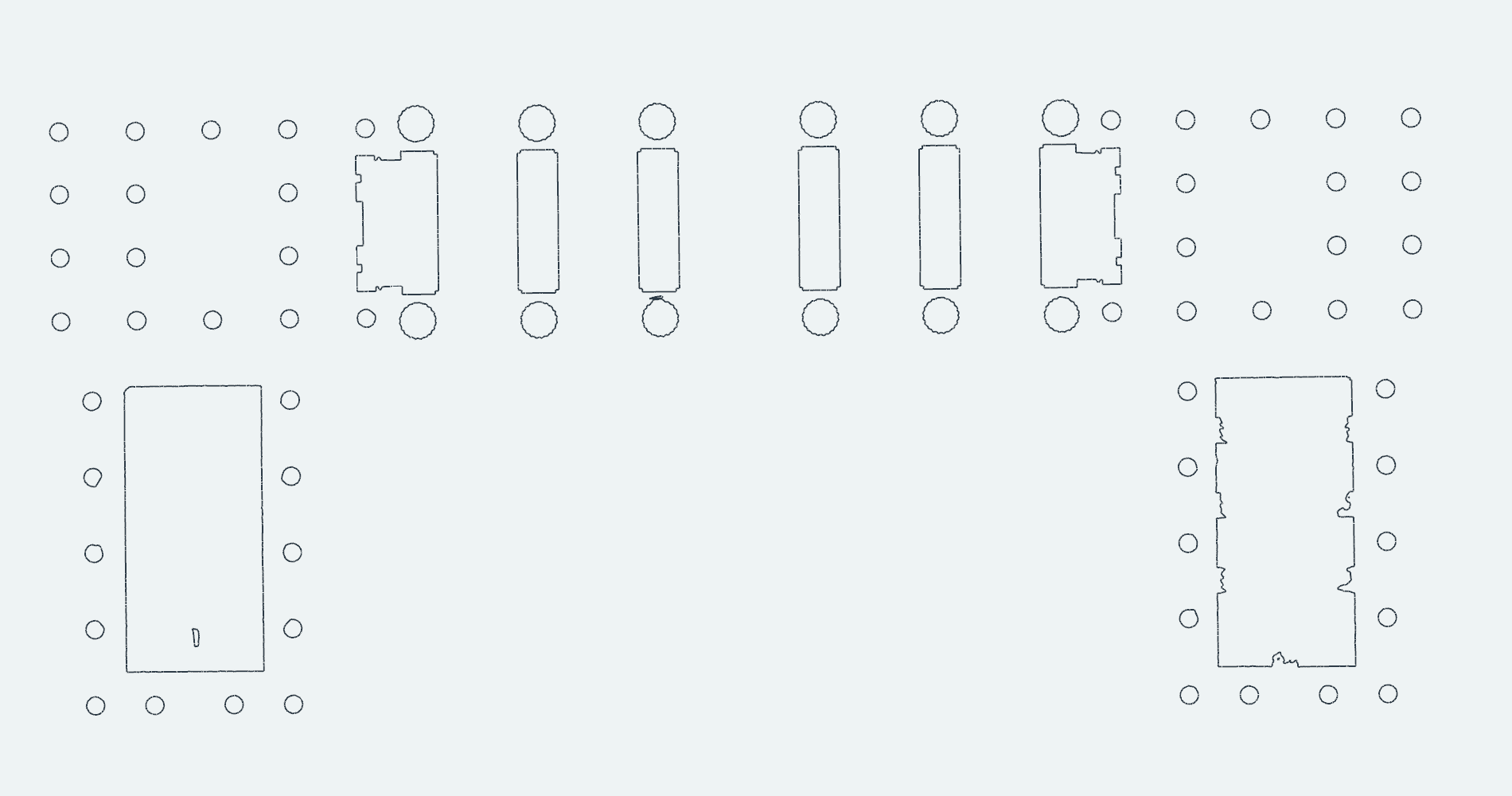
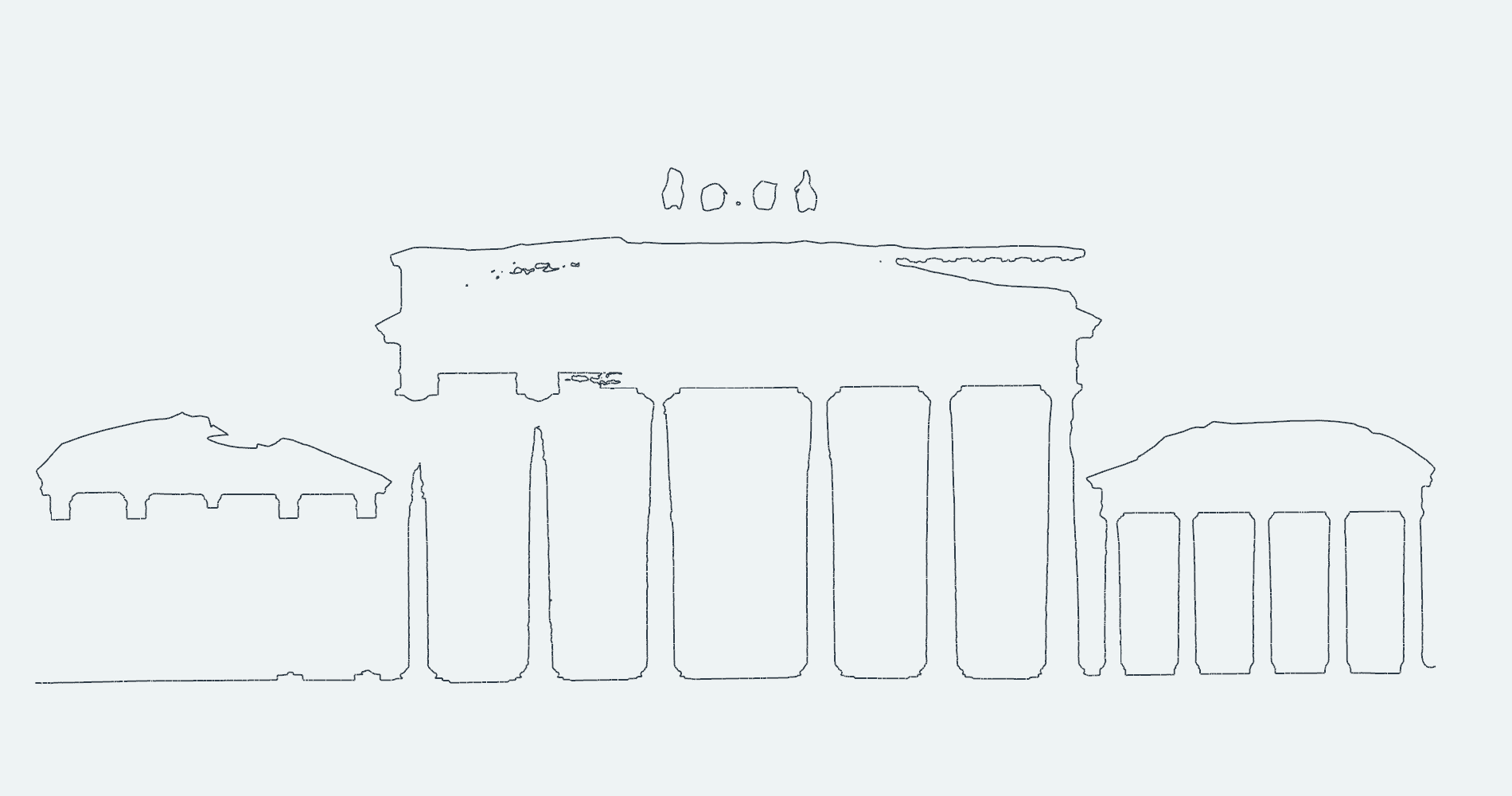
Zero-thickness Model
Section views through the original STL expose its open, zero-thickness construction before reconstruction.
Before and after reconstruction
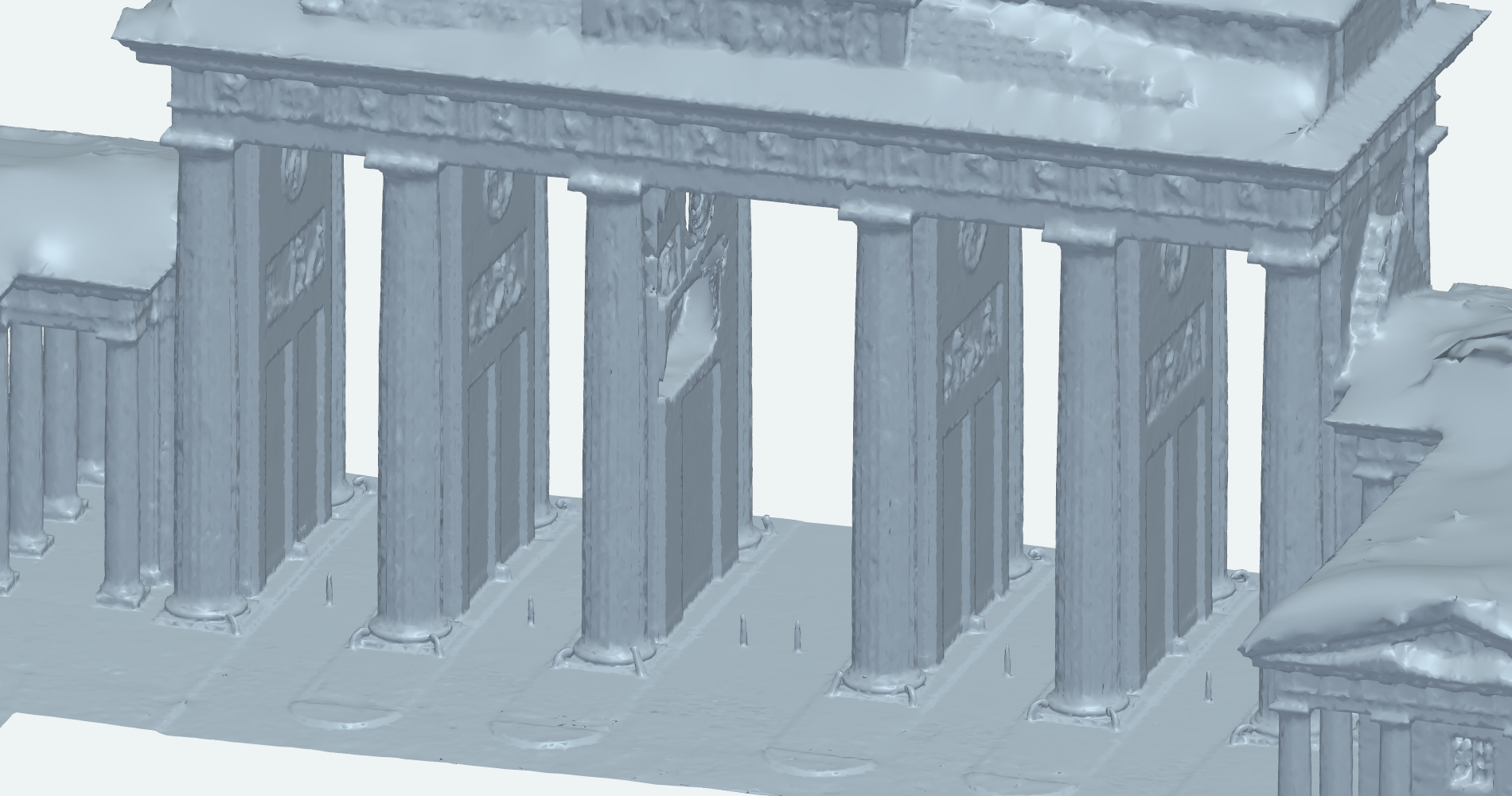
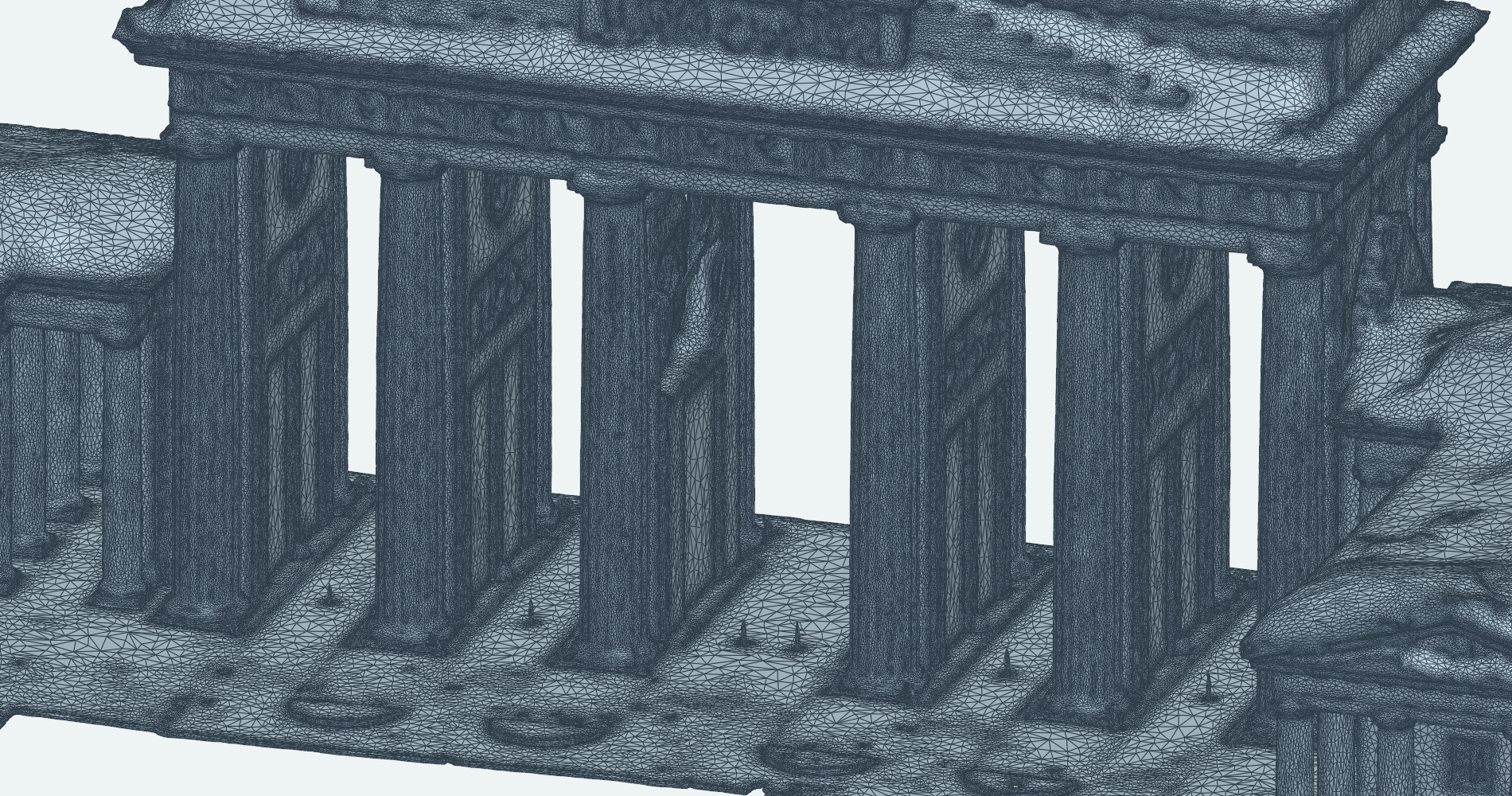
Columns
Repeated curved surfaces are recovered as a continuous, watertight structure.
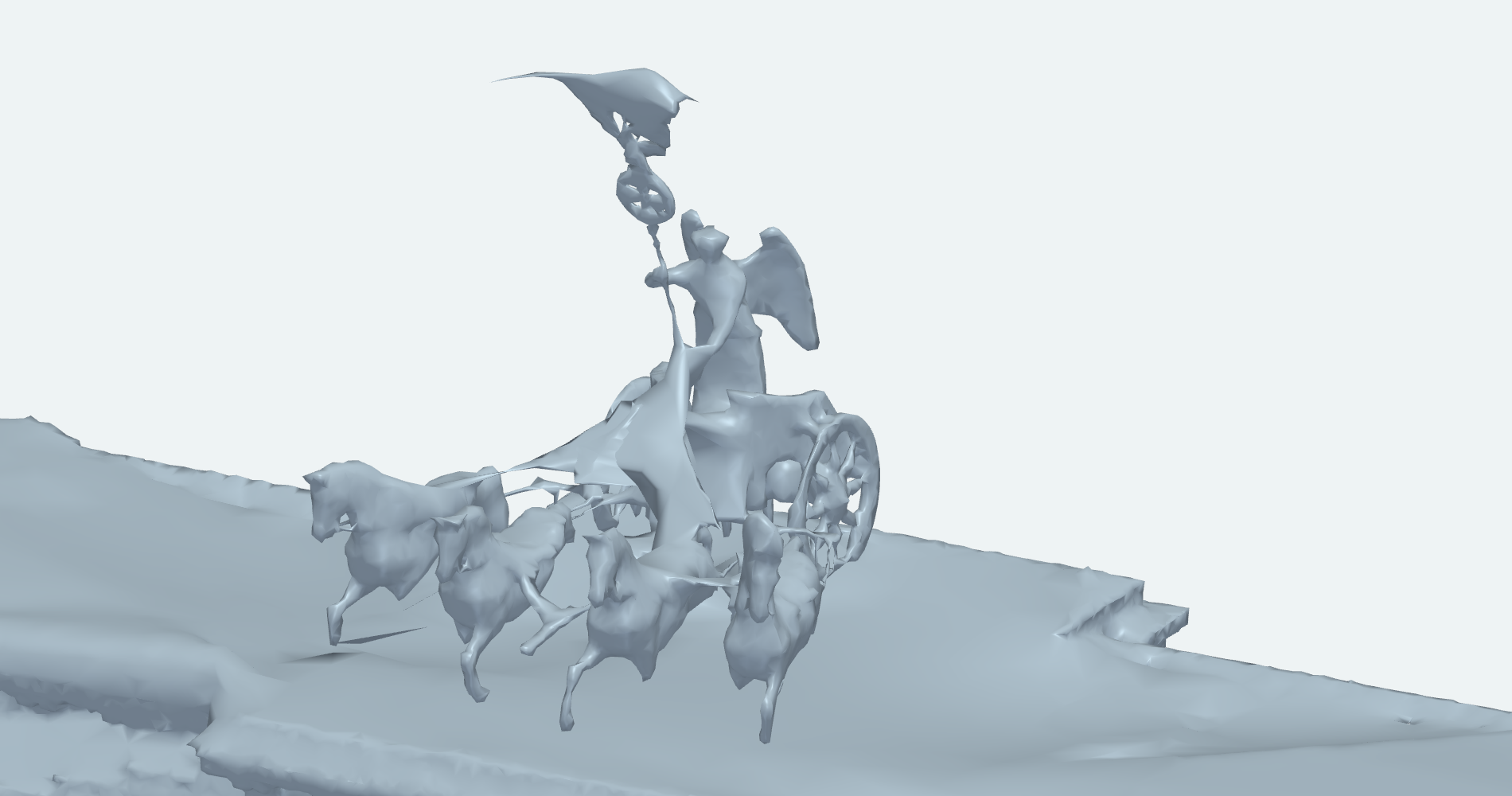
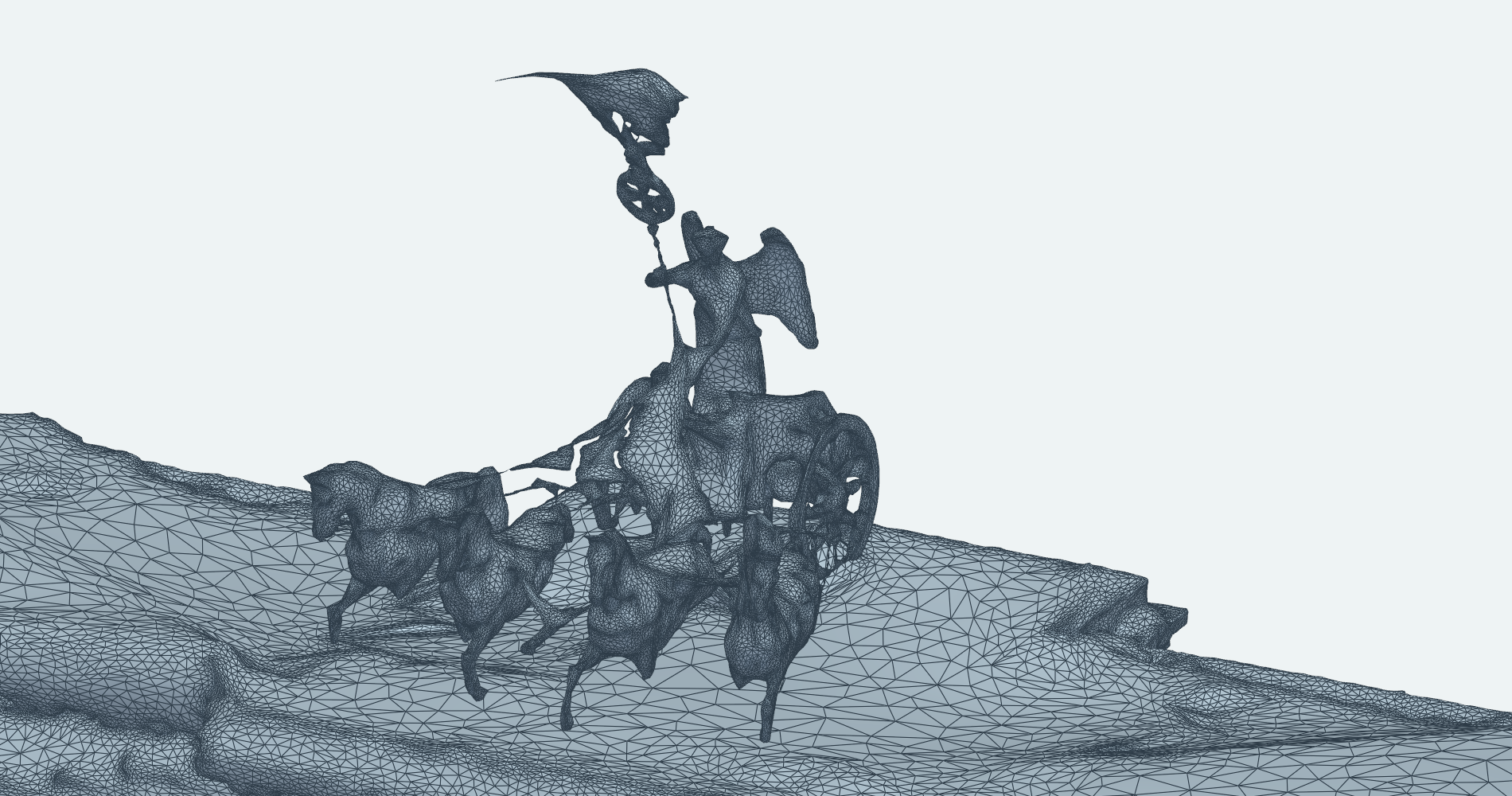
Chariot
The sculptural details and narrow gaps make the chariot the most intricate part of the scan.
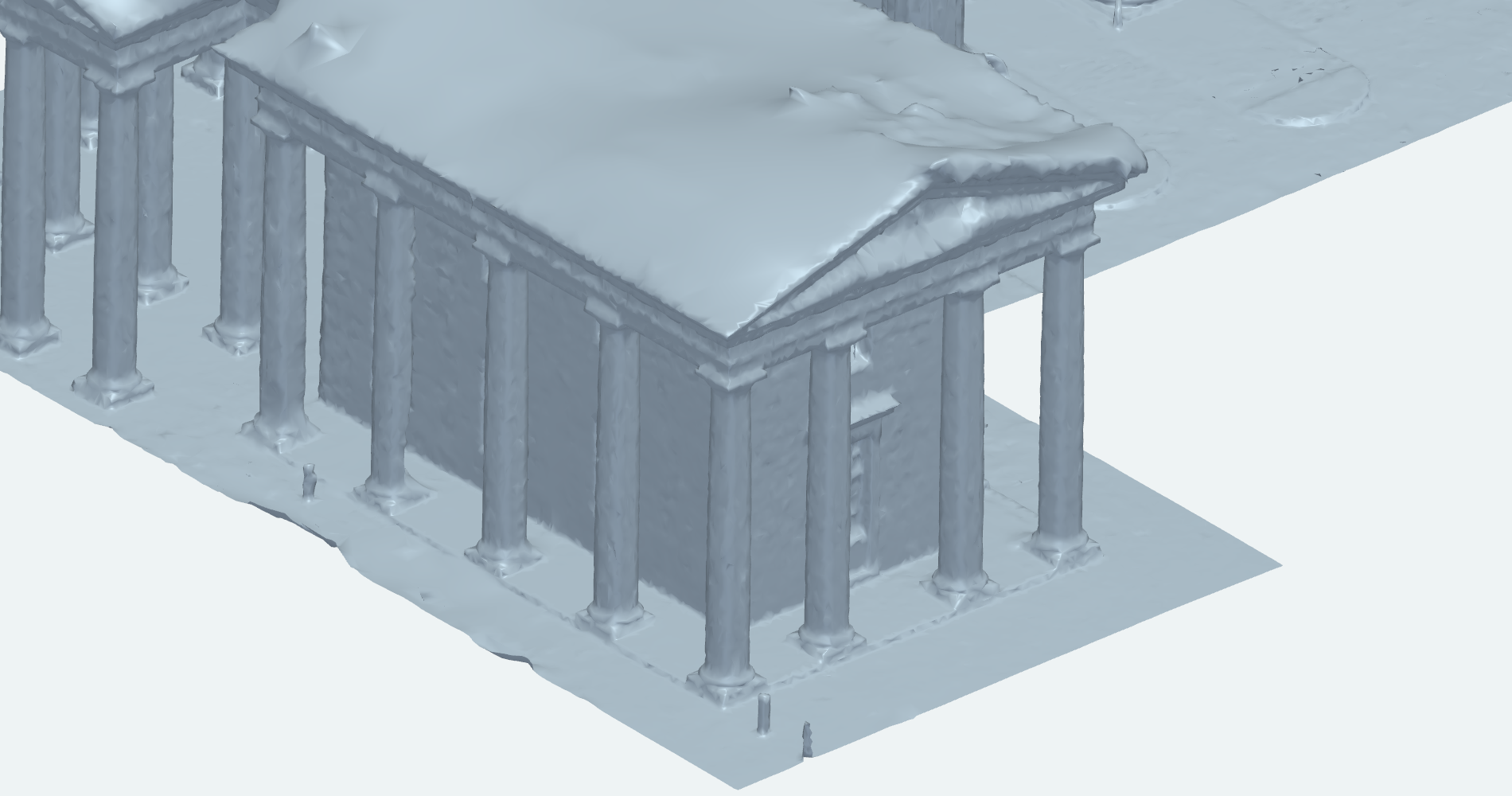
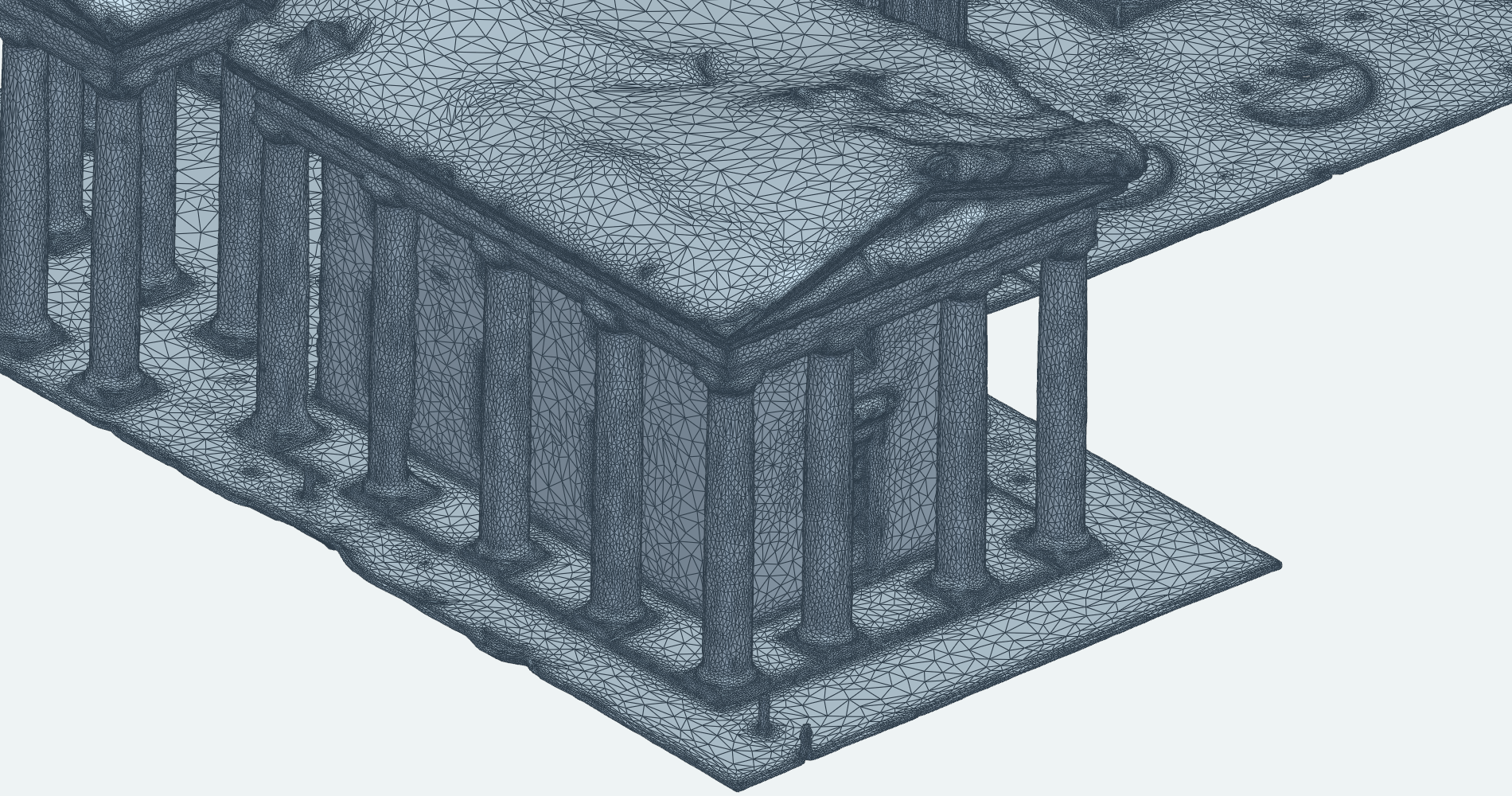
Side entrance
Thin columns, deep openings, and intersecting scanned surfaces are resolved into one mesh.
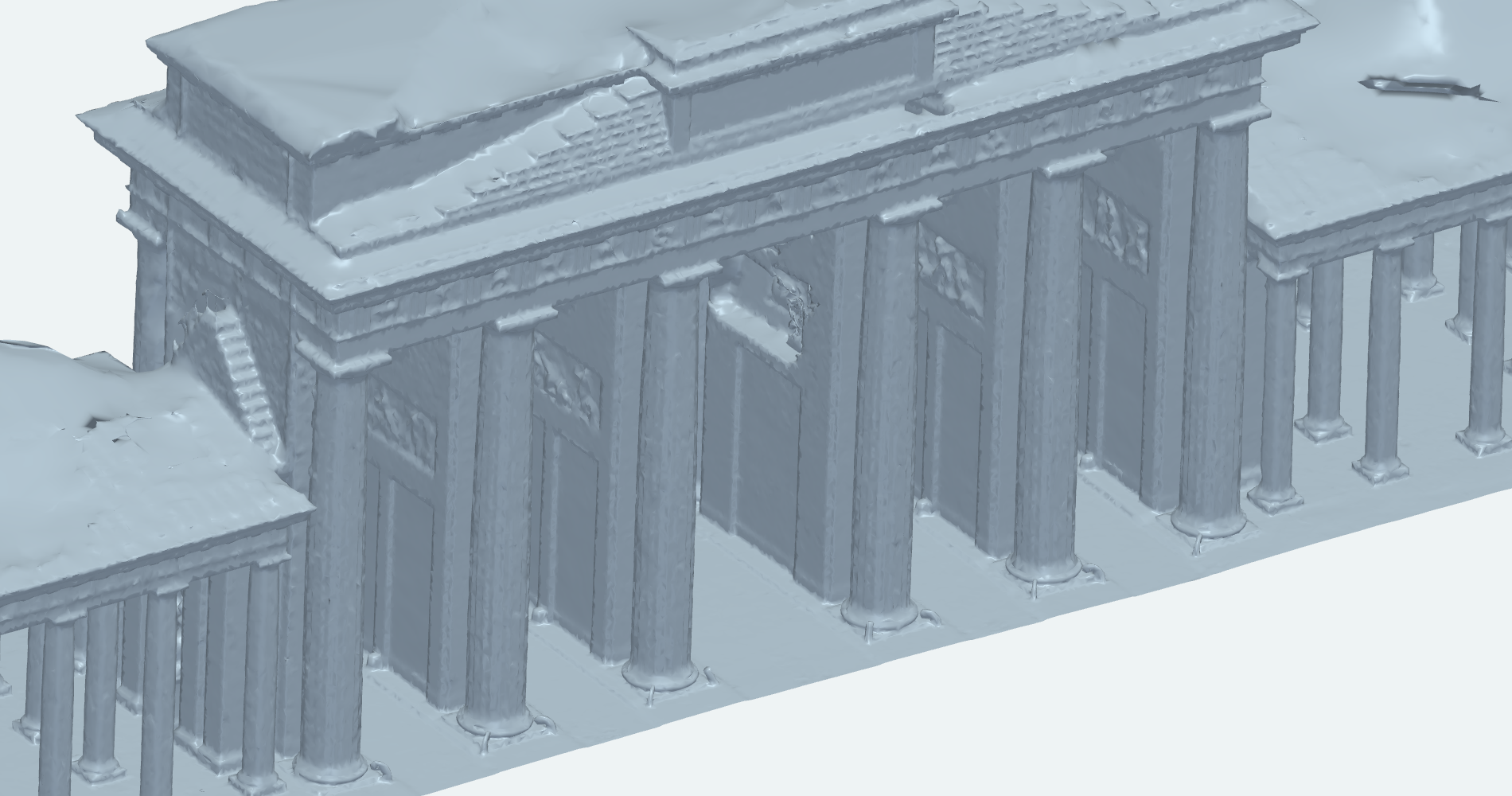
Rear columns
Overlapping scanned features are consolidated behind the colonnade.
Complete gate
The full reconstruction preserves the monument's large-scale form and fine architectural detail.