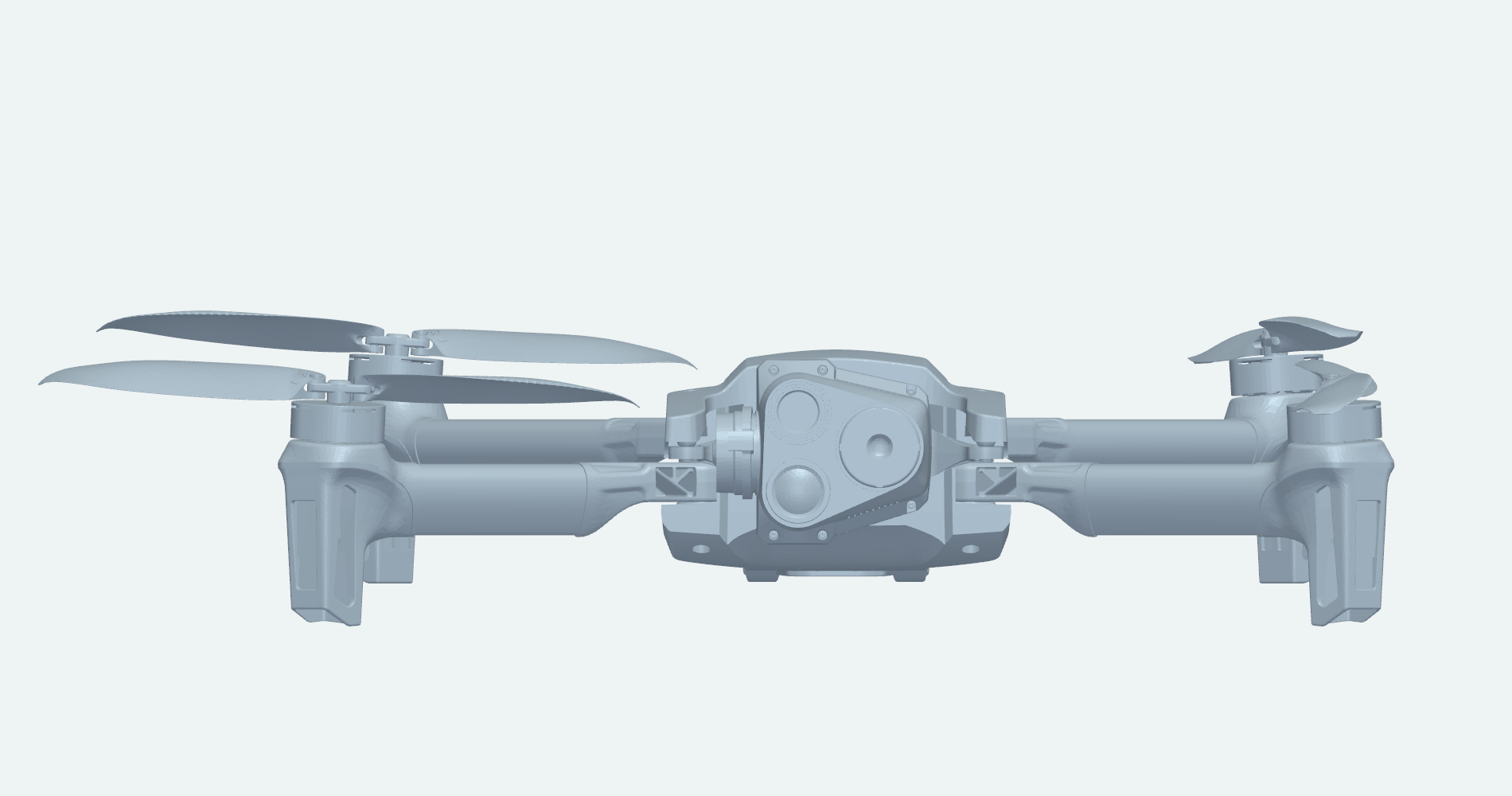
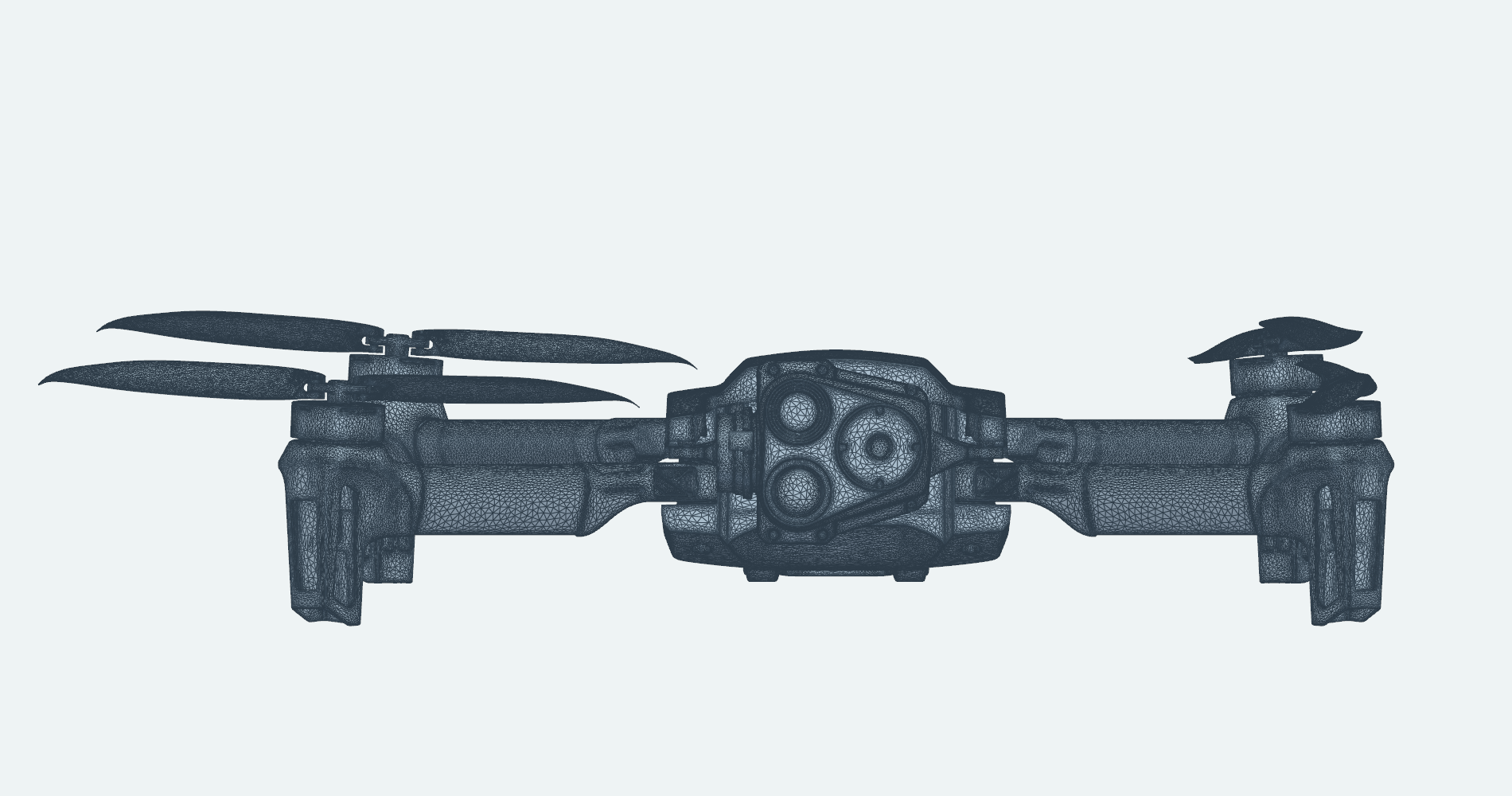
Parrot ANAFI Drone. GeometryAI reconstruction of a complete quadcopter assembly

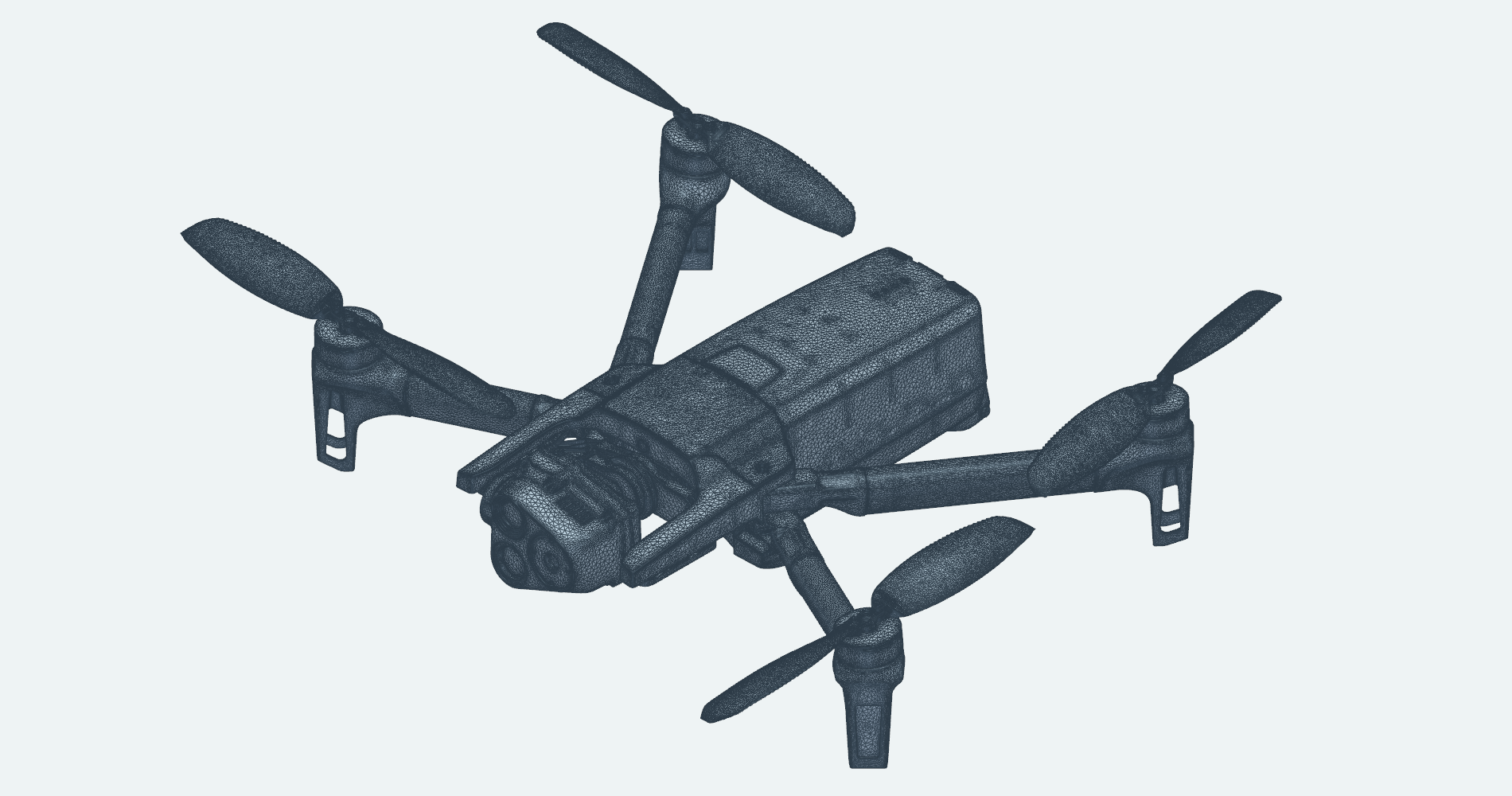
As part of its Open Ecosystem, Parrot provides a series of geometries for validating a range of technological solutions. This model offers a realistic, industry-level test of GeometryAI’s ability to mesh and defeature a complex, detailed drone assembly. It contains approximately 50,000 faces, including internal camera components and other auxiliary systems and electronics. GeometryAI can remove unnecessary internal details and seal channels that do not affect external aerodynamic analysis, such as the camera cooling passages, while preserving a high-fidelity representation of the rest of the assembly. The result is a simulation-ready mesh that retains the detail needed for external aerodynamic analysis.
At a glance
A snapshot of the input geometry, what GeometryAI cleaned up, and the final surface mesh.
| Bodies | 677 |
|---|---|
| Faces | 47,000 |
| Bodies on final surface | 248 |
|---|---|
| Bodies removed | 429 |
| Hidden area removed | 35.8% |
| Gaps closed | ~60 |
| Nodes | 1,304,696 |
|---|---|
| Triangles | 2,615,640 |
| Meshing time | 22 min 4 s |
Model Defeaturing
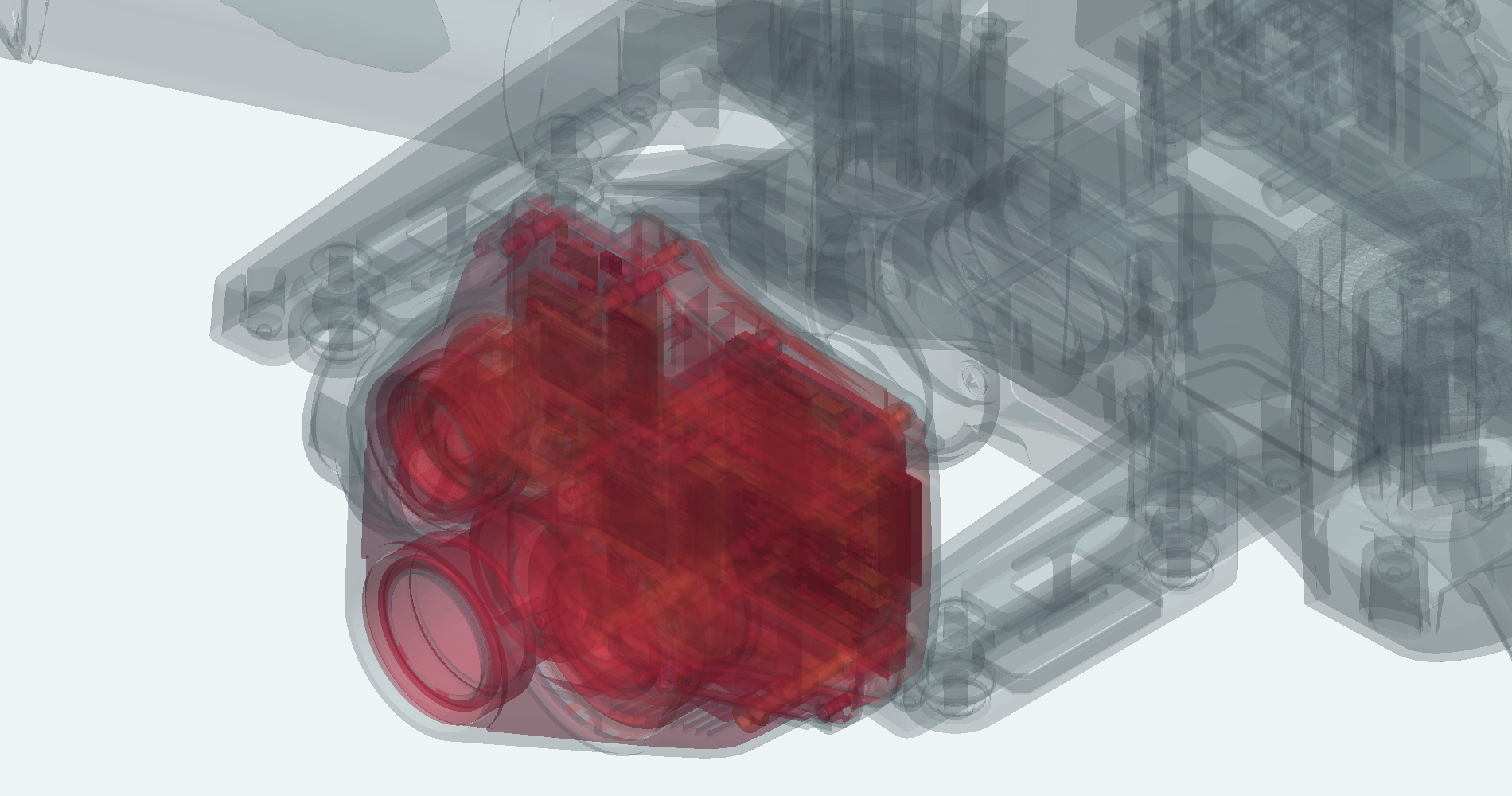
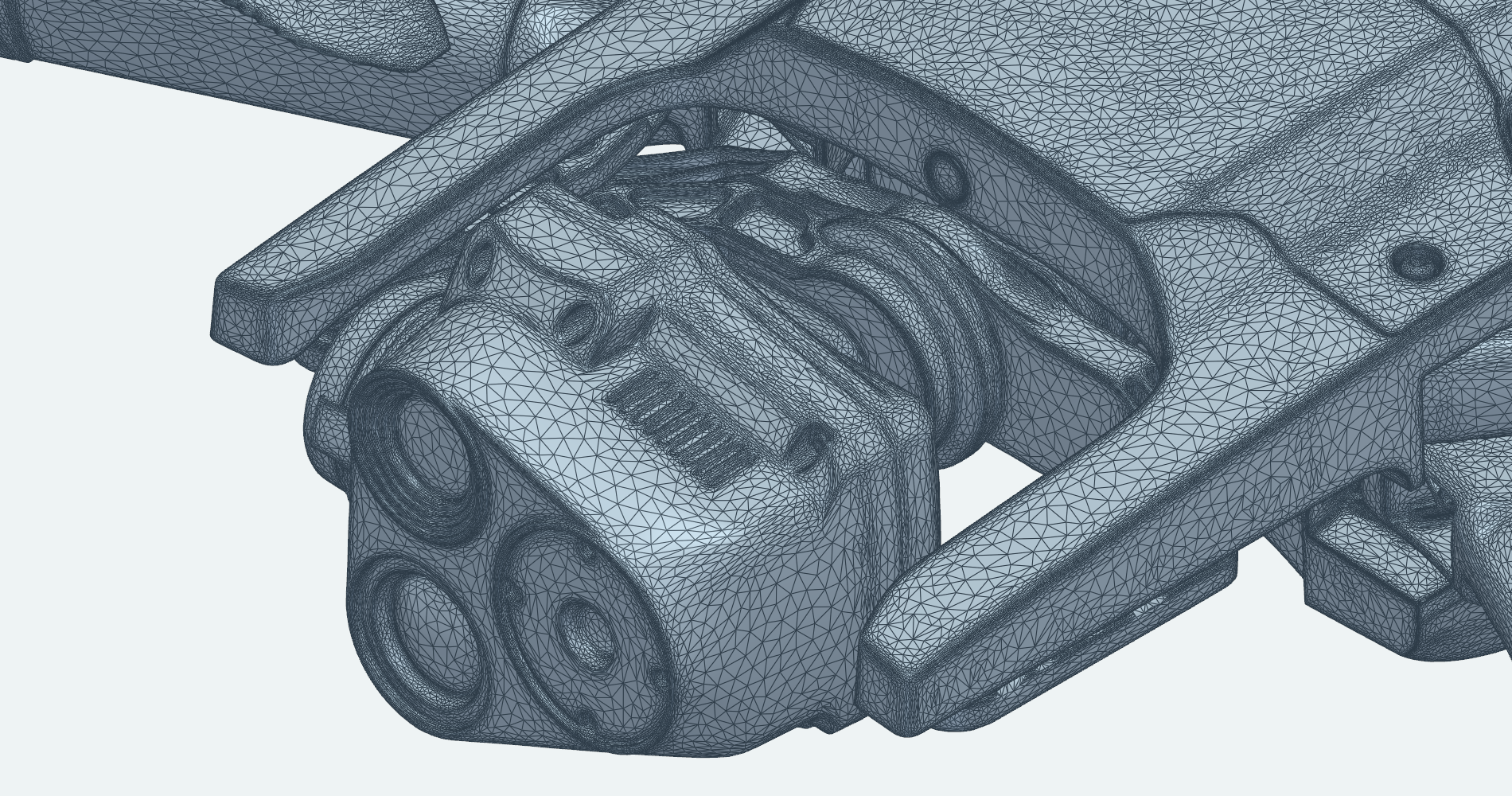
GeometryAI removes the camera's internal components, which represent about 40% of the model's faces, because they are not needed for a CFD model of the drone's external aerodynamics.
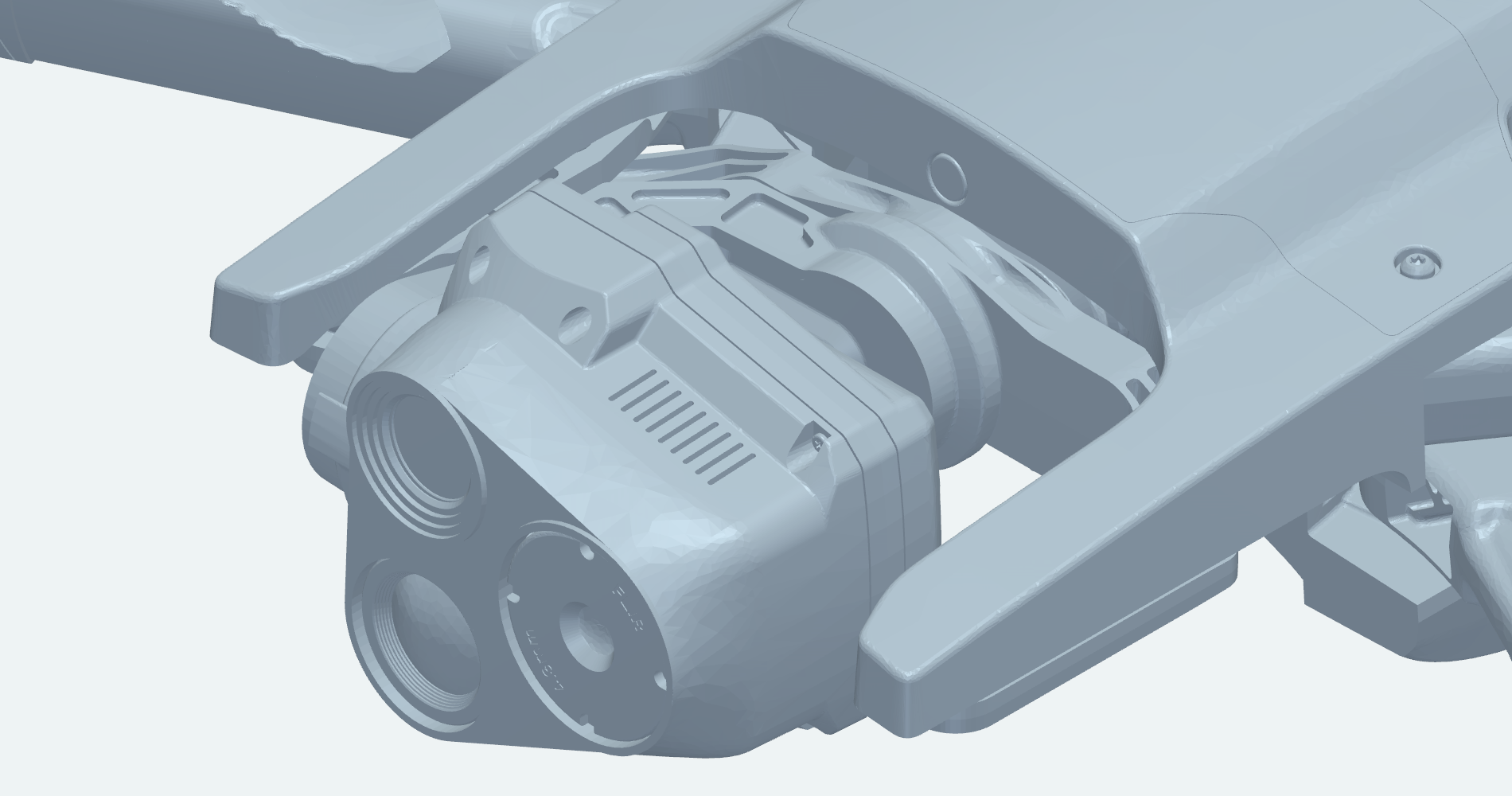
Airframe Detail Preservation
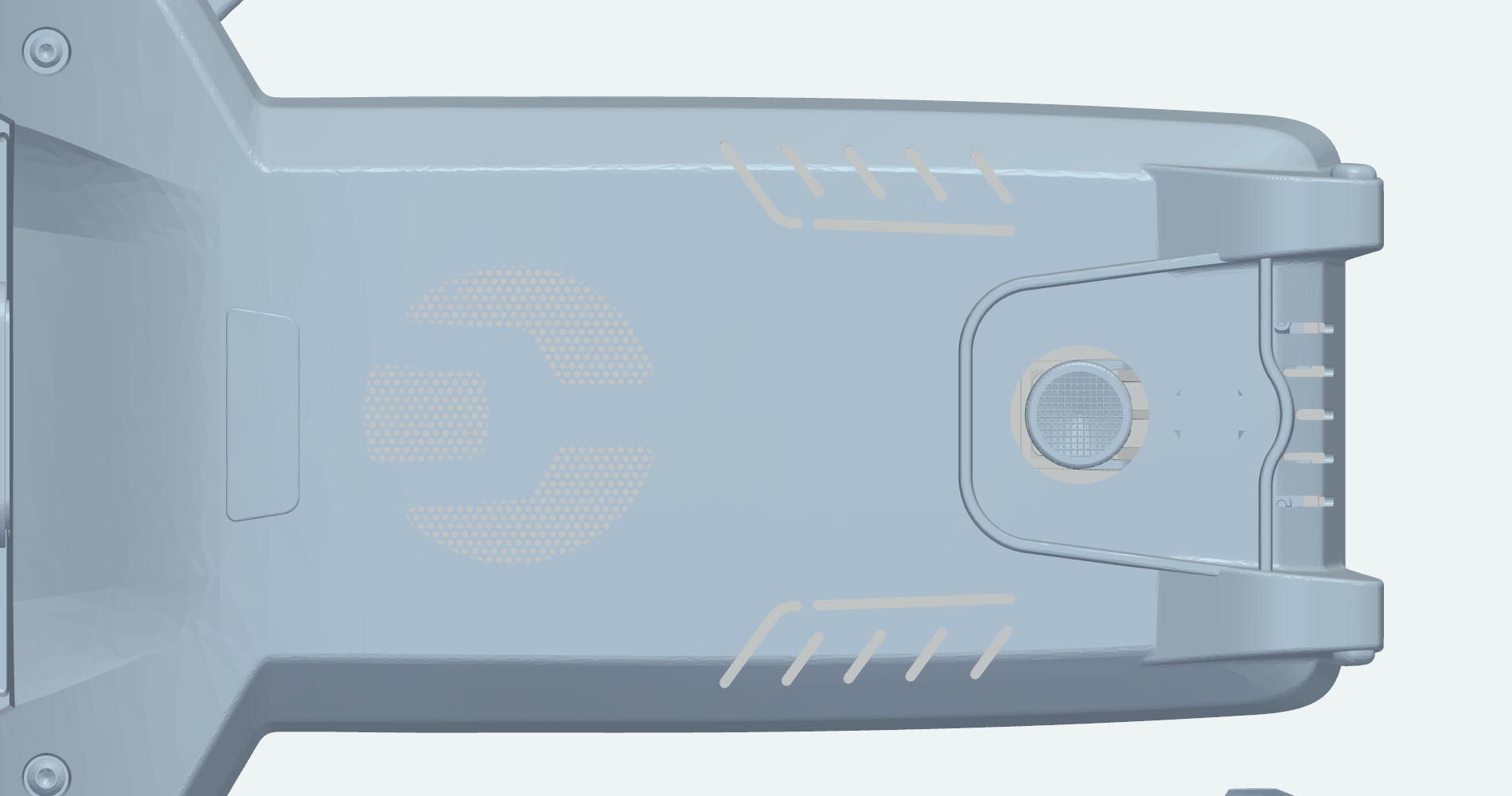
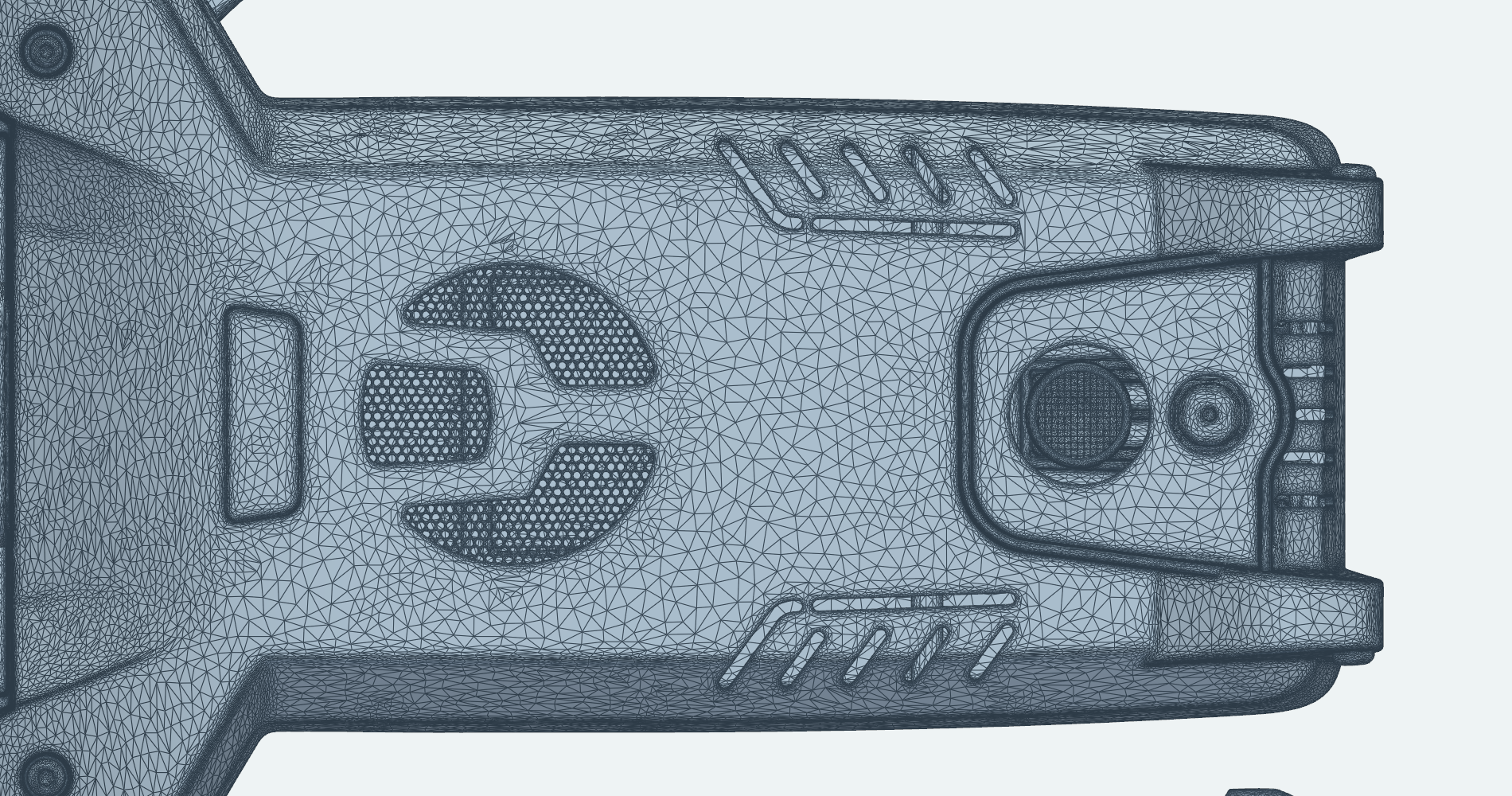
The mesh retains the airframe's internal and external geometric detail.
Rotor Modelling
Rotor geometry is recovered, including the leading-edge tubercles.
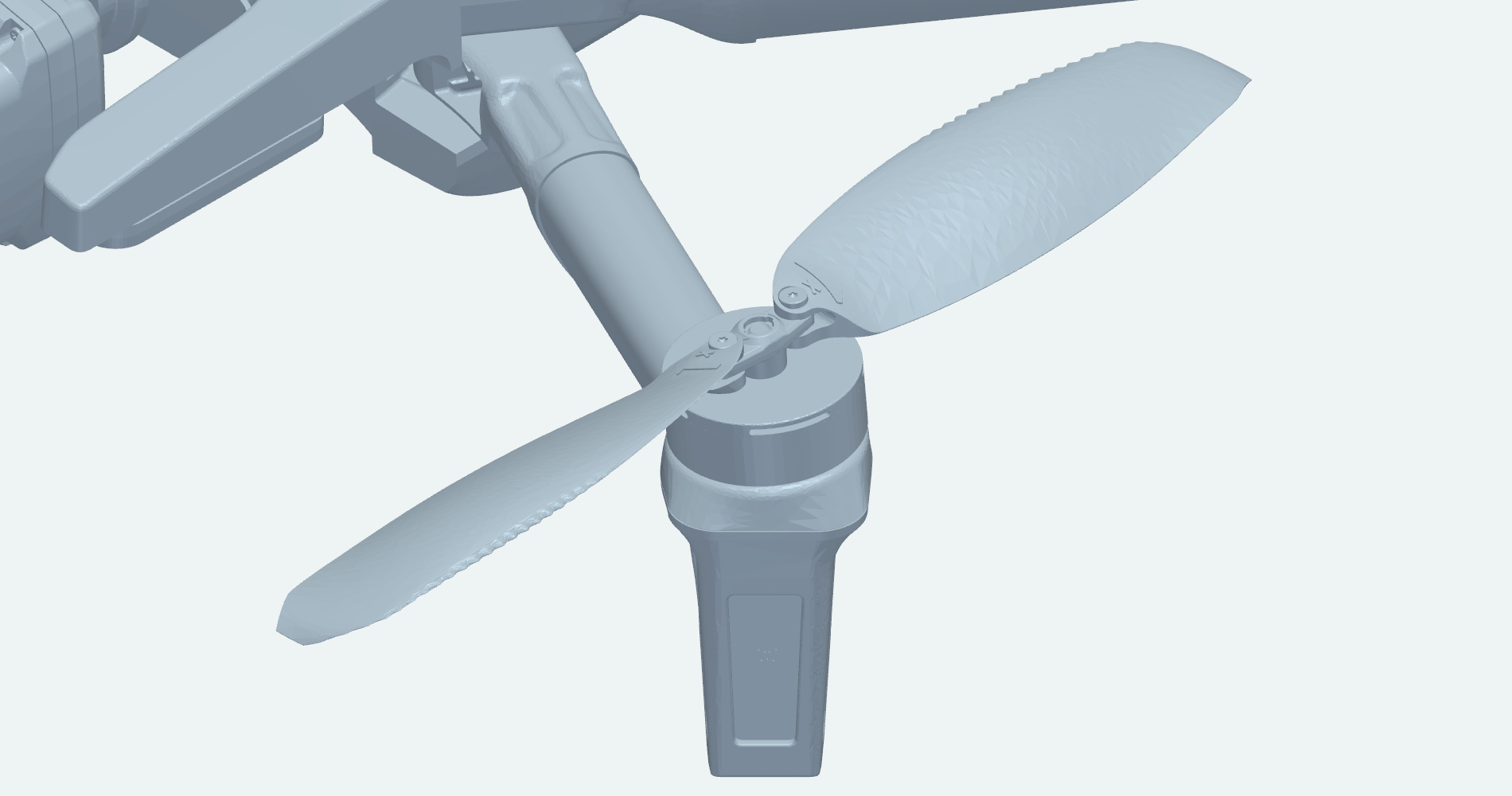
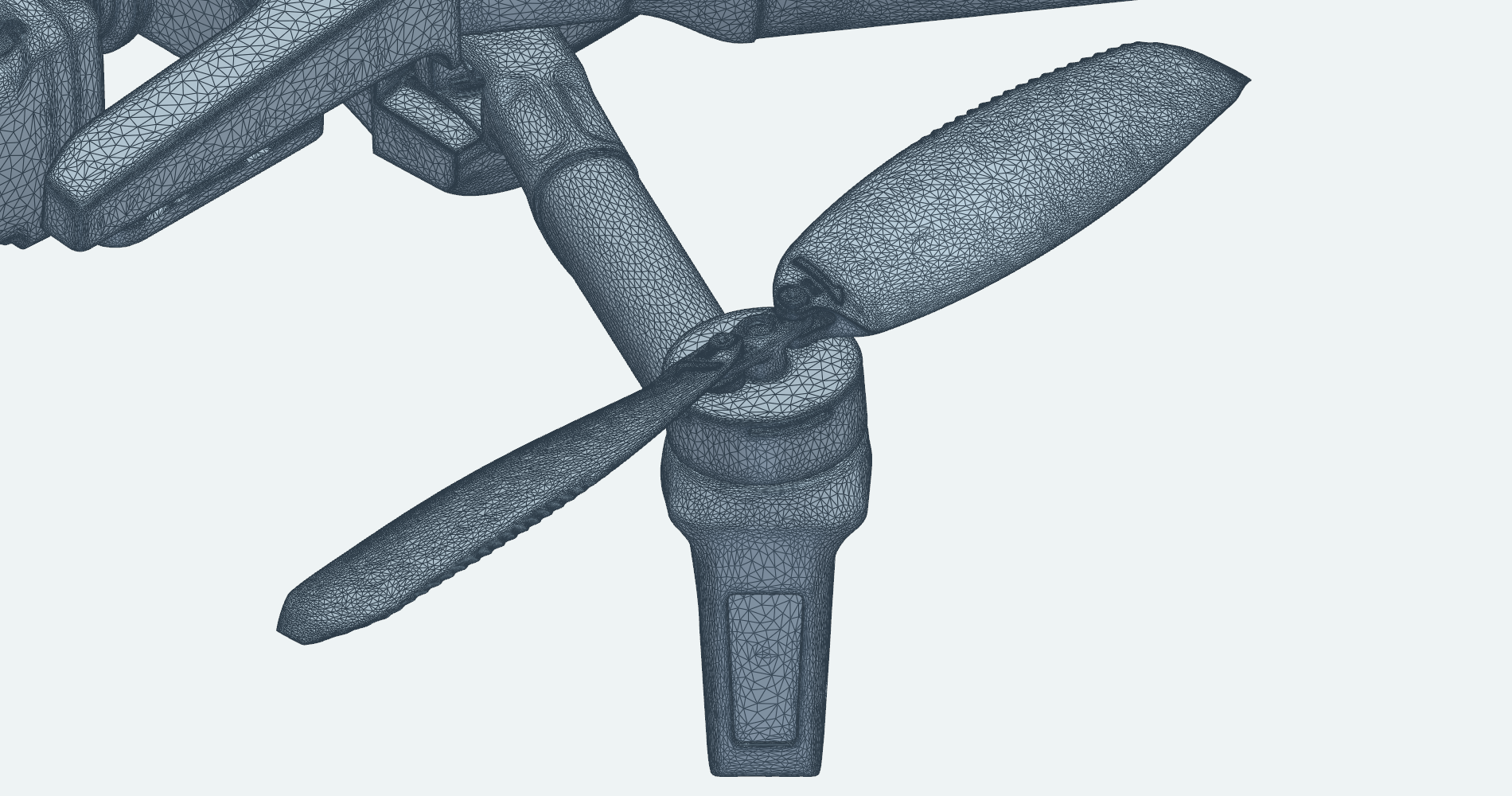
The mesh combines selective camera defeaturing with high-fidelity recovery of the airframe and rotors, producing a simulation-ready model for external aerodynamic analysis.
Complete View
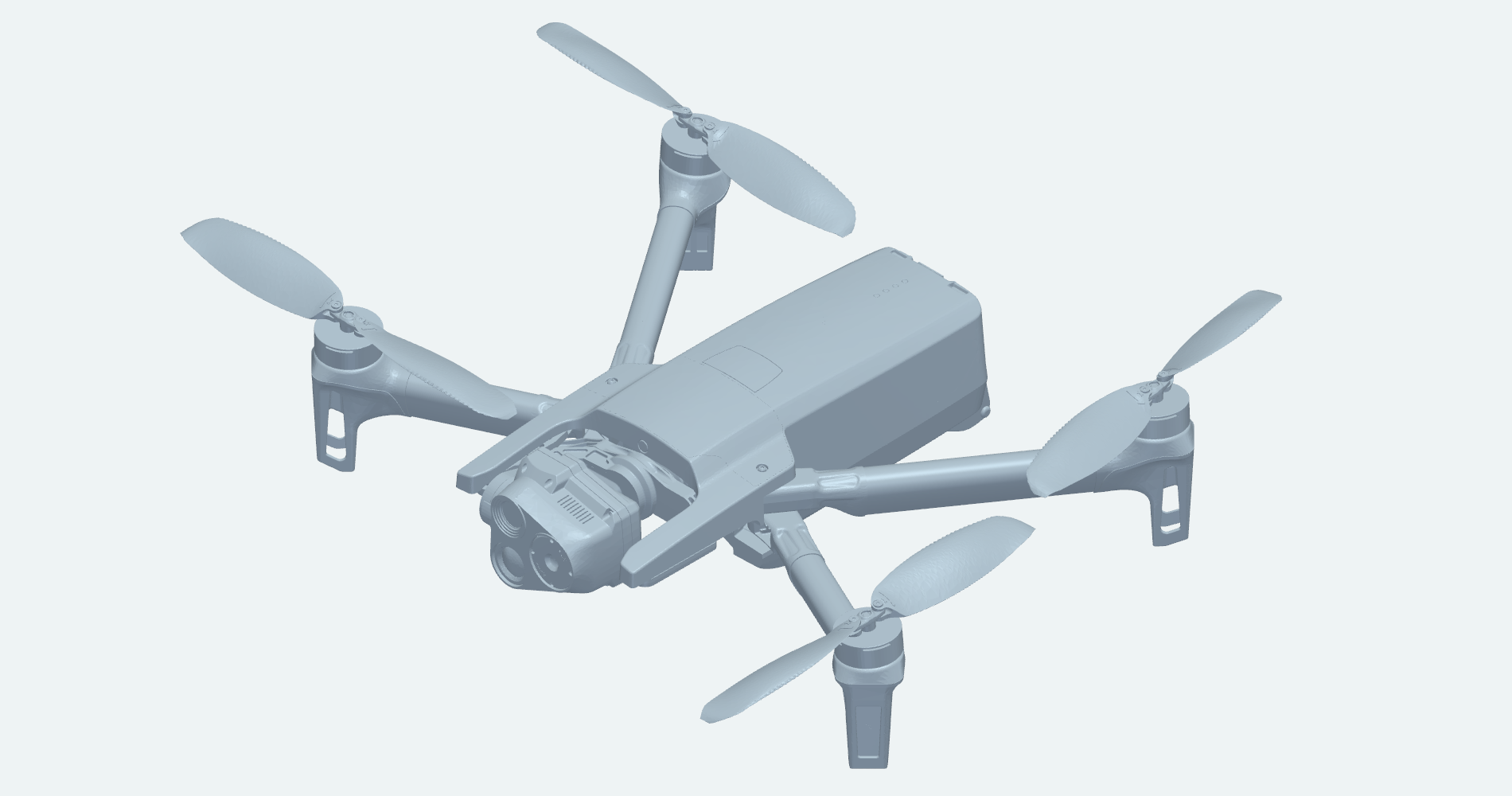
The mesh follows the exposed features across the full drone, including the rotor blades, motor housings, arms, and camera assembly.
Front view
Front comparison of the final model.