Automated Meshing of a DC–DC Converter Cooled by a Ducted Fan. A geometrically complex electronics-cooling assembly
This benchmark from the power-electronics industry presents a complex internal flow problem for electronics cooling — a DC–DC converter cooled by a ducted axial fan. The assembly combines a wide range of geometric features and length scales, including thin heat sink fins, toroidal inductors, cylindrical components, electrical leads, fasteners, narrow passages, and a rotating fan region, all of which must be faithfully represented in the surface mesh.
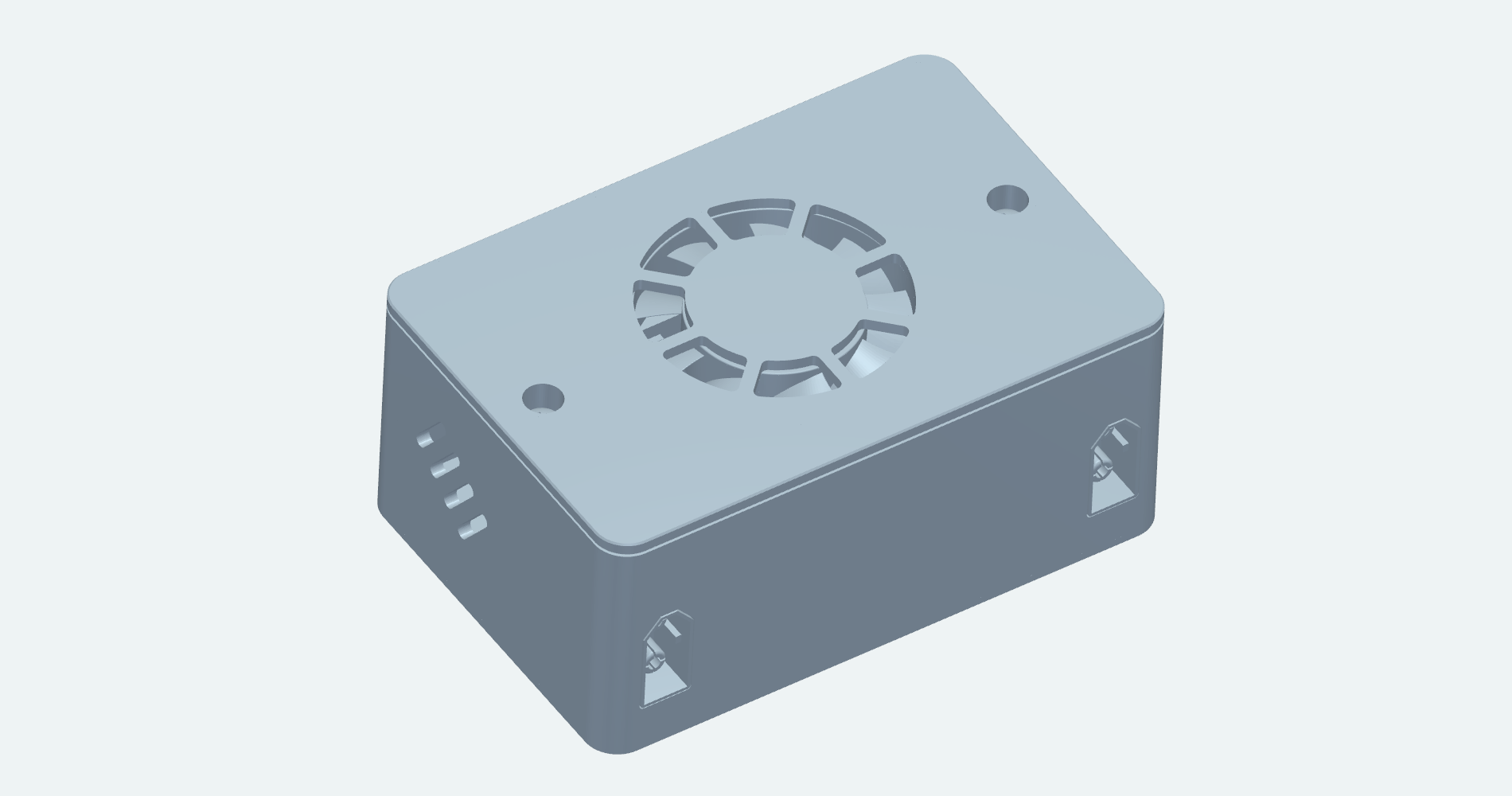
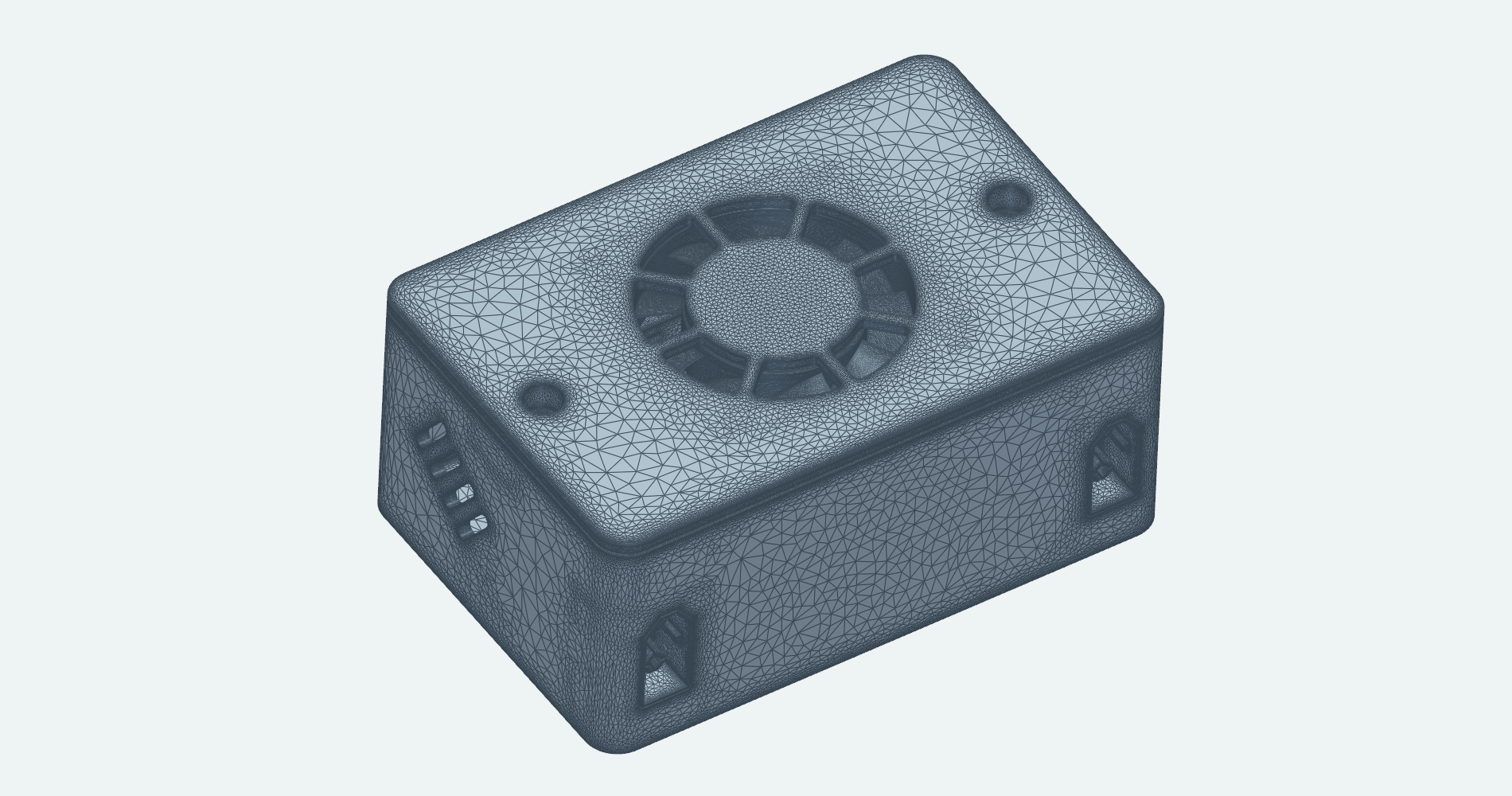
This case demonstrates GeometryAI's ability to recover the intended geometry from a full model without oversimplifying critical regions and without user interaction. The mesh captures the complete model and specific geometric features, including components such as fins, the toroidal inductor, capacitors, leads, fasteners, and the rotating fan region. Each view below shows the original model alongside the corresponding GeometryAI surface mesh.
The complete enclosure provides a global assessment of mesh fidelity across the assembly's broad range of geometric features.
Removing the enclosure and selected fan components exposes the densely packed internal assembly. The mesh resolves thin heat sink fins, cylindrical components, electrical leads, fasteners, and the toroidal inductor.
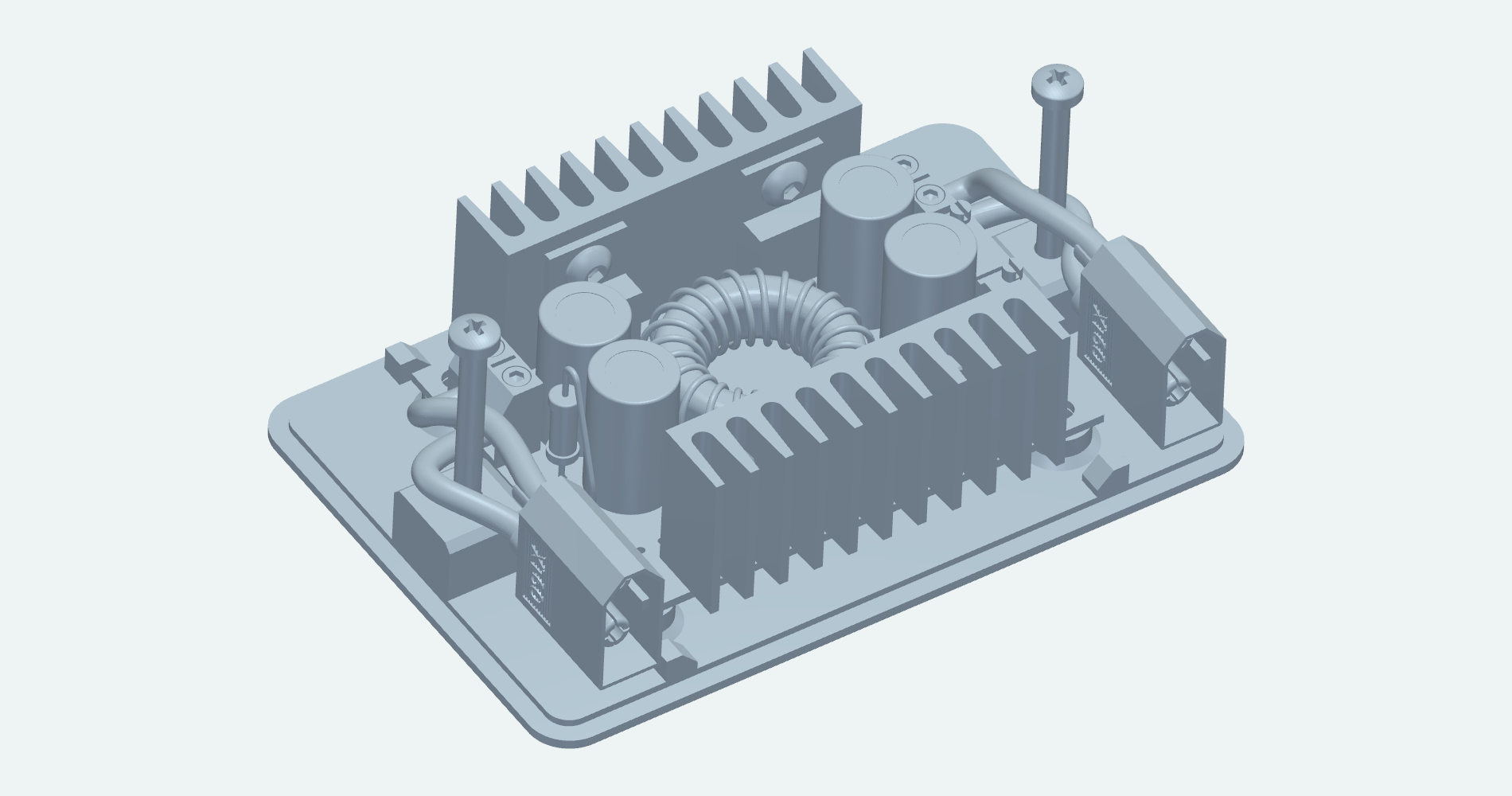
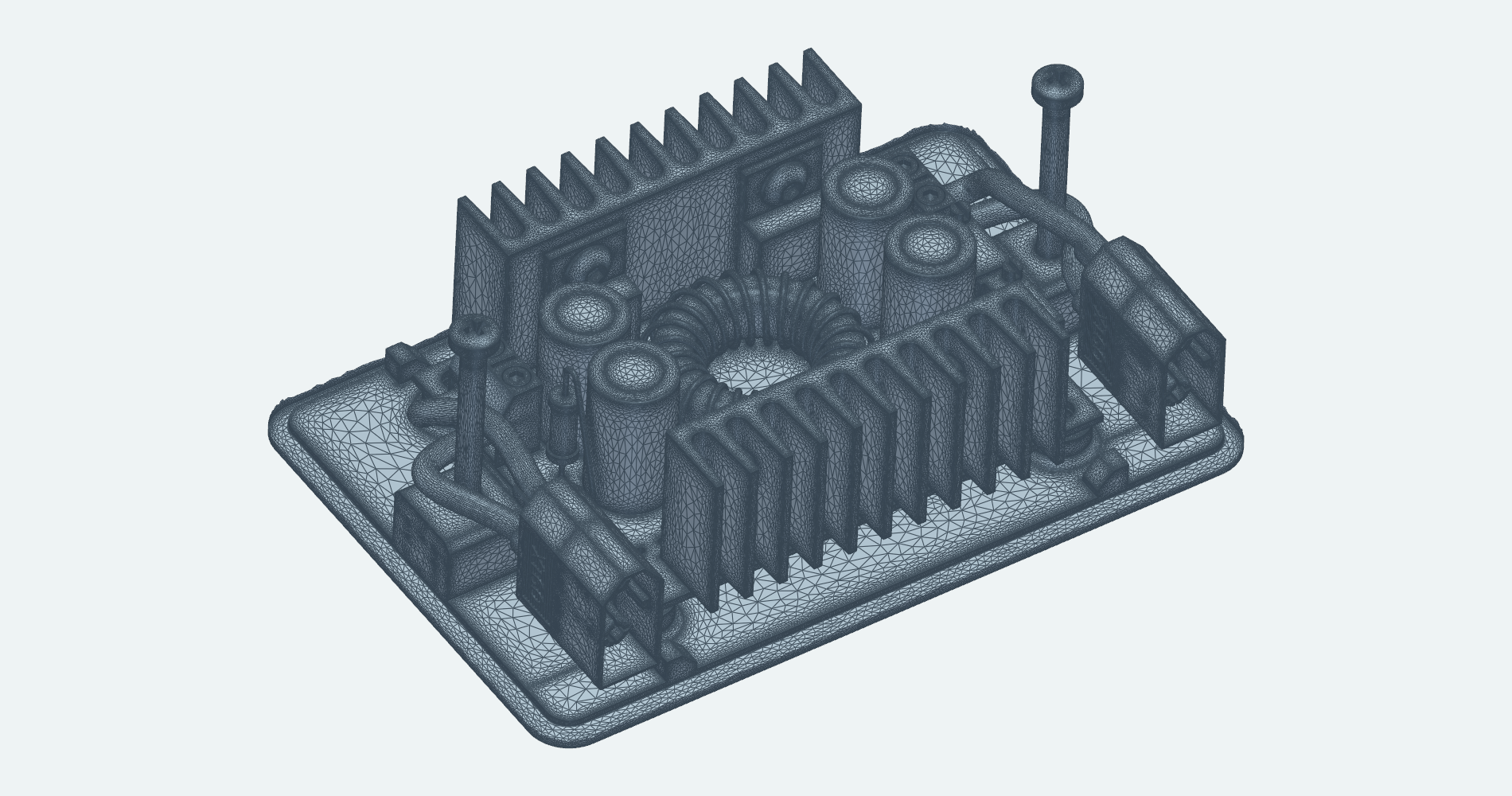
This close-up evaluates mesh resolution around the fan, duct, and enclosure opening. Local refinement captures the blade geometry, curved surfaces, narrow clearances, and sharp edges with smooth transitions to coarser regions.
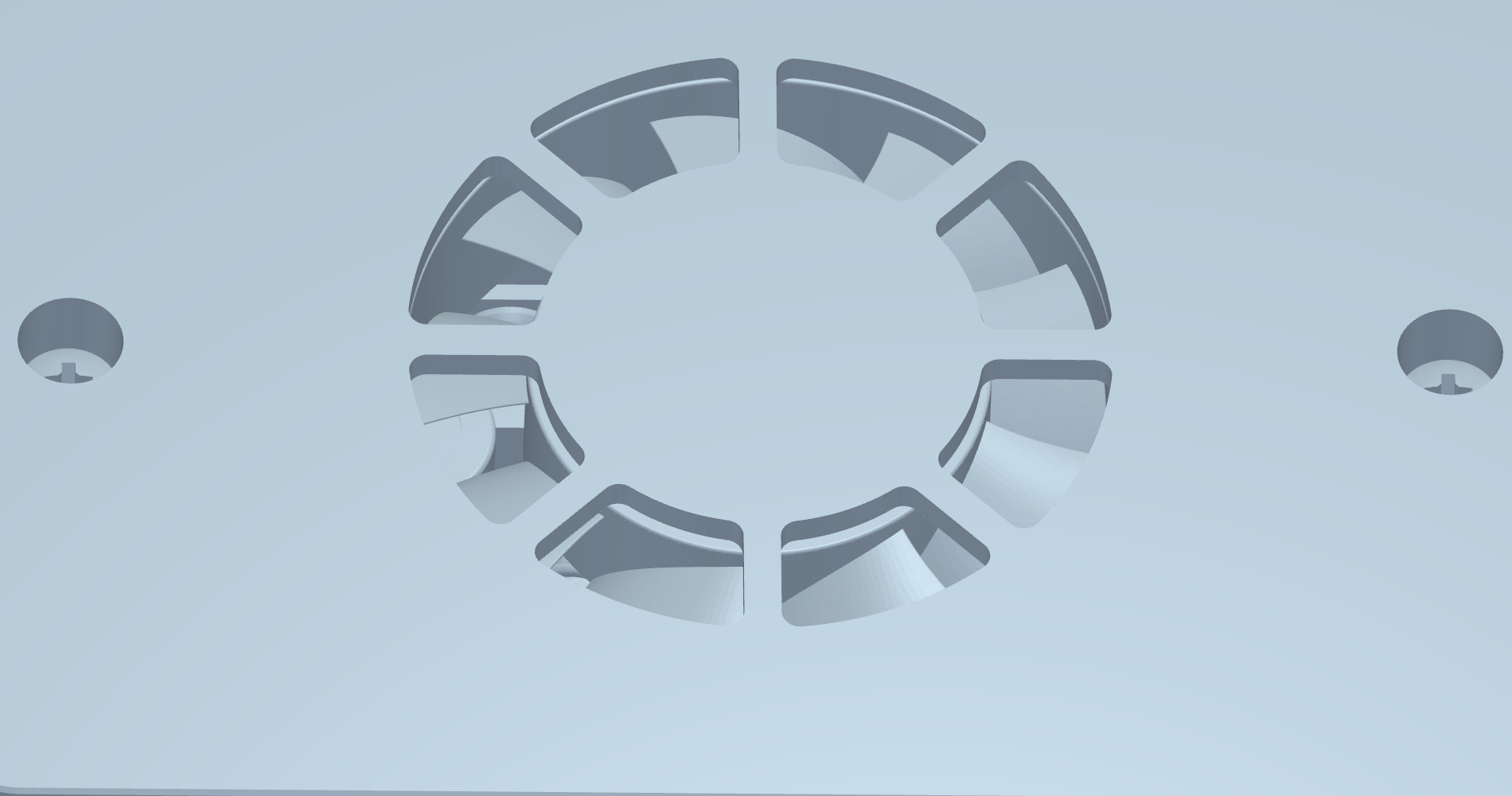
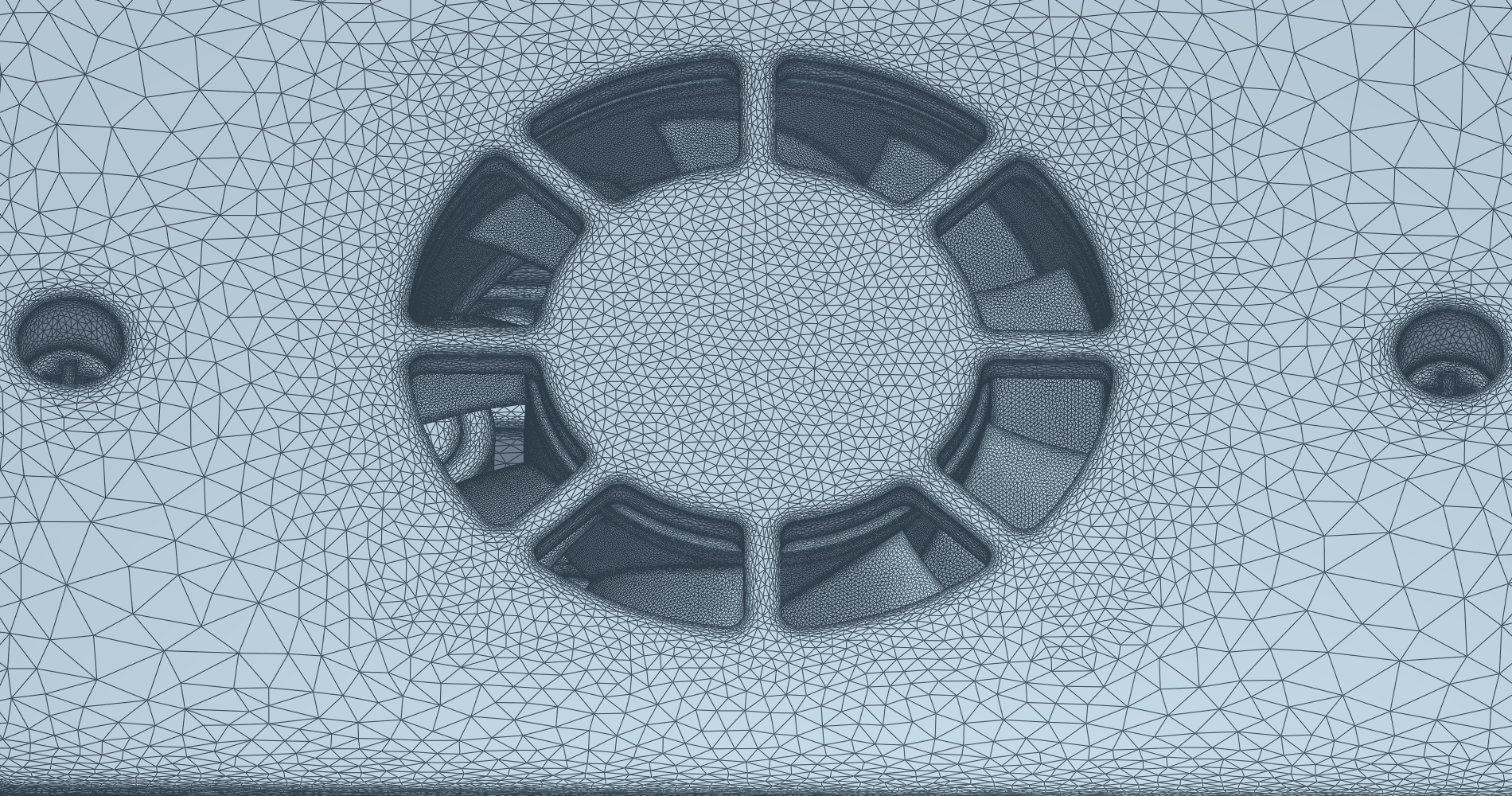
The top view shows the fan relative to the surrounding heat sinks and electronic components. It highlights feature preservation and mesh distribution within the restricted internal flow passages.
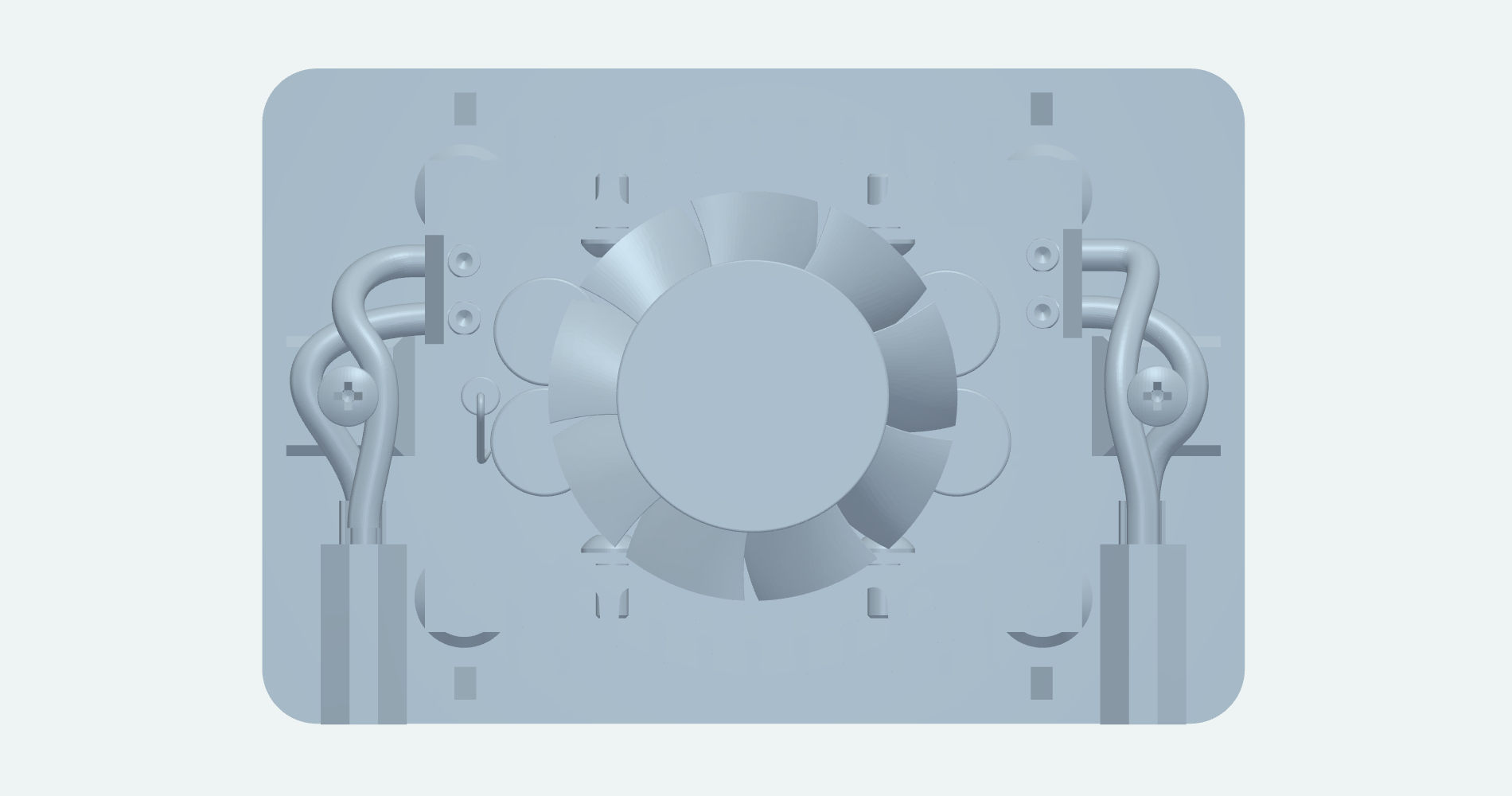
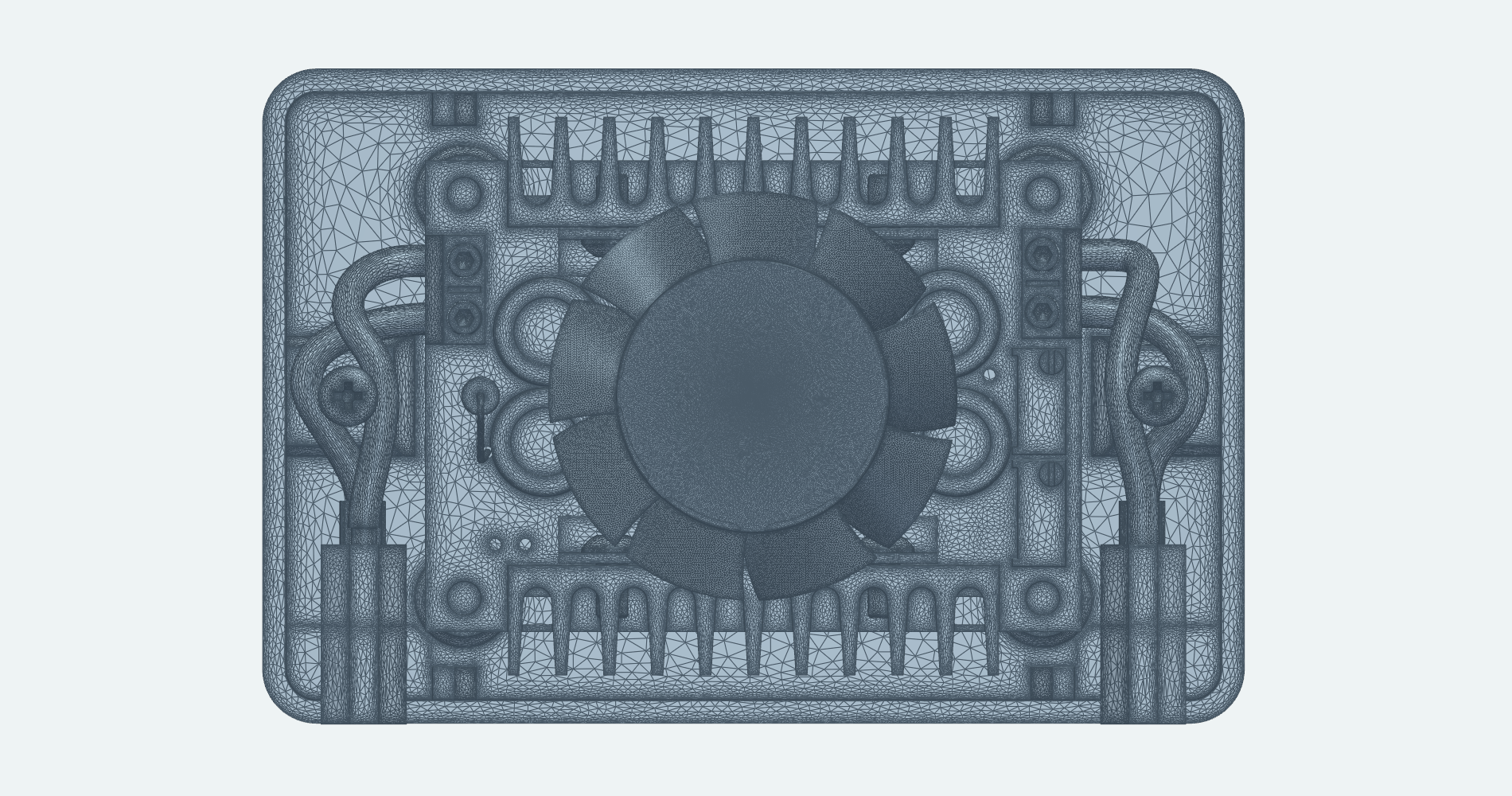
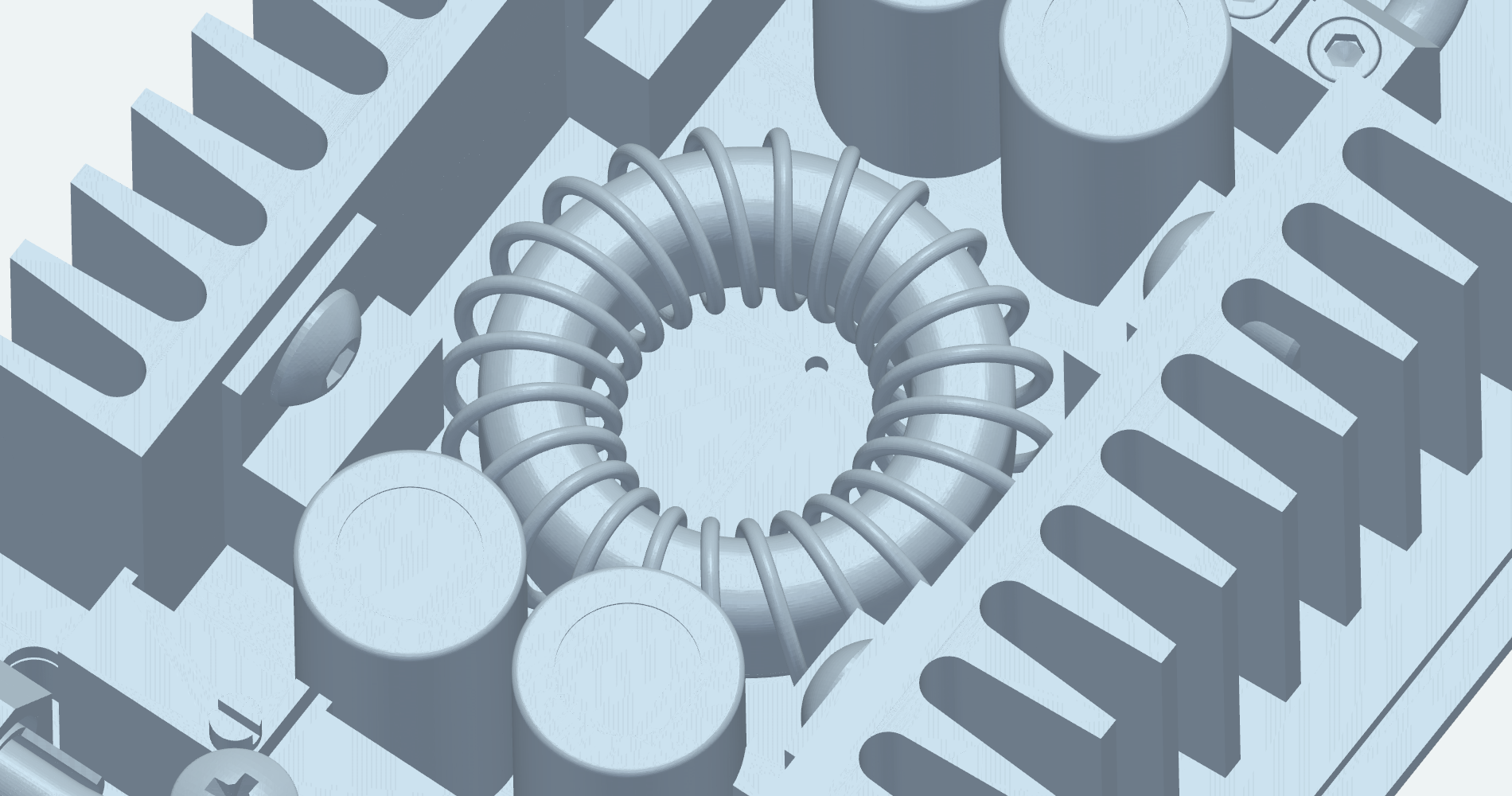
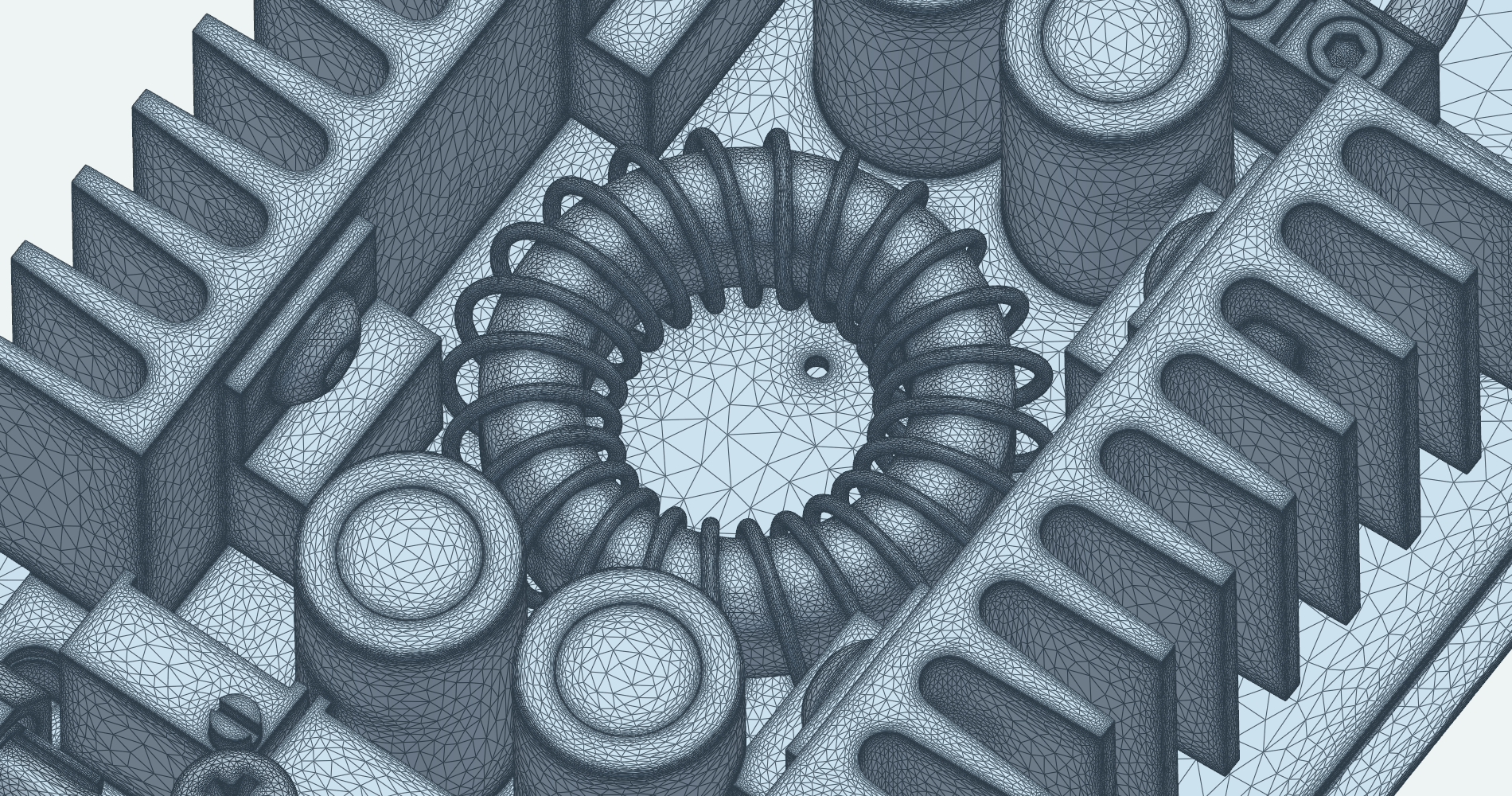
This view examines the toroidal inductor and adjacent heat sinks, where tightly curved windings, thin fins, and small gaps create demanding meshing conditions. GeometryAI preserves these features while maintaining consistent local resolution.