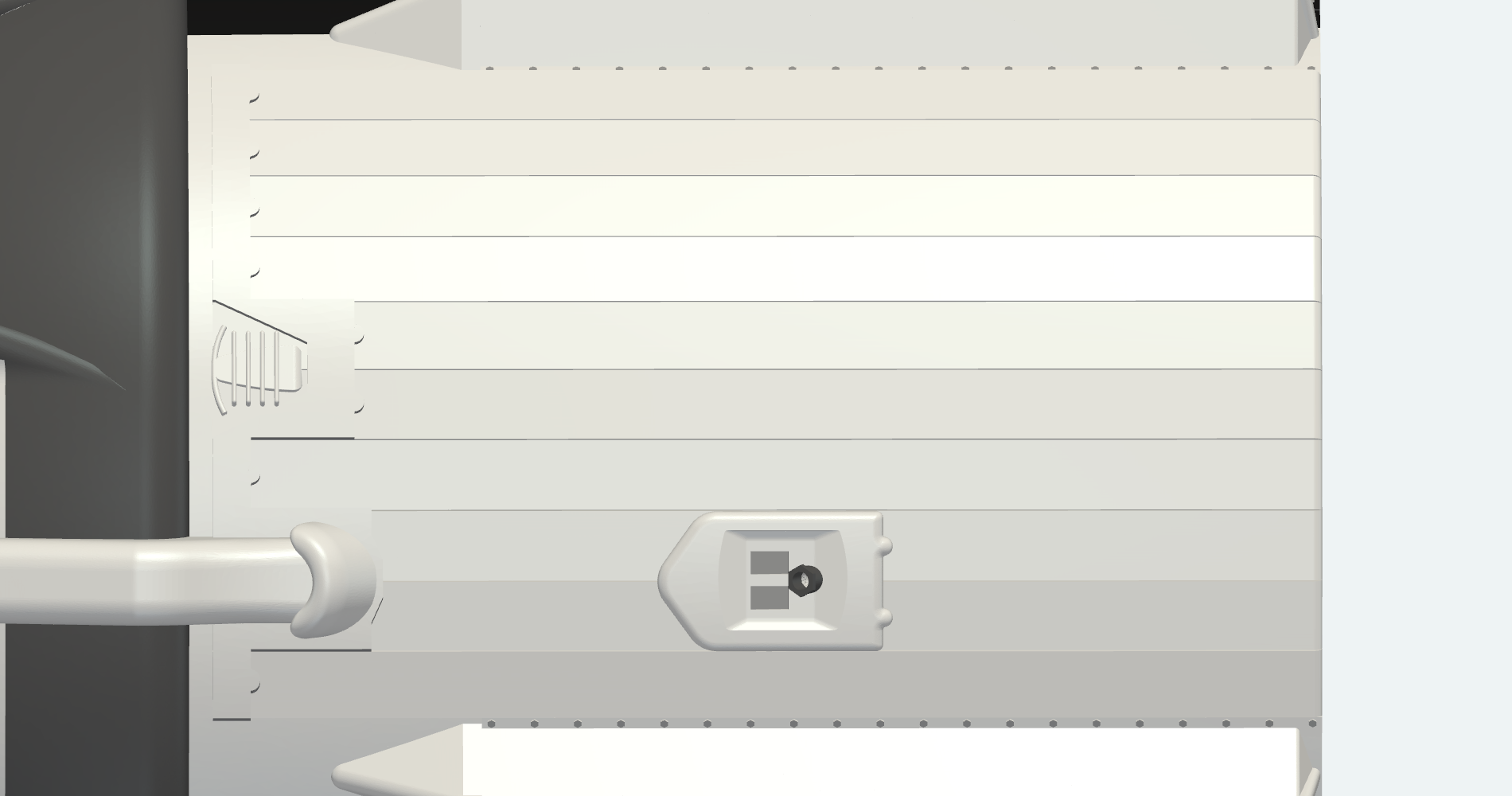
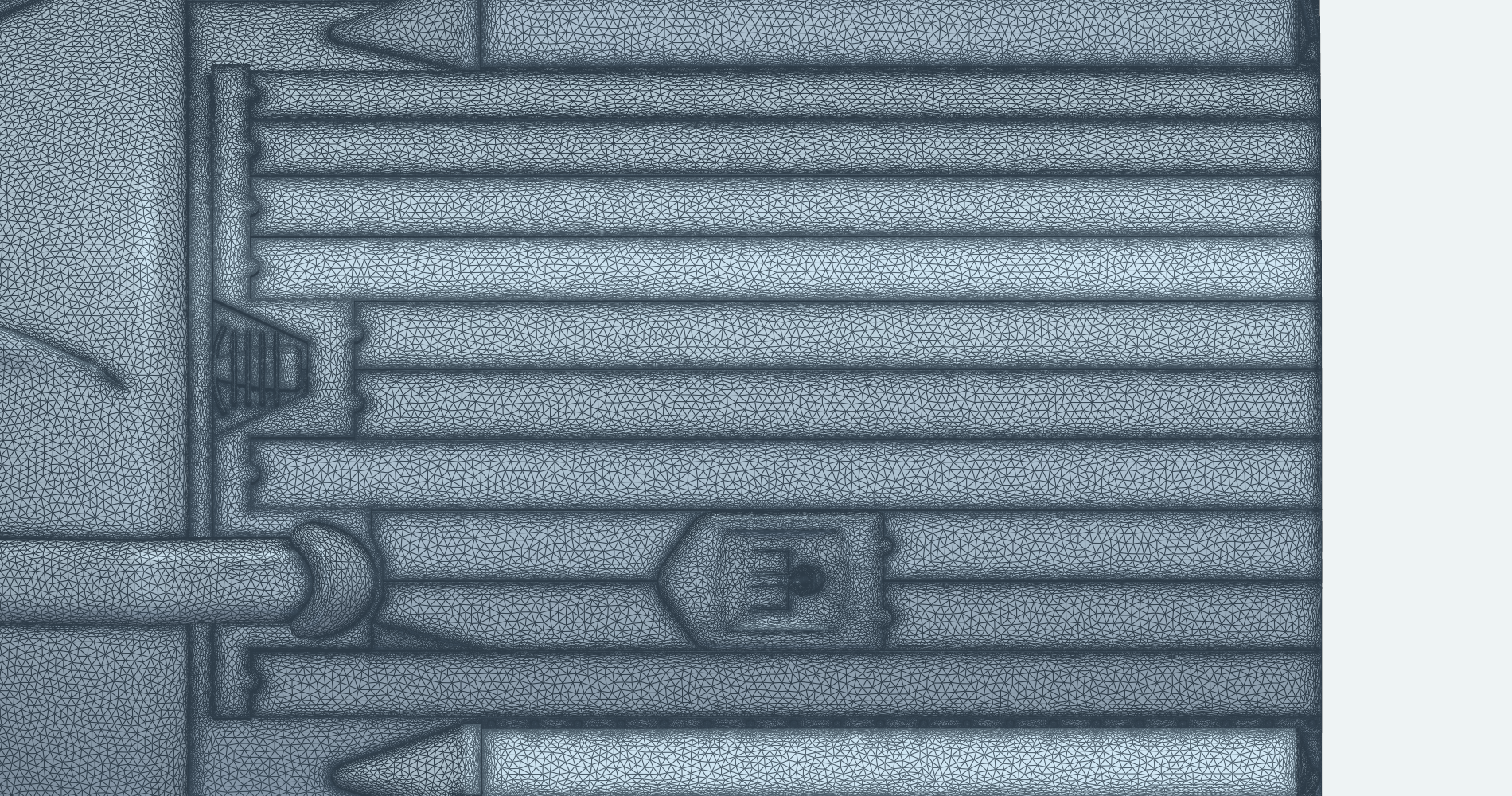
Crewed Reentry Vehicle. Capsule and trunk with solar array and fins
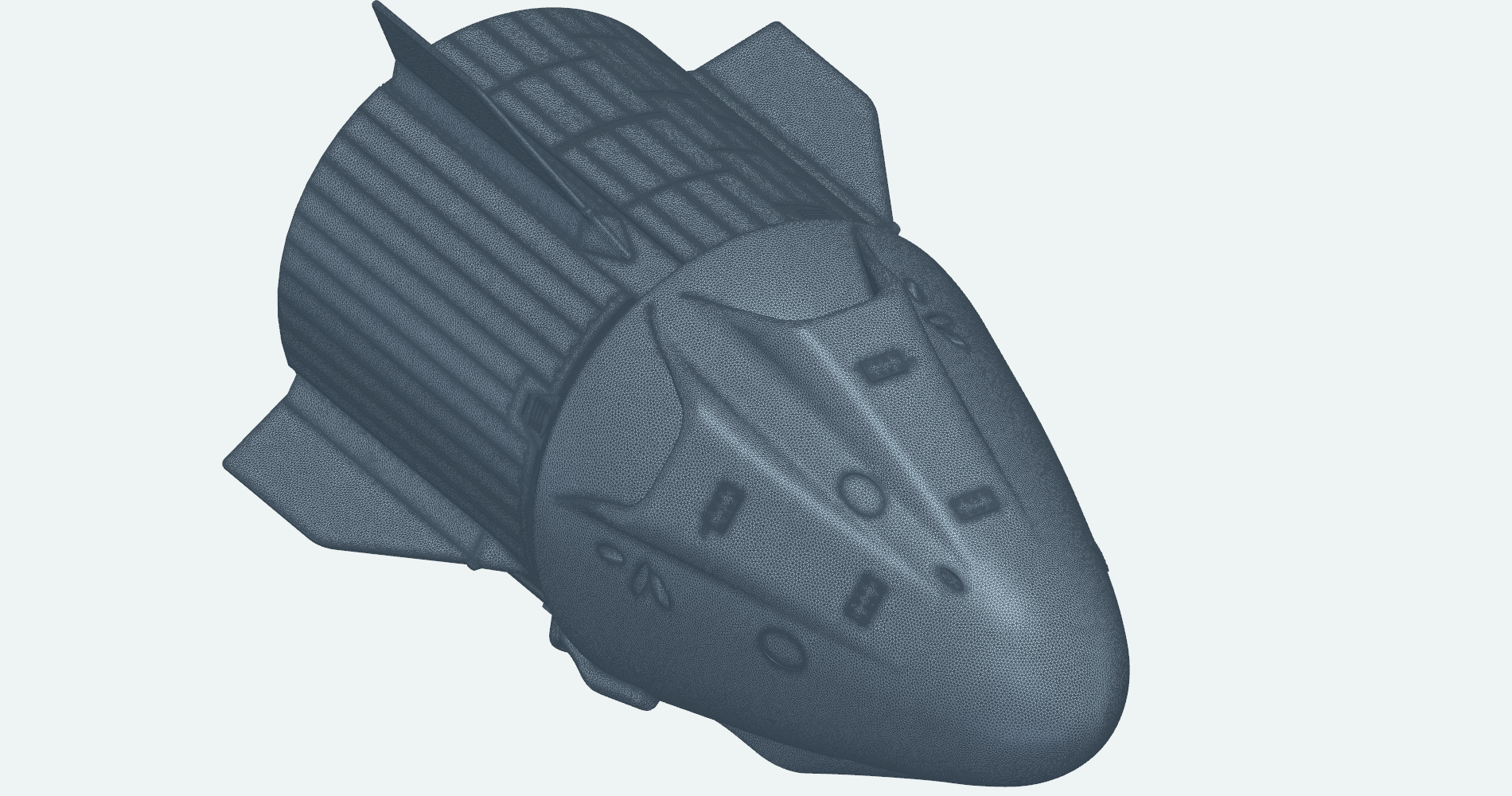
As reusable spacecraft advance and commercial spaceflight expands, reentry vehicles are becoming an increasingly important focus for aerodynamic design. CFD helps engineers predict the forces and intense heating that vehicles experience during reentry, which requires a mesh that captures both the overall shape and key surface features. This model combines a smooth, curved crew capsule with a trunk made of long, flat panels, fins and a solar array, plus smaller details such as access panels, thruster ports and attachment fittings. GeometryAI converts this complex assembly into a watertight, simulation-ready surface mesh that preserves both its major shapes and its fine details.
From CAD Assembly to Surface Mesh
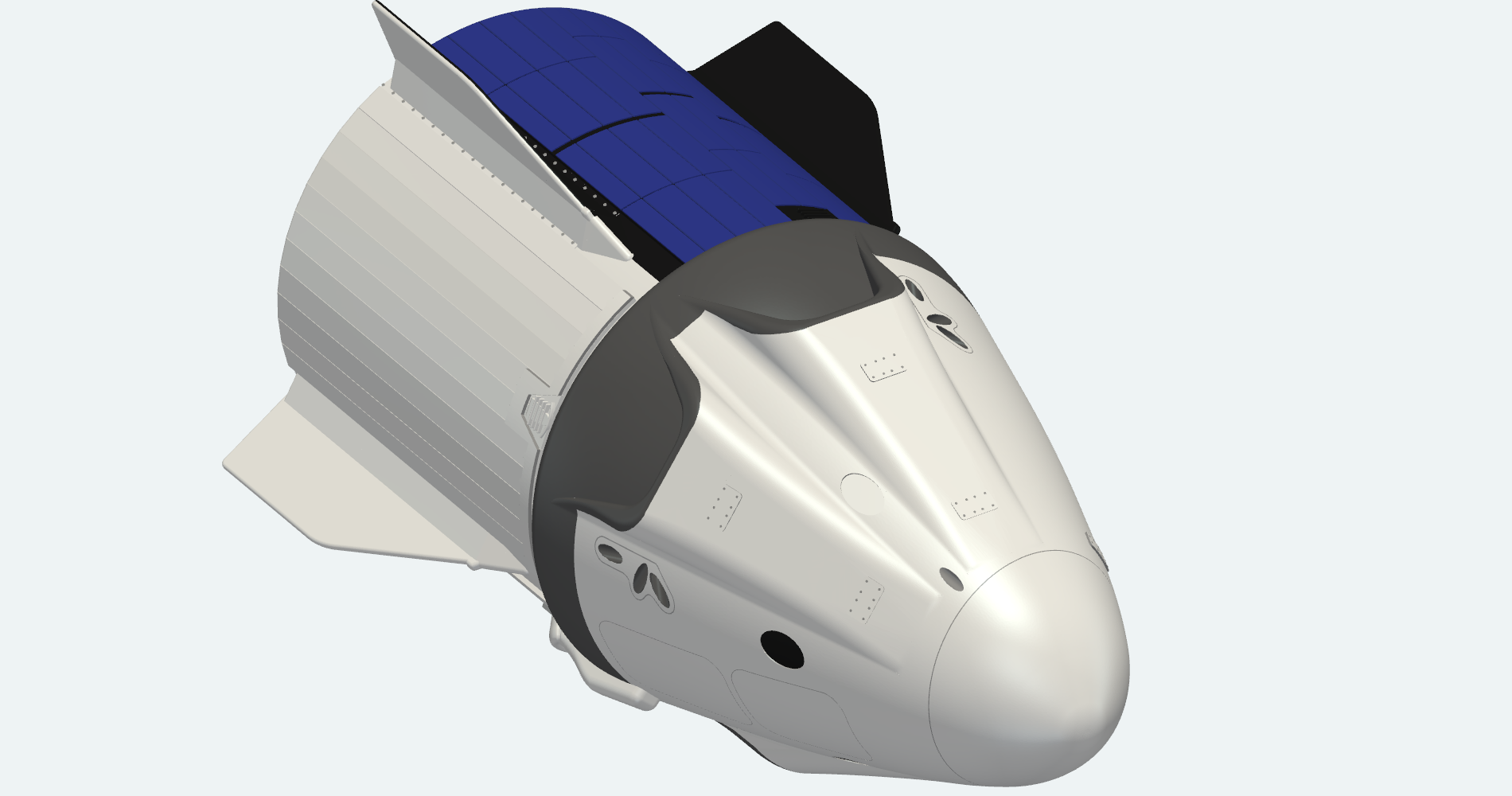
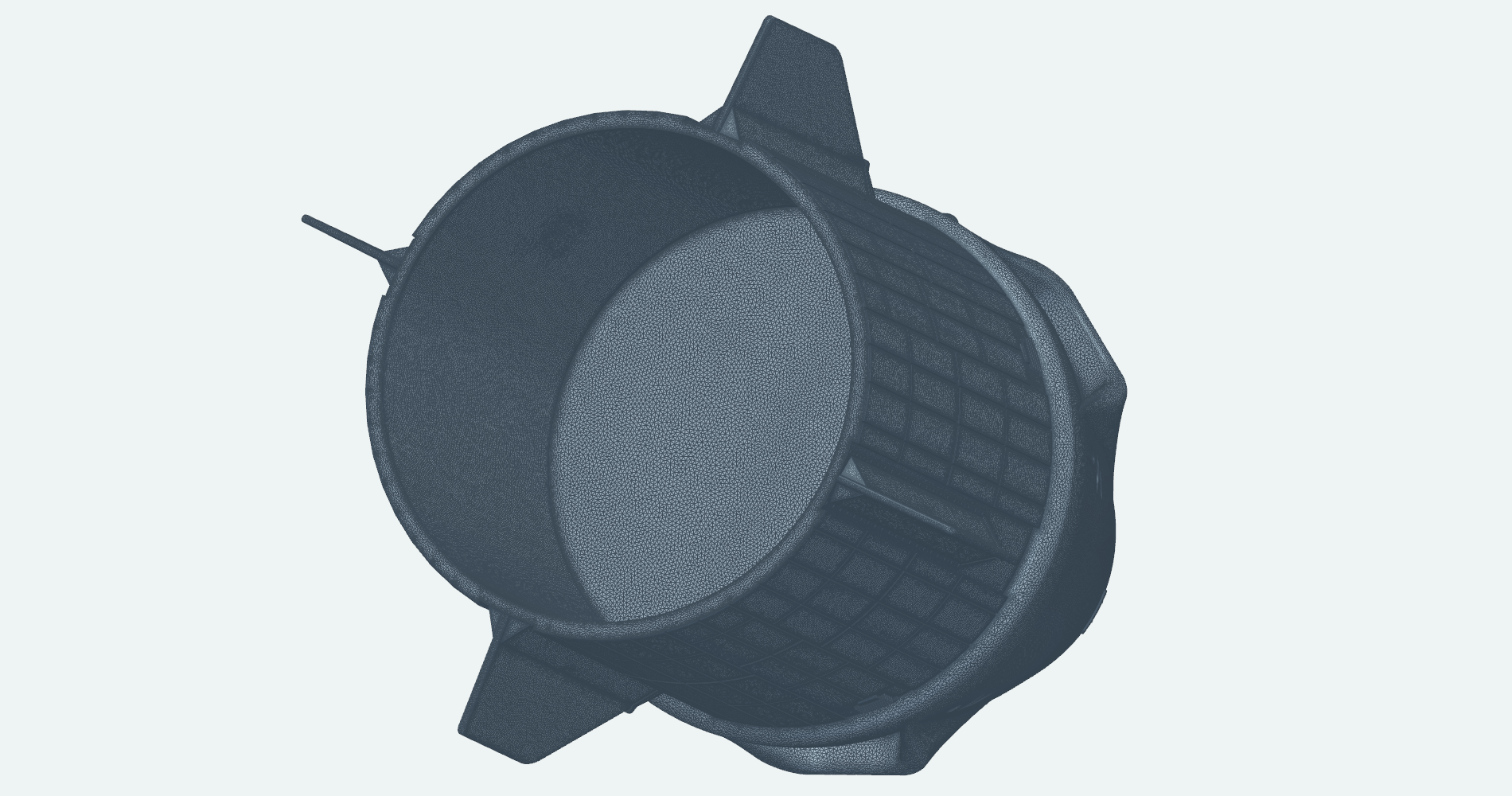
This section gives an overview of the complete model, comparing the GeometryAI surface mesh side by side with the original geometry.
Three-quarter view
The mesh covers the whole vehicle, from the capsule nose to the trunk, its fins and the solar array.
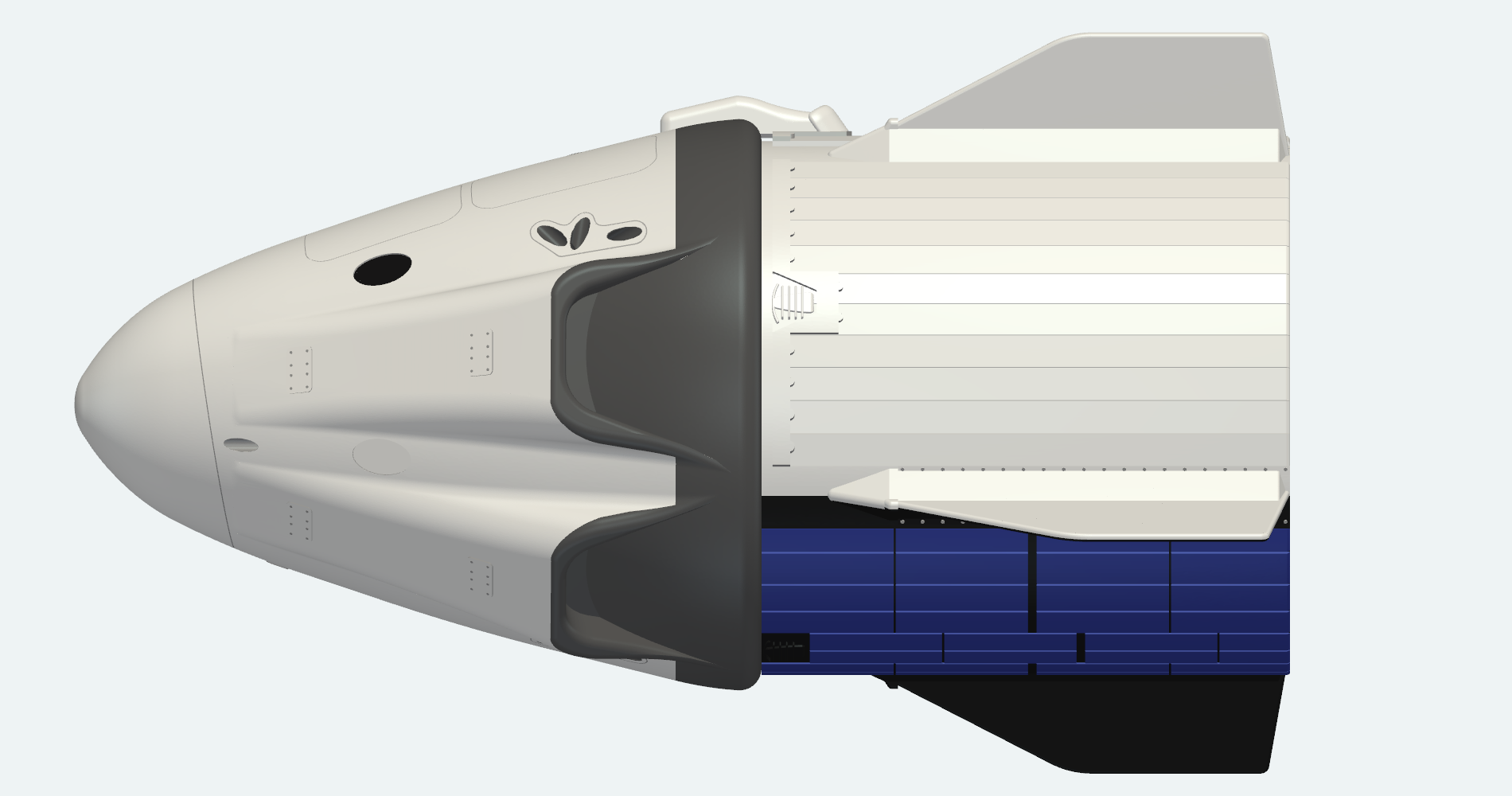
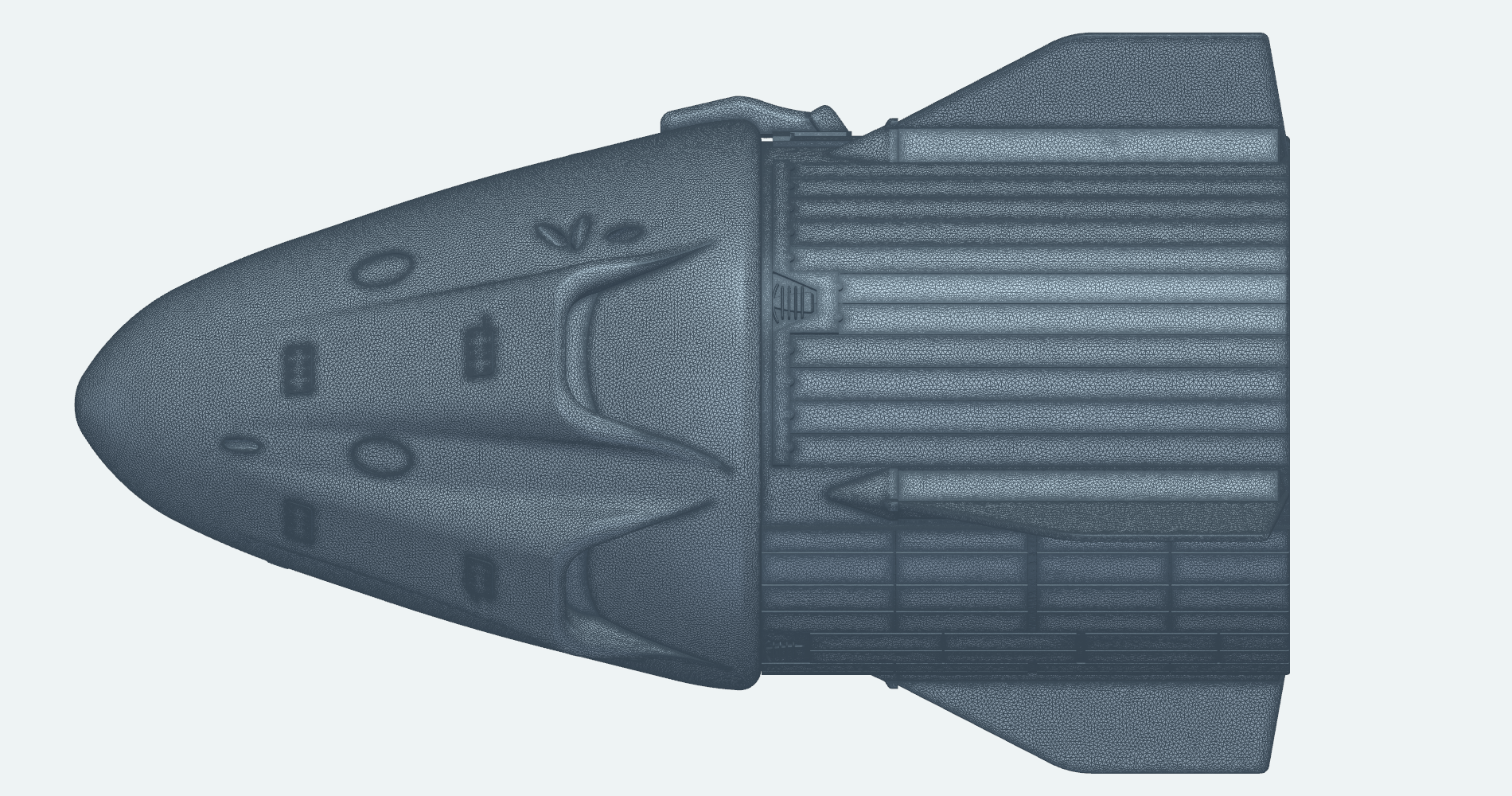
Side view
Side-on, the curved capsule sits ahead of the trunk, with its fins and the solar array.
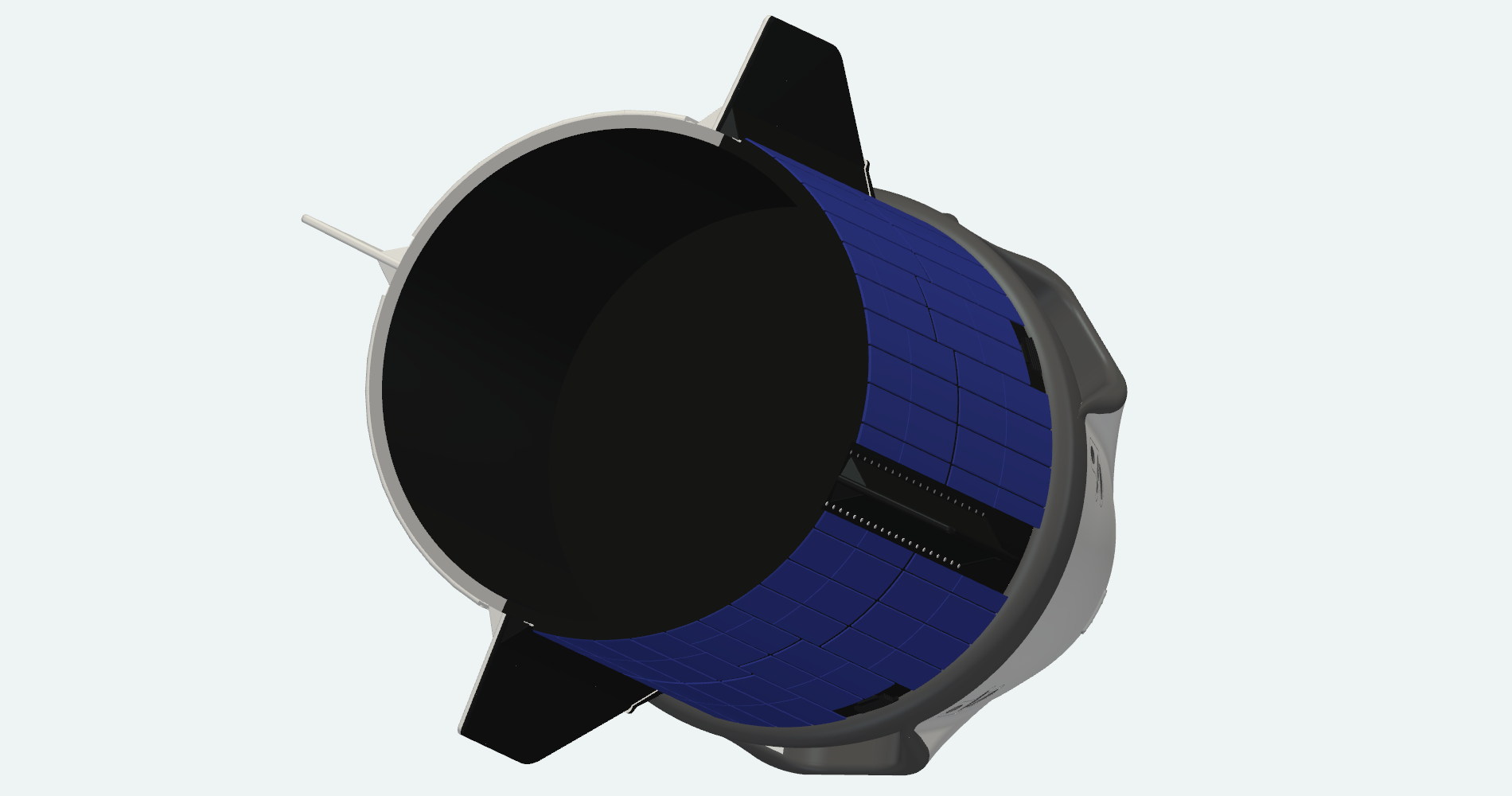
Aft view
From behind, the open end of the trunk shows its inner wall, the fins and the solar array wrapped around it.
Bolt Heads on an Access Panel
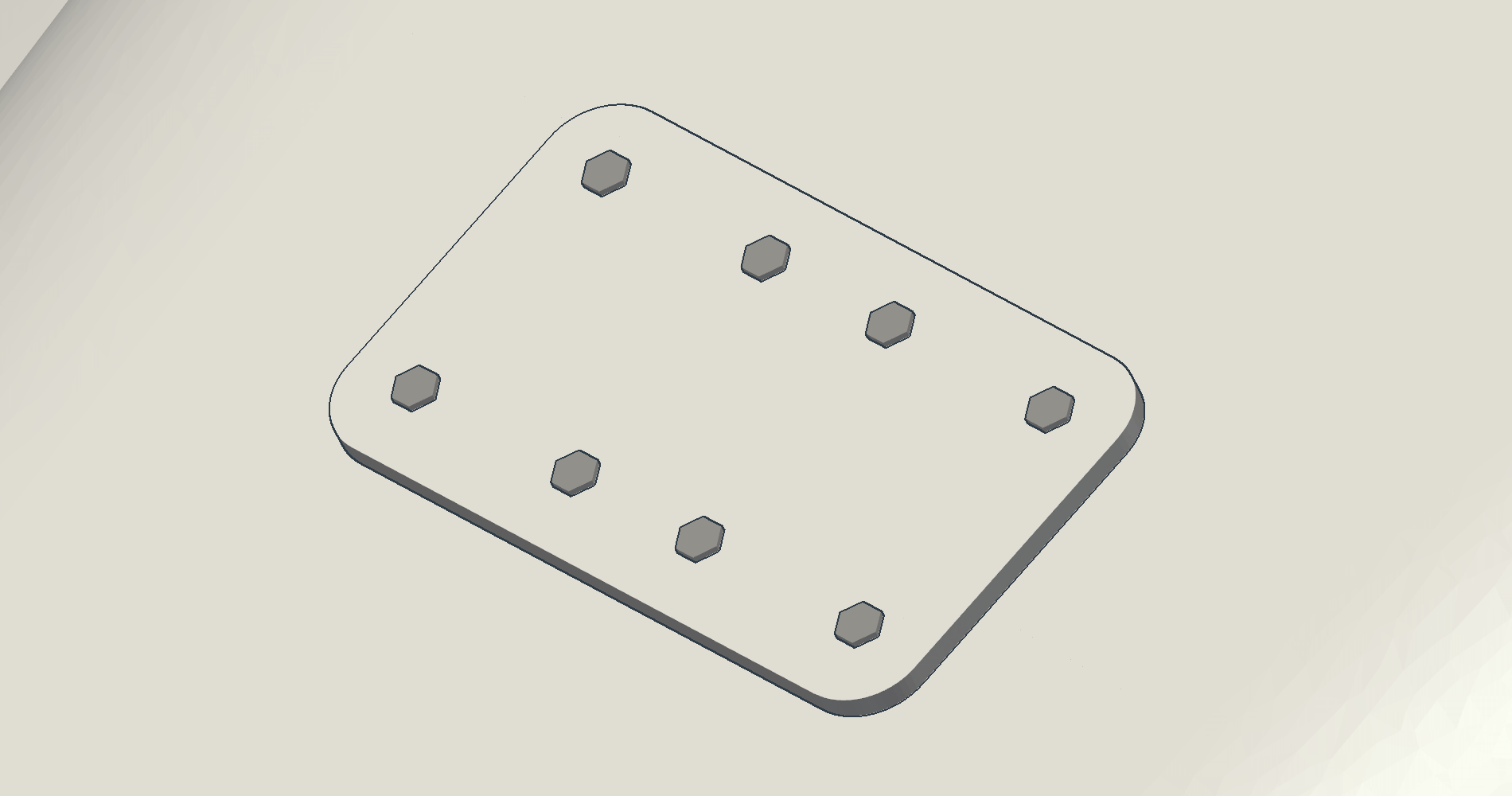
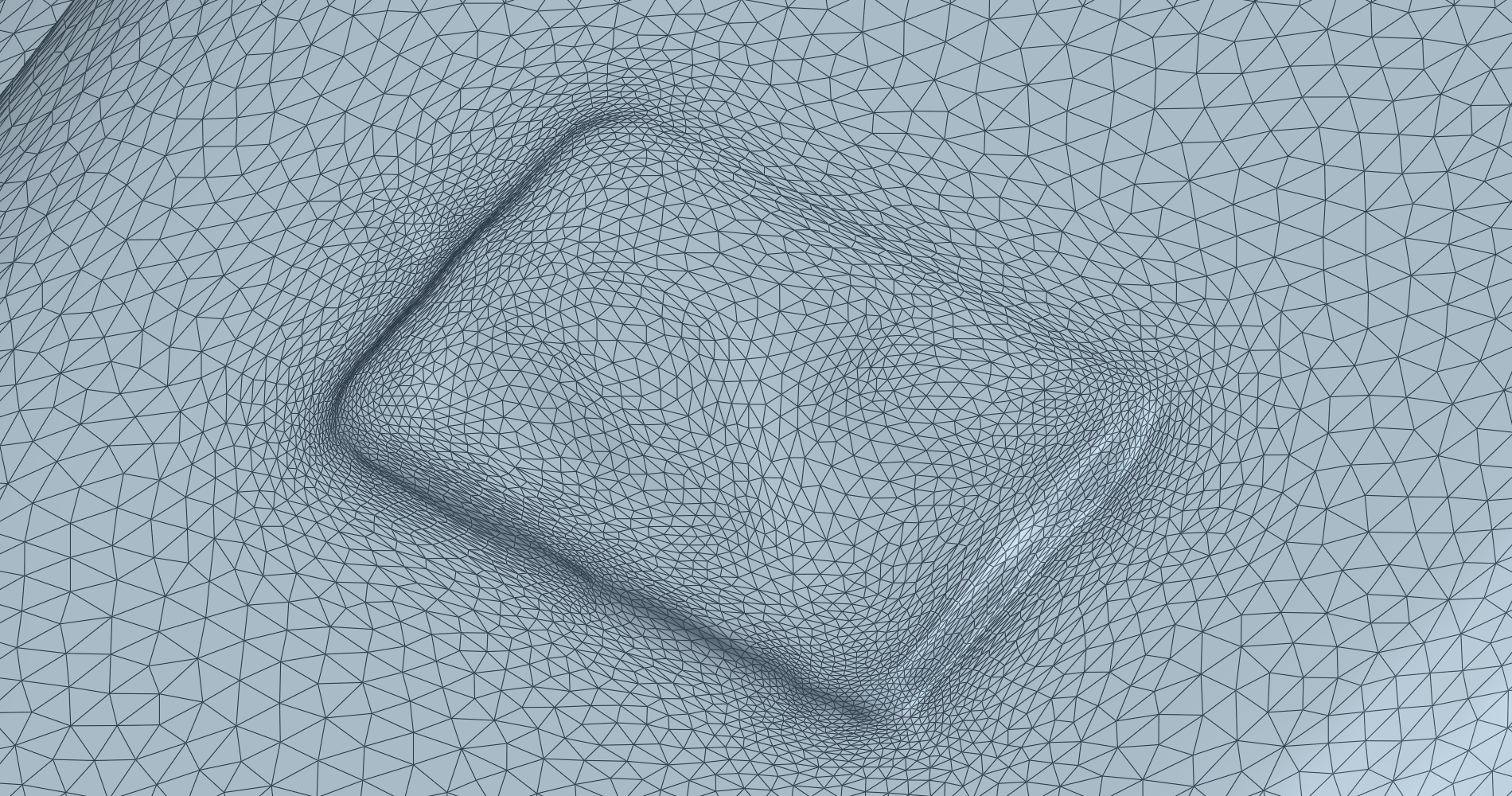
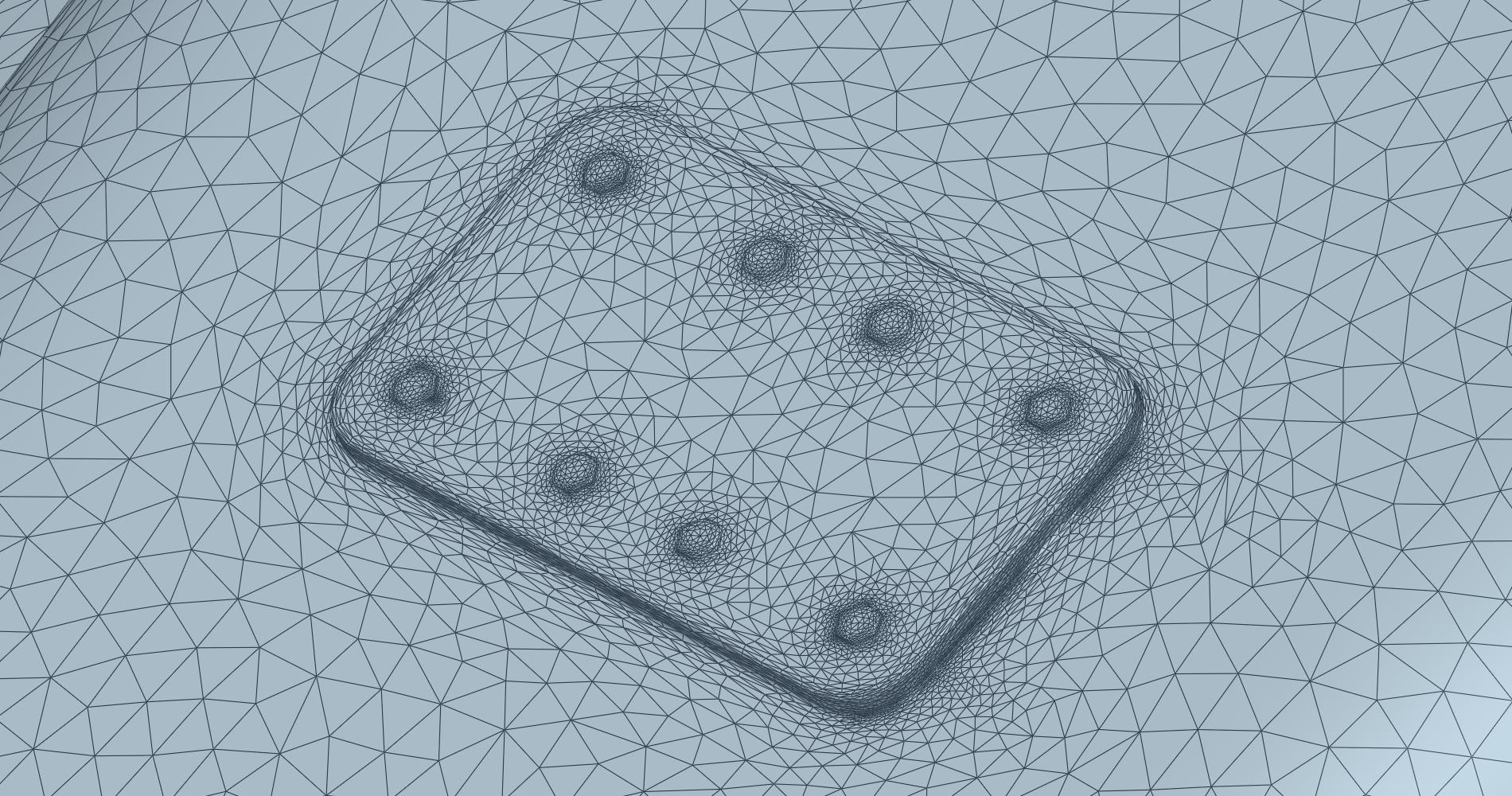
GAI allows users to defeature geometric details that are not relevant to the flowfield through a parameter called Geometry Accuracy. When set to 20 mm, GeometryAI blends the access panel into a smooth bump and removes its bolt heads. When using a finer value of 1 mm, all features are preserved.
Panels, Ports and Fittings
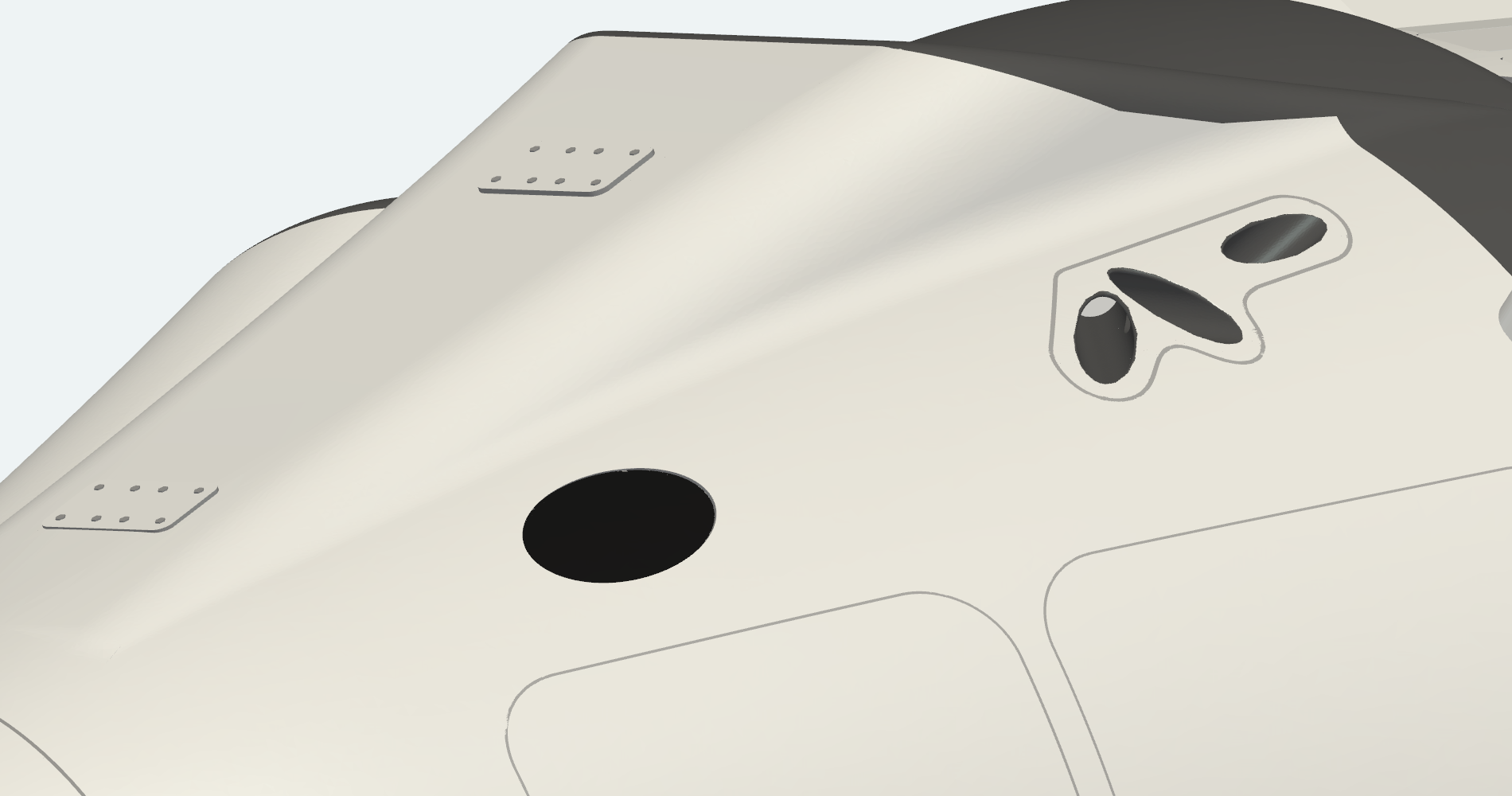
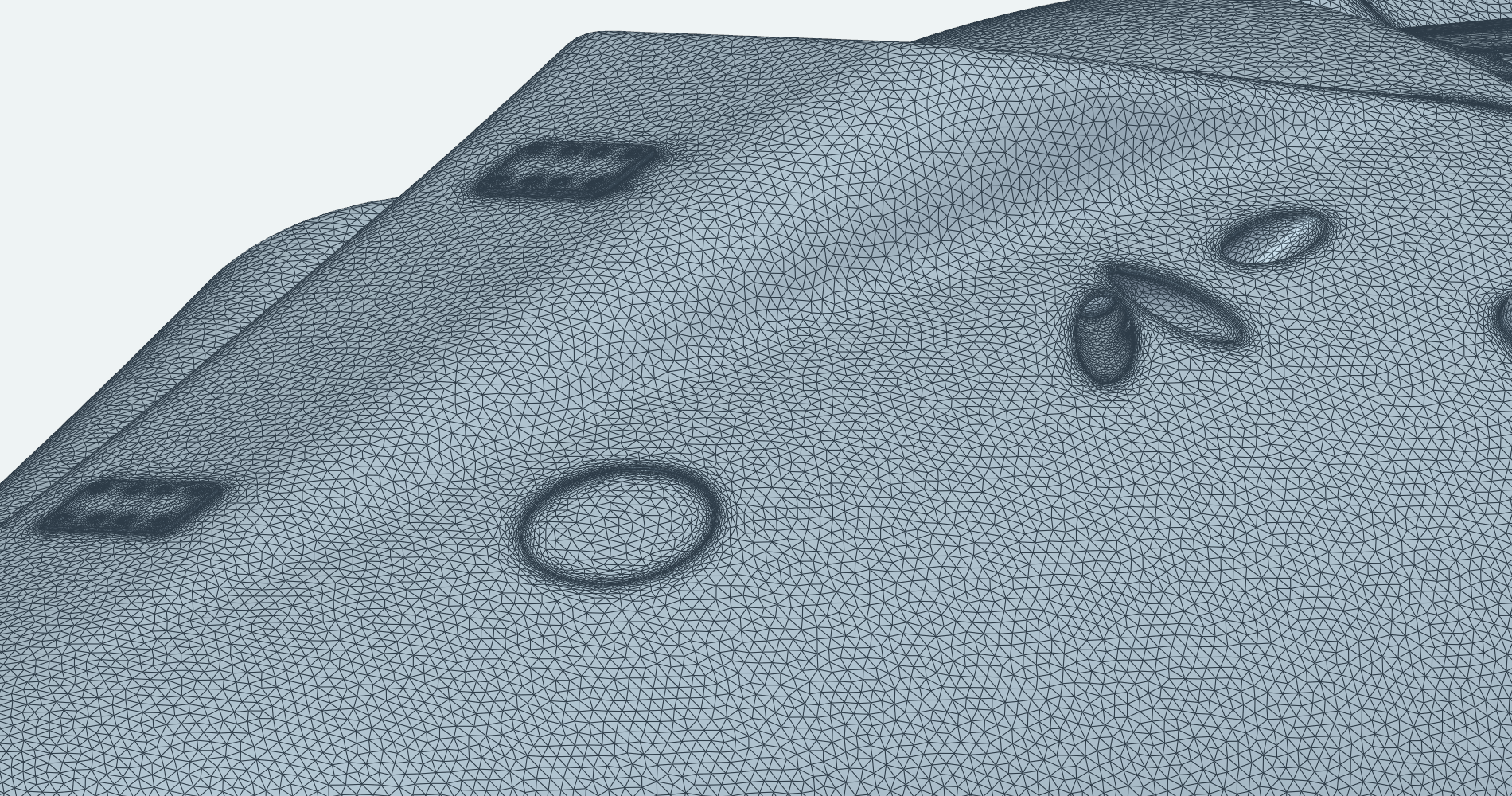
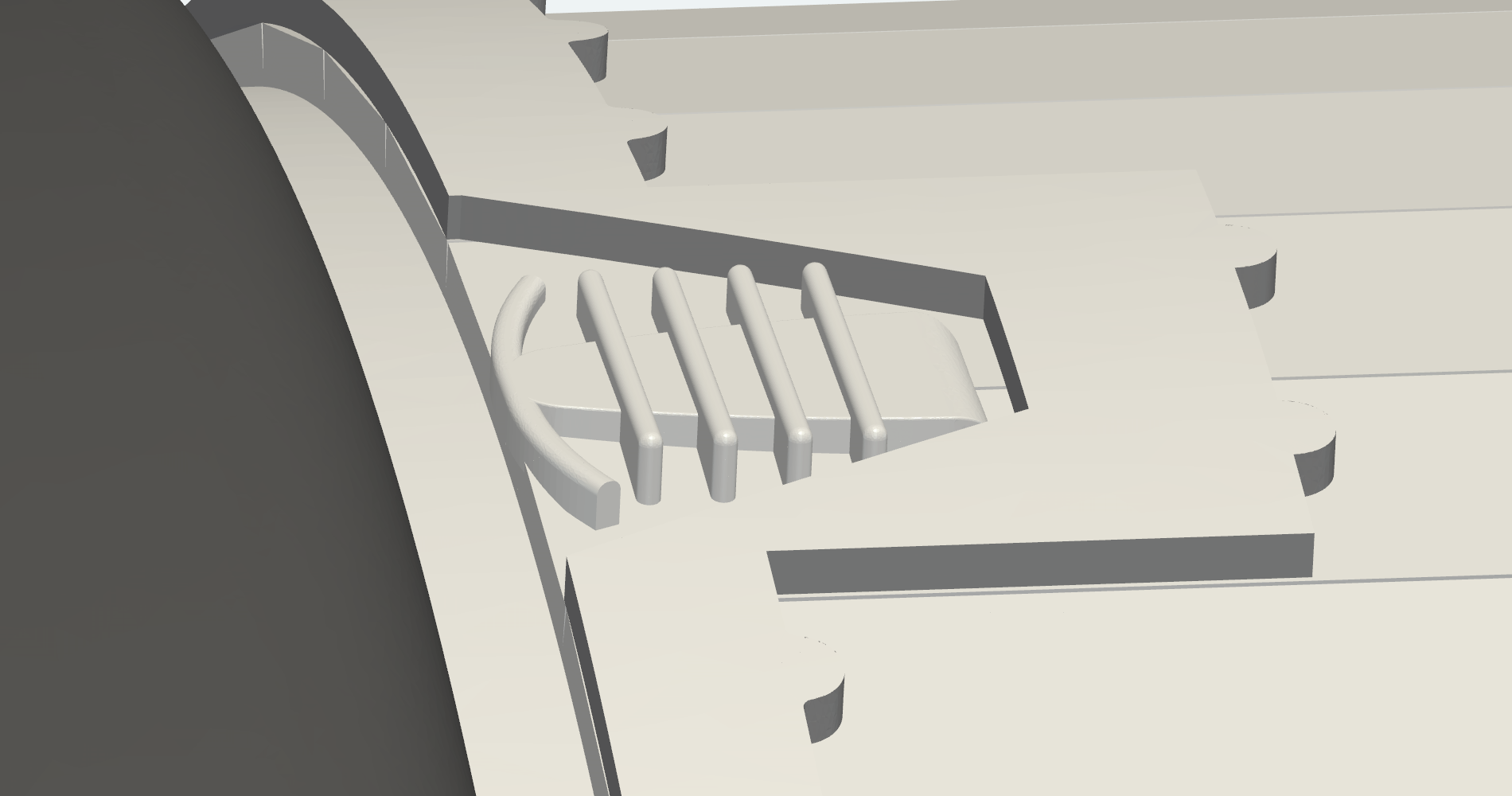
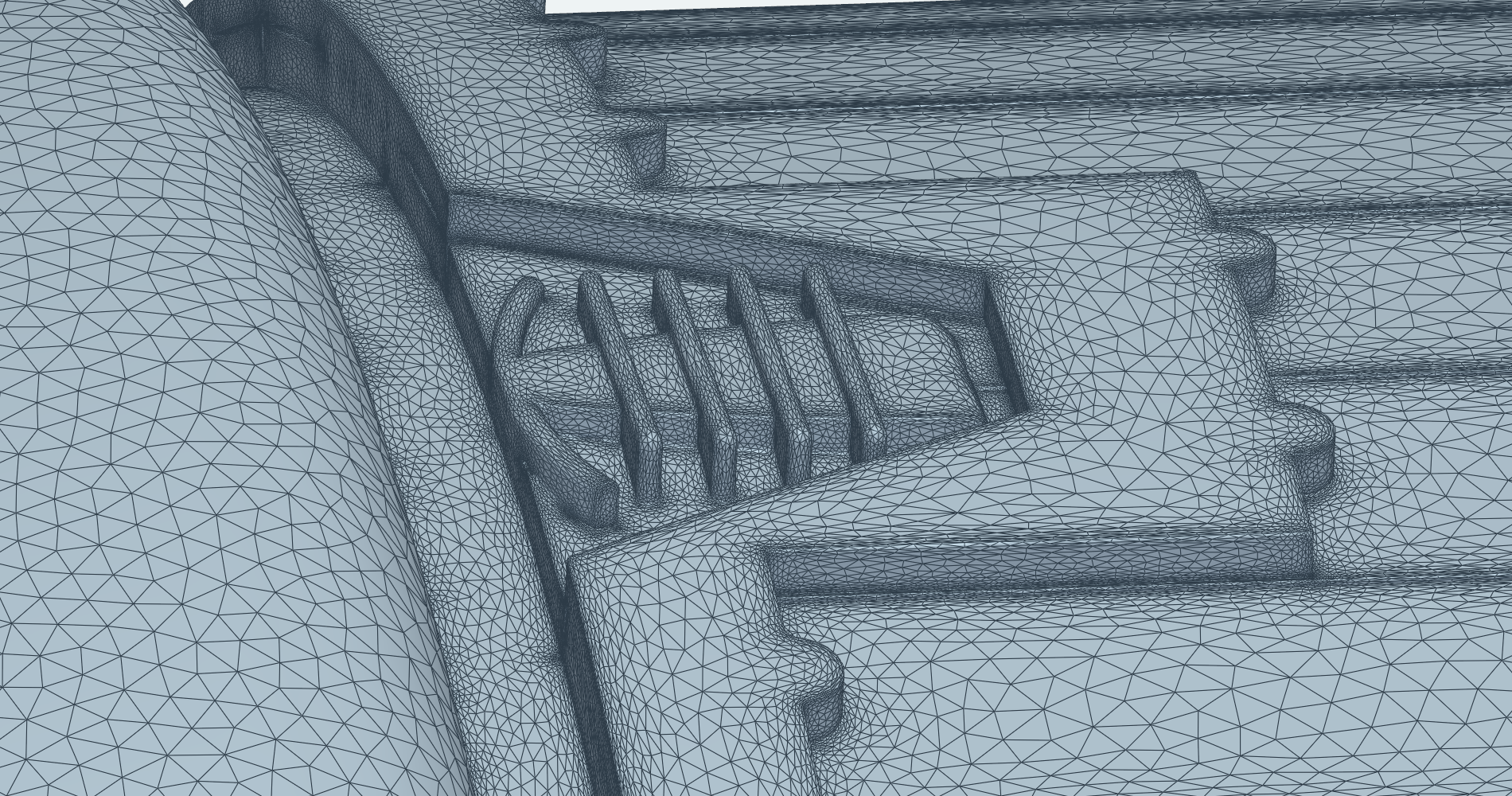
Small features sit on top of large, smooth surfaces. The whole assembly is meshed with one set of global settings, with no local refinements on the small parts.
Capsule details
Access panels and thruster ports on the capsule's outer surface.
Capsule-to-trunk interface
A fitting at the joint between the capsule and the trunk, with its thin rods.
Trunk panels
The trunk's long flat panels, their seams and the fittings along the edge.